business
Wisconsin Senate set to take up sports wagering, UW-Madison NIL on final day

Wisconsin Senate set to take up sports wagering, UW-Madison NIL on final day

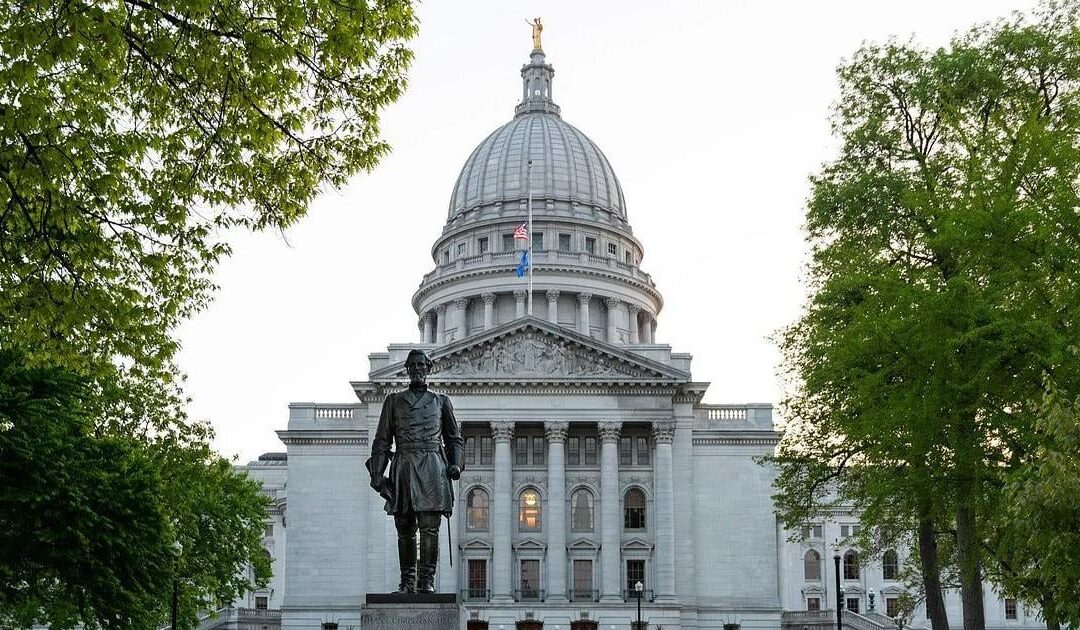
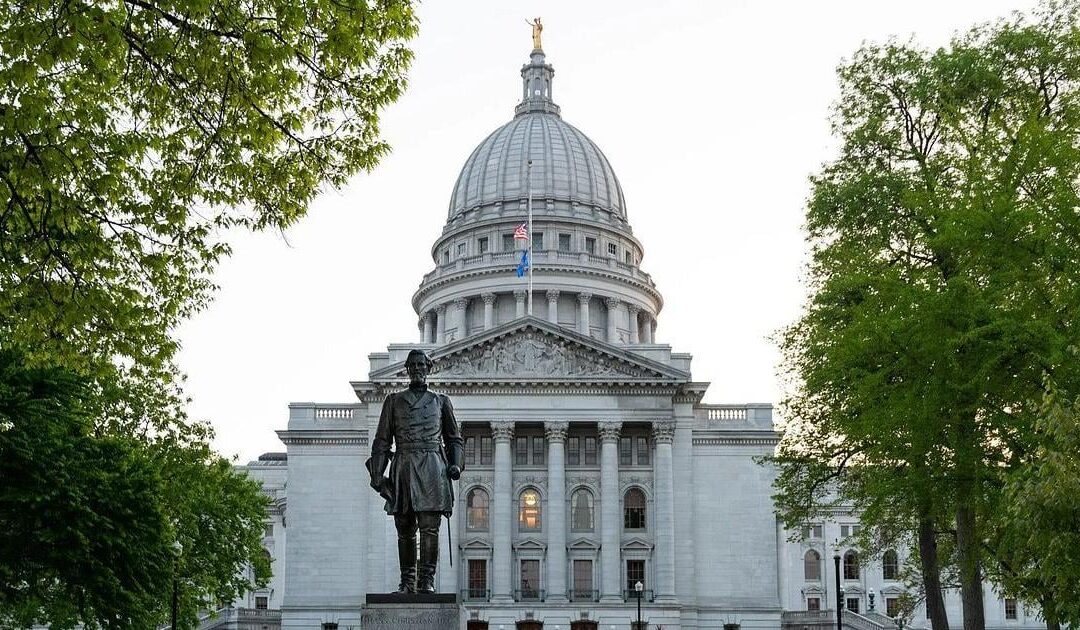
(The Center Square) – The Wisconsin Senate is scheduled to vote on both a sports wagering bill and a University of Wisconsin name, image and likeness bill Tuesday in its final meeting of the session, set to begin at 11 a.m.
The session could include decisions on up to 113 bills.
Gov. Tony Evers has voiced support for the sports wagering bill and both bills would head to Evers’ desk if approved by the Senate on Tuesday.
The NIL bill has received opposition as it proposes to send $15 million annually to the Universities of Wisconsin for athletics facilities while it also includes a sweeping public records exemption that includes all spending and revenue for the athletics department.
The sports wagering bill has gathered opposition as it creates an opening for the state’s tribes to offer mobile sports wagering across the state.
The bill passed the Assembly on a voice vote.
The proposal would change the state’s definition of “bet” to allow the state’s tribes to offer mobile sports wagering if the bettor is in Wisconsin and the sportsbook servers are on tribal land, an amendment to current compacts allowing for casino gambling and sports wagering on tribal lands despite the state’s ban on betting.
The law would allow for a similar sports wagering model as Florida, where the state’s sportsbook operators have servers on federally recognized tribal lands while users can be in the state of Wisconsin.
The proposal cites the U.S. Supreme Court’s 2024 decision not to hear a challenge to the sports wagering pact between Florida and the Seminole tribe of the hub-and-spoke sports wagering model.
Wisconsin receives payments that are a portion of the net win from tribal casinos but does not separately report sports wagering payments.
In 2024, the state received more than $66 million in shared revenue payments with nearly $66 million in 2023 and nearly $57 million in 2022.
Sports wagering is legal in 39 states with 31 allowing mobile sports wagering.

Lawmakers use UW-Madison consultant marketing report to support NIL bill

Lawmakers use UW-Madison consultant marketing report to support NIL bill

(The Center Square) – Wisconsin lawmakers have touted the economic impact of University of Wisconsin football and athletics as a reason to support a name, image and likeness bill that includes $15 million in taxpayer funds given annually toward athletics facilities and a sweeping public records exemption that applies to all spending and revenue for the athletic department.
The NIL bill could reach the Senate floor as soon as Tuesday.
That report, produced in 2022 by ESI Econsult Solutions, claimed that each UW-Madison football game brings $19 million of economic impact to Dane County. Rather than being an independent analysis of impact of the program, the report was a consultant report paid for by the university for use in public policy discussions on funding.
Economists point out that these reports don’t follow basic economic tenets such as accounting for the crowding out effect for visitors who would normally visit Madison on a fall Friday but did not due to hotel prices or availability and displaced spending in a municipality, region or state from those who would have otherwise spent disposable income at other businesses in an area.
Economist J.C. Bradbury of Georgia’s Kennesaw State University previously told The Center Square that there is a “cottage industry” of consultants who produce these reports for sports franchises to receive taxpayer incentives.
“These are totally fake and they mean nothing but they are required to provide some sort of guidance, even though they don’t,” Bradbury said.
A report from UW-Madison’s Crowe Center for Research on the Wisconsin Economy from late last year said that Badger football’s declining performance could lead to a $20 million reduction in annual revenue for the athletic department.
“Wider economic fallout includes an estimated $160 million annual loss in Madison and $280 million statewide, stemming from reduced attendance, game-day spending, tourism, and reputational value,” the report said.
The Badgers were 4-8 overall and 2-7 in the Big Ten Conference in 2025.
UW-Madison athletics operated with a $4.3 million surplus in its most recent annual NCAA financial report covering the financial year that ended in June 2025.
Athletic department officials told the Assembly Committee on State Affairs on Wednesday that football is responsible for 80% of the athletic department’s revenue. That was $113.6 million last fiscal year, according to the NCAA report, which showed the football program brought in $72 million in excess during the year.

Wisconsin spending Monday under blizzard warning, state of emergency

Wisconsin spending Monday under blizzard warning, state of emergency

(The Center Square) – Wisconsin is spending another day dealing with snow, ice, and winds that could hit 60 mph.
The National Weather Service is continuing its blizzard warning for pretty much the entire state through 4 p.m. on Monday. Gov. Tony Evers is leaving his state of emergency in place as well.
The governor issued an emergency declaration Saturday, ahead of the storm on Sunday.
“… A significant winter storm is expected to impact large portions of the State of Wisconsin beginning on March 14, 2026, and continuing through March 16, 2026; Wheras, the National Weather Service predicts the potential for record-breaking snowfall amounts of up to 24 inches and winds gusting up to 50 miles per hour,” the governor wrote in his declaration. “Therefore I, Tony Evers…Proclaim that a State of Emergency exists in the State of Wisconsin. Direct all state agencies of the State of Wisconsin to assist as appropriate in the response and recovery effort. Call to state active duty such elements of the Wisconsin National Guard as the adjutant general deems necessary to assist civil authorities for purposes of assisting in response and recovery effort.”
The winter storm that blanketed the state hit in waves, with northeast Wisconsin getting hit Saturday and into Sunday. Folks around Green Bay were expecting perhaps as many as 30 inches of snow.
The winter weather hit southeast Wisconsin Sunday evening but intensified overnight into Monday morning.
Hundreds of schools canceled classes, and thousands of people lost power because of the winter weather.
On Sunday, the Wisconsin Department of Transportation asked people not to travel across the state.
“The Wisconsin Department of Transportation urges people to stay home and limit travel to emergencies only during the current winter storm. Travel is not advised across northern Wisconsin as blizzard conditions continue to make highways extremely hazardous and often impassable,” the DOT wrote. “The winter storm is expected to cause continued deteriorating conditions in southern counties as the storm progresses.”
Forecasters say snow will continue in parts of southeast and southern Wisconsin until Tuesday night, but it will not be as strong or as windy. The high temperature on Wednesday in Milwaukee is expected to be 40 degrees, with highs at or around 50 on Friday and Saturday.

IRG calls for special committee on Wisconsin Forward Exam standards conference

IRG calls for special committee on Wisconsin Forward Exam standards conference

(The Center Square) – The Institute for Reforming Government is calling for Wisconsin lawmakers to create a special committee to investigate the Department of Public Instructions decision to spend nearly $370,000 of taxpayer money on a 2024 Forward Exam standard-setting workshop in the Wisconsin Dells, with details of the discussions at the workshop hidden behind non-disclosure agreements.
Jake Curtis, General Counsel and Director of the CIO at IRG, previously told The Center Square that he believed the 88-member standards-setting group filled with school employees and leaders fits the exact definition of an Ad Hoc Committee and that meetings of that committee should be public and not subject to the non-disclosure agreements signed by conference attendees.
An investigation from The Center Square showed that other states that work with DPI either hold meetings remotely or in the capital city where the state education department is already located, only paying for expenses from committee members who travel more than 50 miles for the meetings.
Wisconsin’s Joint Committee on Finance delayed $1 million in a funding request to DPI after the report came to light through reporting from the Dairyland Sentinel but later approved a funding request with Co-chair Mark Born, R-Beaver Dam, telling WisPolitics that “there’s nothing wrong with hosting a conference at a Wisconsin conference center and supporting Wisconsin tourism as well.”
DPI Deputy State Superintendent Tom McCarthy claimed to the outlet that Wisconsin is one of the cheaper states that overhauled testing standards but provided no details to prove that.
A spokesperson for the department, Chris Bucher, previously claimed that the conference was a “common approach” though reporting from The Center Square showed that no other state had taken the approach of holding a conference at a resort outside of the state capital.
DPI and Data Recognition Corp. have not responded to questions from The Center Square about the meetings.
Data Recognition Corp., led by former Republican Wisconsin Senate Minority Leader Susan Engeleiter, reportedly signed a nearly $80 million 10-year contract with Wisconsin to operate its testing and create the Forward Exam after initially bidding $63 million on the contract.
The Wisconsin Democracy Campaign questioned Engeleiter’s donations to Wisconsin Gov. Scott Walker when the deal was signed. Gov. Tony Evers was the state school superintendent at the time.
DPI shared a list of additional expenses for the conference with WisPolitics, which included $219,225 for meeting expenses.
That included $70,447 for meeting rooms to accommodate the group, audiovisual equipment and including $55,752 for food. DPI spent $69,437 to reimburse panelists, including a daily stipend of $150 for educators, totaling $52,200, and $10,491 to cover mileage.
It also paid $66,342 for lodging of panelists and staff of Data Recognition Corp.

Wisconsin lawmaker pleads guilty to disorderly conduct, accepts $300 fine

Wisconsin lawmaker pleads guilty to disorderly conduct, accepts $300 fine

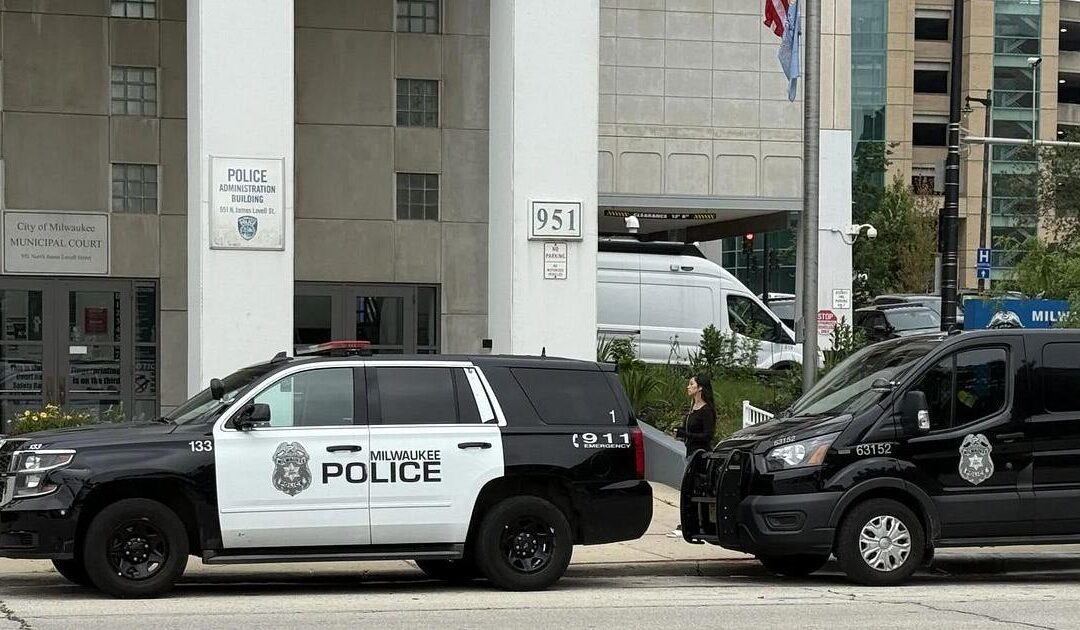
(The Center Square) – State Rep. Sylvia Ortiz-Velez, D-Milwaukee, agreed to plea guilty to a misdemeanor charge of disorderly conduct and will pay a $300 fine after she was charged following a Sept. 2 phone call where she reportedly threatened another member of the Assembly that she would “tell the press negative personal information” if she was not included in writing a Joint Resolution honoring Latino veterans.
Ortiz-Velez’s late husband was a Latino veteran.
She said in a Friday statement that that she broke directives from her party’s leaders when she voted for maps proposed by Gov. Tony Evers and his budget and that was later held against her.
“My voting choices caused a rift that has turned ugly and bitter,” Ortiz-Velez wrote. “My constituents did not send me to Madison to litigate internal caucus disputes or to be distracted by the personal feuds – they sent me to deliver results. I continue to focus 100% of my efforts for the people of the 8th Assembly district.”
She went on to say that she will continue to be an “independent voice in the Capitol.”
Ortiz-Velez left the Democratic caucus after the incident.
The complaint states that Ortiz-Velez felt she was intentionally left out of writing the resolution despite the fact that her late husband was a Latino veteran.
The complaint was filed in Milwaukee because both representatives live in Milwaukee and both were in Milwaukee when the phone call occurred.
“These were personal attacks regarding Witness 1 that were outside the bounds of political response,” the complaint said. “The statements were indecent and tended to disrupt the good public order.”

Registered nurses can no longer sign school excuse letters starting Sept. 1

Registered nurses can no longer sign school excuse letters starting Sept. 1

(The Center Square) – A registered nurse can no longer sign an excused absence from school in Wisconsin starting Sept. 1.
Gov. Tony Evers signed a bill Friday to remove registered nurses from the list of those allowed to excuse an absence. The list now includes licensed physicians, naturopathic doctors, dentists, chiropractors, optometrists, psychologists, physician assistants and advanced practice registered nurses
“By elevating the threshold to these specialized providers, the bill aims to prevent potential misuse of excused absences, promote consistency in evaluations, and prioritize classroom attendance for students aged 6 to 18,” Sen. Rachael Cabral-Guevara, R-Fox Crossing, wrote in testimony on the bill.
The Wisconsin Association of School Nurses asked for the change due to what it called “confusion that was created with an inadvertent change to the state’s school absence law.”
The bill goes along with a new system to license Advanced Practice Registered Nurses. The Wisconsin Nurses Association also supported the bill.
“Registered nurses, while highly skilled in patient care, typically do not have the independent authority to diagnose conditions without supervision from higher-credentialed professionals,” Cabral-Guevara wrote. “By limiting excuses to those with advanced diagnostic capabilities, we can better ensure that absences are genuinely warranted, reducing unnecessary disruptions to learning and fostering a more accountable system.”

IRG Report: Wisconsin schools seeing fewer students, facing fiscal worries

IRG Report: Wisconsin schools seeing fewer students, facing fiscal worries

(The Center Square) – There is another warning about school finances in Wisconsin, but it has nothing to do with taxes.
The Institute for Reforming Government released a report that shows almost every Wisconsin county is seeing fewer students this year. Only four counties added students, but even those saw just a few more students.
“Wisconsin lost 14,087 students this year, 1.7% of enrollment,” the report notes. “Sixty-eight of 72 counties lost students. Florence added zero students, Richland added three, Burnett added four, and Dane added 198 due to gaining hundreds of virtual students. No Wisconsin region was a bright spot.”
The IRG report states that this kind of student loss is rare. In fact, there are only three other school years where almost every county in the state lost students.
But IRG’s report is not just a head count. It is a warning.
“Losing students forces tough choices on the educators looking out for our kids and the taxpayers funding our schools,” IRG’s Quinton Klabon said. “Wisconsinites must attract families and businesses to our great state, or we will never escape the cycle of referenda and layoffs.”
Wisconsin’s school aid is student-based, meaning when schools lose students, they also lose state dollars.
Earlier this week, IRG released a tracking tool for the 74 local schools asking for $225 million in local referendum questions this year. Many of those schools say they need more money from local taxpayers to make-up for the state aid they have lost because of a drop in enrollment.
IRG’s new report also provides a snapshot of how schools across the state are doing in other areas.
“Students are attending school more often, getting suspended less, graduating high school more often, and enrolling in college more often. However, schools have reached “a new normal” below pre-pandemic performance,” IRG added.
That snapshot includes:
● Attendance rose to 92.6%, up 0.2%. Black and Indigenous students improved significantly…However, attendance has not recovered from pandemic policies, when Wisconsin regularly reached 95.0% attendance.
● Suspension rates fell 0.2%, the equivalent of 1,468 fewer suspensions statewide.
● High school graduation rates reached a modern high of 92.3%. All groups graduated more across income, racial, special needs, and native language designations. However, Wisconsin continues to struggle against other states on graduation rates.
● College enrollment rose slightly, with roughly one half of graduates enrolling in 2- or 4-year universities.

Wisconsin unleaded at $3.21 average, up nearly 60 cents in a month

Wisconsin unleaded at $3.21 average, up nearly 60 cents in a month

(The Center Square) – The average price of a gallon of unleaded gas in Wisconsin was up nearly 60 cents from a month ago at $3.21 as of Thursday, according to the American Automobile Association.
That was up from $2.96 a week ago and $2.63 a month ago but it was below the national average of $3.59. That national average was $2.94 a month ago.
A large part of the increases across the country is the impact of the U.S.-Israeli conflict with Iran.
Wisconsin ranked as the ninth least expensive state to purchase a gallon of unleaded gas with Kansas ($3.04), Oklahoma ($3.05), North Dakota ($3.09), Arkansas ($3.11), Missouri ($3.12), Mississippi ($3.16), South Dakota ($3.18) and Kentucky ($3.19) leading the way.
The prices are similar to 2024 prices, AAA wrote.
“Crude oil prices play a major role in what drivers pay at the pump, and prices have surpassed the $100/barrel mark multiple times in recent days,” AAA wrote on Thursday. “To help offset rising prices, the U.S. announced it will release 172 million barrels of oil from its strategic reserves over four months. The move is part of a broader effort by the International Energy Agency to release a total of 400 million barrels of oil, the largest emergency release in its history.”

Audit of DPI sexual misconduct response to be completed in ‘coming weeks’

Audit of DPI sexual misconduct response to be completed in ‘coming weeks’

(The Center Square) – An audit of how Wisconsin’s Department of Public Instruction handles grooming and sexual misconduct cases involving teachers will be completed in the coming weeks, according to Sen. Eric Limburger, R-Gillett.
Wimberger said that the results are even more important after a federal civil rights lawsuit was filed alleging that three Oconto Falls students were sexually groomed and abused by teachers in what lawyers called a pattern of abusive actions.
“This lawsuit again highlights the need for the results of our statewide audit of how the Department of Public Instruction handles grooming and sexual misconduct allegations,” Limburger said in a statement. “I look forward to the audit report’s release in the coming weeks to provide transparency regarding Wisconsin’s education leaders’ highest responsibility: ensuring our children are safe at school.”
The Oconto Falls lawsuit accused the school board of ignoring the issue for years, claiming that at least nine teachers or staff members were involved in sexual abuse, grooming, harassment or severe misconduct with at least 14 students between 2005 and 2025.
“They were abused by teachers and coaches under circumstances created by the Board through its pervasive custom and policy of knowing about teacher-student sexual abuse and failing to act,” the lawsuit said. “While Plaintiffs were aware of their abuse, they had no knowledge, and no reason to know, of the Board’s unwritten policies, customs, and practices tolerating sexual abuse and grooming across many teachers and students, and the Board’s deliberate indifference to such conduct until Fall 2025, when they learned of the full scope of teacher-student sexual abuse at Oconto Falls High School and the Board’s decades-long pattern of ignoring it.”
Wimberger and the Joint Legislative Audit Committee ordered an examination of how DPI handles teacher abuse cases in November following reports from the Capital Times detailing how DPI handles and hid 200 cases of sexual misconduct.
“All sexual abuse allegations deserve serious investigation by our justice system,” Limburger said. “Students in our community should feel safe when they walk the halls of our schools – and especially safe from predators who disguise themselves as someone their victims know and trust.”

Wis. SC approves key defense in class action lawsuits

Wis. SC approves key defense in class action lawsuits

The Wisconsin Supreme Court has dealt a blow to class action lawyers, finding their targets can avoid lengthy and costly litigation if they take a simple preliminary step.
The justices last week ruled in Gudex v. Franklin Collection Service that class certification under the Wisconsin Consumer Act is not available when a defendant makes an appropriate settlement offer to just the named plaintiff – even though the offered relief does not apply to the entire class.
The case involved allegations that Franklin Collection Service attempted to collect a debt against Heather Gudex by sending her a letter that included statements like, “IF YOU ARE NOT PAYING THIS ACCOUNT, CONTACT YOUR ATTORNEY REGARDING OUR POTENTIAL REMEDIES, AND YOUR DEFENSES” and “[w]hen this letter was mailed no attorney has personally reviewed your account.”
Gudex alleged the letter caused her confusion and anxiety as to whether she was about to be sued and led her to bring a class action lawsuit against Franklin under both the WCA and the federal Fair Debt Collection Practices Act on behalf of herself and other recipients of Franklin’s letter.
According to Gudex, Franklin was attempting to collect $51.13 she allegedly owed to AT&T.
The case proceeded under the WCA alone after discovery into Franklin’s financial statements revealed that Gudex could sue for greater statutory damages under the WCA rather than the FDCPA. The WCA prohibits plaintiffs from recovering WCA damages if they bring a federal action based on the same claims.
In response to Gudex’s demand for damages under the WCA, Franklin offered to settle the claim by paying Gudex actual damages and the WCA statutory damages of $1,000 in addition to entering a voluntary stipulation that Franklin would stop sending out collection notices using the same language.
Gudex rejected this offer and instead moved for class certification, which the trial court approved based on Franklin’s failure to offer settlement to the entire class.
Gudex also claimed that Franklin’s offer was not appropriate under the WCA because it failed to offer costs, attorneys fees and punitive damages.
In granting class certification, the trial court reasoned that barring the class would make class actions for damages “unduly difficult” because a defendant could avoid class liability by offering settlement only to the plaintiff and not the potential class. The Court of Appeals agreed.
The Supreme Court disagreed, however, and, in a 6-1 opinion written by Justice Brian Hagedorn that focused on a plain reading of the WCA, reversed the Court of Appeals and sent the case back to the trial court.
The WCA carefully “establishes a series of processes and conditions attendant to a class action,” Hagedorn wrote.
Among these are a requirement of notice of claims by the plaintiff to defendant before bringing a class claim. Once received, the WCA provides that an action for damages may not be “maintained… if an appropriate remedy … is given, or agreed to be given within a reasonable time,” by the defendant “to such party” within 30 days of receipt of the required notice.
The “party” to whom the defendant must offer the appropriate remedy “is Gudex, and Gudex alone,” not the entire class, the majority held.
In her lone dissent, Justice Susan Crawford argued that the majority’s view would defeat the legislative intent of the WCA by allowing “a defendant to avoid a consumer class action for damages by ‘picking off’ the representative plaintiff.”
“With a defendant having at its disposal this powerful, inexpensive, court-created tool for avoiding consumer class actions for damages, it is hard to imagine how any consumer class action for damages will be maintained,” Justice Crawford wrote.
That may be so, the majority argued, but a “better view of the statutory policy choice is that the legislature chose to incentivize making an affected customer whole as quickly as possible, while still preserving access to the class action lawsuit if the customer does not receive an appropriate remedy.”
Left unaddressed by the Court, as the dissent noted, is whether Gudex’s federal class claim is extinguished. “Although the majority doesn’t address it, the certification of the class for claims asserted under the FDCPA arguably stands,” Justice Crawford stated.
The case was sent back to the trial court to proceed on the remaining claims.

Act-10 turned 15 years old; will it turn 16?

Act-10 turned 15 years old; will it turn 16?

(The Center Square) – Wisconsin may have just celebrated the last anniversary for Act-10.
Act-10 became law in 2011, changing how many public sector workers, particularly teachers, could negotiate contracts.
The MacIver Institute said Act-10 has saved taxpayers in Wisconsin more than $35 billion during the past decade-and-a-half. But the Wisconsin Supreme Court appears poised to strike the law down.
Will Flanders with the Wisconsin Institute for Law and Liberty believes if the court does, all $35 billion of those savings will disappear.
“The best hope is to convey just how devastating this will be to school districts, to local governments, and to taxpayers across the state if [Act-10] goes away,” Flanders said in an interview on News Talk 1130 WISN. “[Those] $35 billion in savings, that’s immediately going back on to the property rolls, at least a lot of it will immediately go back on the property tax rolls.”
Flanders said it will take a few years for some of the savings to be erased because schools and local governments will have to negotiate new contracts.
Flanders said while Act-10 mostly focused on schools, every government in the state will see costs jump if Act-10 goes away.
“For school districts [the savings] were about $1.6 billion in annual new costs…And local governments [the savings] are about $480 million in new annual costs,” Flanders explained. “But all told, we’re looking at about $2 billion in annual new costs. And that’s going to be borne by all local governments across the state.”
The challenge before the Wisconsin Supreme Court challenges why some public employees, particularly police officers and firefighters, were not covered by Act-10’s restrictions. Act-10 has survived legal challenges in the past, and Flanders said if the Wisconsin court kills it, it will be for purely “political reasons.”
Though, Flanders said there is a chance that some pieces of Act-10 may survive.
“We have a Supreme Court ruling at the national level that says folks can’t be forced to pay union dues for political purposes,” Flanders said. “It would lead to a challenge immediately, because if we repeal Act-10, some of those things would go back into law. So, there is a potential for something at the federal level.”

Wisconsin paid $118K to prison warden who resigned amid drug, death investigations

Wisconsin paid $118K to prison warden who resigned amid drug, death investigations

(The Center Square) – A former Wisconsin prison warden, who was convicted of a criminal charge tied to the death of one of his inmates, was paid nearly $118,000 for unused vacation time after he resigned, according to state data obtained by The Center Square.
Randall Hepp was charged with felony misconduct in public office in June 2024, the same month he resigned his warden job at the Waupun Correctional Institution, a maximum-security prison northwest of Milwaukee.
Hepp pleaded no-contest to a lesser charge and paid a fine and court costs that totaled about $1,100 last year, according to court records.
He and eight of his staff had faced prosecution for the deaths of two inmates. One died of dehydration and malnutrition after guards shut off water to his cell in solitary confinement, according to news reports. The other — who had insisted he needed medical treatment — suffered a stroke in solitary confinement. His death wasn’t discovered for at least 12 hours.
Hepp’s resignation — which the state Department of Corrections called a “retirement” – also came amid a federal investigation into drug smuggling that involved prison staff, news reports said at the time.
Hepp could not be reached to comment for this article. The Department of Corrections didn’t respond to requests to comment.
Wisconsin doesn’t require private employers to pay accrued leave time when their employees are separated from their jobs, but the department pays regardless of the circumstances, according to its policies The Center Square obtained with a records request. The state allows long-time employees to reserve up to three weeks of vacation time each year for cash payouts, without limit.
Patrick McIlheran, of the Badger Institute, a Milwaukee-based policy group that advocates for limited government, said generous benefits for public workers has led to labor law reform in recent years. That includes Wisconsin’s Act 10, which limits labor union bargaining and is the subject of ongoing legal challenges.
“Are big accruals and big payouts the kind of benefit that Wisconsin needs to be competitive in hiring talent — or is it out of line with what’s common in the private sector?” McIlheran told The Center Square.
The state paid Hepp $117,840.55 in late June 2024, which indicates he had accrued about 34 weeks of paid leave. His annual salary at the time was about $175,000, according to state records.
Payouts total millions each year
Data obtained by The Center Square show vacation payouts for state employees who leave their jobs total millions of dollars each year and have increased in the past three. The state did not disclose the reasons for their departures.
In 2023, the state paid about $4.6 million. In 2024, it was about $5.5 million. And in 2025 it exceeded $6 million.
The average payment is about $3,000 per person, but 11 people netted more than $100,000 apiece in recent years, including Hepp.
The others included:
– About $243,000 for Chad Neumann, a former executive with the State of Wisconsin Investment Board, which has the highest-paid employees of state agencies. His salary in 2024 was about $888,0000, according to state data.
– About $158,000 for Michael Witkovsky, a former psychiatrist for the Department of Health Services. That was more than half of his annual salary, which in 2024 was about $310,000.
– About $140,000 for Michael Harmelink, a former investment board employee.
– About $127,000 for Gary Boughton, the former warden of the Wisconsin Secure Program Facility, which houses the state’s most dangerous inmates. That payout slightly exceeded his annual salary, which indicates he had accrued more than a year’s worth of vacation time.
– About $120,000 for Chirag Gandhi, a former investment board executive who was fired for poor performance, state records show. He challenged the handling of his dismissal because he didn’t receive a more generous severance payout, but that appeal was dismissed by the state’s Employment Relations Commission. His salary was about $475,000.
– About $114,000 for Biren Patel, a former engineer for the Department of Transportation.
– About $111,000 for Robert Lemcke, a former transportation specialist for the Department of Transportation.
– About $109,000 for Patricia Benesh, a policy advisor for the Department of Health who died while she was still employed.
– About $102,000 for John Battaglia, a former psychiatrist for Department of Health Services.
– About $102,000 for Morna Foy, the former president of the Wisconsin Technical College System.

Report: Hospital drug prices can vary up to 2,000X across country

Report: Hospital drug prices can vary up to 2,000X across country

(The Center Square) – The price for the same prescription drug in different hospitals nationwide could have more than a $10,000 difference, according to a new report.
A report from 3 Axis Advisors used publicly available hospital data to analyze the cost differential between the same generic prescription drugs in hospitals across the country. It found a 2,347x differential between the minimum and maximum prescription drug prices in some cases. This means one insurance company could pay $1 for a prescription drug while another could pay $2,347 for the same drug purchased at a different hospital.
The report bears this out when it looks at prescription drugs across various hospitals. The report found 200 milligrams of Keytruda, a drug to treat cancer, ranged from $12,000 to $43,000. It also found 480 milligrams of Opdivo, another drug to treat cancer, ranged from $17,000 to $67,000.
The report found that, in some cases, uninsured patients could be receiving a better price for prescription drugs than insured patients. It pointed to various billing methods, inconsistent unit usage, and unclear contracts for the vastly different prescription drug prices.
In 2021, the Centers for Medicare & Medicaid Services implemented the Hospital Price Transparency Rule, a requirement for hospitals to publicly disclose detailed “standard charges” in prescription drug prices. However, the report’s analysis found this has done little to address vastly different prices across the country.
“While there is often consistency in list prices presented to payers and patients, the majority of a hospital’s patients – those with insurance – face a confusing array of potential prices,” the report reads.
The report also found other popular prescription drugs including Ocrevus, to treat multiple sclerosis, ranged from $16,000 to $65,000; Tysabri ranged from $6,500 to $27,000.
“These pricing disparities are significantly large enough to theoretically fund travel expenses between the hospitals while still resulting in significant savings,” the report reads.
Indeed, the report estimated a patient could obtain Keytruda through United Healthcare in Colorado for $12,059, but would likely pay $43,099 in Massachusetts. Similarly, the cost for Darzalez Faspro, a treatment for myeloma, cost $9,311 in North Carolina compared to $36,300 in Wisconsin.
Additionally, Tysarbi, a medication for multiple sclerosis and Crohn’s disease, cost $6,477 through Cigna in Tennessee and $26,451 in New Jersey.
“While transparency requirements have unveiled price variations, they have yet to achieve meaningful price standardization, consumer usability, or systemic affordability,” the report reads.
The report called for greater transparency and structural reforms to insurance and hospital pricing metrics. It called for standardized billing based on the number of units sold in a drug.
The report also called for hospitals to provide consumer-friendly search functions to negotiate and compare drug prices. Additionally, the report called on the Centers for Medicare and Medicaid Services to implement greater enforcement and oversight of its protocols.
“Hospital data revealed a new level of dysfunction that surprised even us drug pricing cynics,” said Antonio Ciaccia, president of 3 Axis Advisors. “What we found wasn’t just complexity — it was systemic chaos that makes it nearly impossible for payers and patients to understand or predict what they’ll pay at the hospital.”
The report comes as the Trump administration has sought to increase price transparency and lower insurance costs for millions across the country. Trump launched TrumpRx, a prescription drug tool for Americans to find prices on different products across the country.
He has also sought to reduce prices for common prescription drugs to similar levels as European countries. Most-favored-nation pricing means the U.S. would pay no more than the lowest price paid by peer countries. Trump has thus far managed to get 17 of the largest drug manufacturers across the country to agree on most-favored-nations prices.
“This represents the greatest victory for patient affordability in the history of American health care, by far, and every single American will benefit,” Trump said.
Advocates for reform have celebrated the administration’s moves to reduce prices but have called for greater price transparency within the country as well.
“Maximum price transparency with stronger standardization and enforcement will allow patients to shop, make informed choices, and be protected from overcharges,” said Cynthia Fisher, founder of Patient Rights Advocate.

Wisconsin NIL bill, sending $15M annually for sports facilities, heads to Senate

Wisconsin NIL bill, sending $15M annually for sports facilities, heads to Senate

(The Center Square) – A University of Wisconsin name, image and likeness athletics bill that would send $15 million to the universities for facilities and remove most college athletics spending from being a public record passed the state’s Joint Committee on Finance 8-5 on Wednesday.
Republican Sens. Julian Bradley, Patrick Testin and Rob Stafsholt opposed the bill along with Democratic Sens. Kelda Roys and LaTonya Johnson.
The Republican-sponsored proposal is about NIL changes and rules while its impact goes beyond NIL. The bill passed the Committee on Government Operations, Labor and Economic Development earlier 3-2.
The bill will next head to the full Senate after it was approved 95-1 by the Assembly.
UW-Madison Athletics Director Chris McIntosh said in committee that the $14.6 million in funding annually to the school’s athletic department for facilities debt is essentially for the athletic department to remain competitive and supporting 23 sports and 600-plus athletes.
UW-Madison athletics operated with a $4.3 million surplus in its most recent annual NCAA financial report released earlier this year covering the financial year that ended in June 2025.
The football program accounted for 80% of the program’s revenue, equaling $113.6 million last fiscal year, according to the NCAA report, which showed the football program brought in $72 million in excess during the year.
“In the event that this legislation is not passed, we will be forced to reconcile our revenues with our liabilities, like we always have,” McIntosh told the Senate committee. “And that will come through a series of painful reductions, further emphasis on increasing our revenues.
“And, what I fear is, that through those reductions in support of our sport programs, all of our sport programs, all 23 of our sport programs, we’ll be left in a situation in which it will be difficult to say the least, for us to be competitive in the sports that generate in excess of 80% of the revenues. And it will also be difficult to be competitive.”
The Wisconsin Newspaper Association, meanwhile, warned lawmakers and the public that a public records stipulation in the bill could have a sweeping unintended impact that goes well beyond NIL records.
The bill would exempt records related to the “generation, deployment, or allocation of revenue generated by an intercollegiate athletic program.”

Wisconsin bill would require local approval of wind, solar projects

Wisconsin bill would require local approval of wind, solar projects

(The Center Square) – A Wisconsin Senate bill would require local governments to approve a solar or wind project before it can be approved by the state’s Public Service Commission.
Senate Bill 3 will first receive a Senate committee vote before going in front of the full Senate. The bill did not reach the Assembly before it ended its session.
Bill authors say it is about local control while those opposing the bill say that it adds an additional step to make creating new renewable energy more difficult.
“This bill would simply provide our municipalities, our townships with the ability to stop any wind or solar projects that are objectionable to the citizens who live there,” said Sen. Howard Marklein, R-Spring Green.
Marklein said that wind and solar projects are different than data centers in that there is no local control on the projects.
“Wisconsin’s energy future depends on scaling up affordable clean energy options quickly and responsibly, but SB3 risks delaying or blocking these projects before the Public Service Commission can act,” the Clean Economy Coalition of Wisconsin said in a statement. “At a time when Wisconsinites across the state are concerned about rising utility bills, lawmakers should be finding ways to expand affordable, reliable, clean energy. Legislation like Senate Bill 3 would inject uncertainty into the approval process and send the wrong signal to companies looking to build new projects in Wisconsin.”
Rep. Travis Tranel, R-Cuba City, said that the utilities have done a great job ensuring that Wisconsin has reliable power but that he feels it is the Legislature’s job to ensure that power is affordable and that residents are happy with how the power is generated.
Tranel said that he wants to ensure that Wisconsin’s rural communities are not covered with wind and solar in places where the community doesn’t want that to occur.
“I would challenge you to come to southwest Wisconsin or any part of Wisconsin where they are proposing these 1,000-acre solar farms or these wind turbines that are going to be 600 feet tall or taller, start knocking on doors and asking people if they support them or not,” Tranel said. “I would submit that the only people that you will find that support them are the people that are going to directly benefit monetarily from them by hosting them on their property.”

Institute releases school transparency tool

Institute releases school transparency tool

(The Center Square) – Voters across Wisconsin now have a bit more information on the nearly quarter-billion dollars in school referendum questions they will see on ballots next month.
The Institute for Reforming Government on Tuesday released its School Referenda Transparency Tool.
“Funding schools sufficiently is important, but taxpayers deserve clear information about district spending and staffing trends when considering new referenda,” IRG’s Quinton Klabon said. “IRG’s tool provides simple, helpful information for anyone seeking to understand this April’s proposals.”
The tool lists all 74 school referendum questions on the April ballot. They total $225 million.
The tool breaks down the cost of the proposed tax increase through 2033, as well as whether the referendum is for building new buildings, maintaining old buildings, or paying day-to-day bills.
The institute also tracks how many students each school district asking for money has added, and how many employees they have added.
“Taxpayers now have clear, consolidated information in one place, helping inform them about local school referenda,” the institute said.
The institute is also sharing its latest school funding report. That report details the final $1.4 billion in federal COVID-19 funding. It questions whether local schools are “investing wisely.”
“After sending $860 million to help Wisconsin public schools manage through spring 2021, Congress sent a final $1.49 billion to get students back on track,” the report writes. “The goal? Do whatever it takes to catch kids up by September 2024. The problem? No one knows how schools have directed it or not directed it … until now.”
That report allows parents to look at how schools spent their COVID-19 money, breaking it down by category like student spending, teacher spending, mental health spending, and transportation spending.
The institute says the goal is to give Wisconsin taxpayers a fuller view of how much money is headed to their local schools. It comes as Gov. Tony Evers continues to insist that the state needs to spend money on public schools, and as a lawsuit over school funding in the state begins its likely journey to the Wisconsin Supreme Court.
The Institute for Reforming Government says its “main focus will be to remove the onerous barriers and red tape separating the individual from an efficient and functioning government.”