Douglas County
Bill aiding Wisconsin school bus drivers older than 70 sent to Senate

Bill aiding Wisconsin school bus drivers older than 70 sent to Senate

(The Center Square) – A bill that is aimed at helping Wisconsin school bus drivers older than 70 maintain their ability to drive for schools is headed to the Senate.
The bill would reduce the frequency of commercial drivers’ license testing for those 70 or older from every two to every four years while also allowing drivers to return to work when they are medically cleared by a medical professional instead of when a state medical review board approves that clearance.
The bill passed the Assembly on Tuesday afternoon and was sent to the Senate with a pair of approved amendments. One of the amendments requires an annual medical examination for drivers older than 70 despite the four-year interval on license renewal.
“Roughly a quarter of school bus drivers are 65 years or older,” Rep. Shae Sortwell, R-Two Rivers, said in testimony supporting the bill. “Overregulation, such as CDL frequency testing and a burdensome medical review process, is deterring these drivers from entering, re-entering, or staying in the profession.”
Wisconsin has 20% less school bus drivers than it had 20 years ago and lawmakers say they are concerned it will lead to school cancellations or delays along with overcrowded and unsafe buses.
Surrounding states do not change bus driver eligibility requirements at age 70, like Wisconsin has since the rules were altered in 1989.

Wisconsin lawmakers aim to cut spending, root out government spending fraud

Wisconsin lawmakers aim to cut spending, root out government spending fraud

(The Center Square) – A group of Wisconsin Republicans are looking to root out fraud by changing the way state agencies go through the budget process.
Assembly Bill 556 would require 20% of state agencies to do a zero-based budgeting process each biennial budget. That would mean starting from scratch and justifying all spending instead of building on prior agency budgets.
Sen. Chris Kapenga, R-Delafield, said that the state’s current budget process is broken and pointed out that the 2011-13 budget was for $64 billion while the 2026-27 budget is $111 billion.
“The most important part of the budget process is that every budget builds off of current spending levels,” Kapenga said in testimony for the bill, which he sponsors. “Simply put, every state budget is built on top of the one before it, or what’s called built from base. Rarely, if ever, is there an actual cut in spending.”
Kapenga said that it is necessary for state agencies to look at the effectiveness of past spending toward an agency’s purpose before choosing to spend again in the same way in the future.
“The bill also makes modifications to the way our state agencies make their budget base reports, by requiring agencies to identify the intended goal of each appropriation and analyze whether each appropriation completely succeeded in meeting its intended goal,” Kapenga said. “If not, then the agency is required to explain why. Under current law, the information agencies are required to share about how successful their prior appropriations leave much to be desired.”
Rep. Lindee Brill, R-Sheboygan Falls, said that normal business owners, like the family manufacturing business she grew up with, use zen-based budgeting and that it only makes sense for state agencies to do the same with taxpayer funds.
“Just one state over, taxpayers have been defrauded of literally billions of dollars, with the true number climbing all the time,” Brill said in testimony on the bill. “We have learned that state agencies, if not actively complicit in the fraud, allowed this to continue for cycle after cycle of budget processes.
“AB 556 provides a clear, effective measure to establish a culture of accountability in our budgeting process, to ensure that not one penny of taxpayer dollars is being wasted.”

Beef farmer joins race for Wisconsin secretary of state as Republican

Beef farmer joins race for Wisconsin secretary of state as Republican

(The Center Square) – Nate Pollnow says he has a plan to do something if he’s elected as secretary of state.
Pollnow, a beef farmer and auctioneer from Dodge County, entered the race for secretary of state Tuesday.
“What we have now is an opportunity to get in there, roll up our sleeves, go to work, get a website built that’s easily accessible to the people, so that if they want to grab something from the state, if they’re wondering about something, where some money is going they can go and get it,” Pollnow said in an interview on News Talk 1130 WISN. “Shine some light into the dark corners of our state bureaucracies.”
Wisconsin’s secretary of state doesn’t do much. The office is not in charge of voting or driver’s licenses like in some states. Pollnow said the biggest jobs for Wisconsin’s secretary of state are to be the state’s official record keeper and to manage the Common School Fund.
The secretary of state is also responsible for the Board of Commissioners of Public Lands, which handles millions of dollars in loans for local government and school infrastructure projects.
“[It’s] really a cool thing. It kind of makes a cycle [where] we’re always funding those things, and we’re keeping that money in house,” Pollnow added. “But right now, if you read the secretary of state website, it reads that we’ve got that money should be going towards green energy infrastructure projects.”
Pollnow said Democrats have, for years, used the secretary of state’s office either as a do-nothing office or a political parking spot.
“I’m not going to be there for 42 years like Doug LaFollette. and I’m definitely not taking this as a consolation prize,” Pollnow said.
If Pollnow wins, he would be the first Republican to hold the secretary of state’s office in more than 50 years. Democrat Doug LaFollette spent 42 years as secretary of state. After he stepped down, Sara Godlewski stepped in in 2023. Godlewski is not running for secretary of state this year, instead she is running for lieutenant governor. Democrat Jocasta Zamarripa is running instead.

Wisconsin November unemployment numbers remain similar to year before

Wisconsin November unemployment numbers remain similar to year before

(The Center Square) – Wisconsin and other states did not receive October unemployment numbers due to the federal government shutdown but the state’s November numbers show that Wisconsin remains well below the national average on unemployment.
Wisconsin’s unemployment rate was 3.1%, the same as it was one year before.
The state’s labor force participation rate went from 66.0% in November 2024 to 64.1% in November 2025. The U.S. labor force participation rate remained at 62.5% in both Novembers.
Locally, the numbers were also similar year over year as five of the state’s 13 metropolitan statistical areas had the exact same unemployment rate year over year while four went up by 0.1 percentage points, three went down 0.1 percentage points and the Fond du Lac area dropped from 2.6% to 2.4%.
Fitchburg’s 2.1% unemployment rate is the lowest of the state’s among Wisconsin’s 35 largest cities while Madison is at 2.2%, Muskego is at 2.3% and De Pere, Eau Claire, Neenah, New Berlin and West Bend sat at 2.4% using numbers that are not seasonally adjusted.
Green County had the lowest unemployment rate of Wisconsin’s 72 counties, followed by Calumet, Dane, Dodge, Iowa and Lafayette counties at 2.2% along with Kewaunee, Marathon, Monroe and Outagamie at 2.3%.

Wisconsin now expected to have $2.3B surplus at end of current budget

Wisconsin now expected to have $2.3B surplus at end of current budget

(The Center Square) – Wisconsin is now expected to have $1.5 billion more in surplus after its current budget cycle ends on June 30, 2027, after new estimates were announced by the state’s Legislative Fiscal Bureau.
That would mean the state would have $2.3 billion in surplus, lower than the $4 billion heading into this budget but well above the $800 million surplus that was previously projected.
The group said that the surplus would be the result of nearly $1.4 billion in increased tax collections and $104 million in additional departmental non-tax revenues.
Both Republicans and Democrats took credit for the surplus.
“These revenue estimates are further proof that Legislative Republicans’ long-standing commitment to responsible budgeting and fiscal discipline is working,” Joint Committee on Finance Co-Chairs Sen. Howard Marklein, R-Spring Green, and Rep. Mark Born, R-Beaver Dam, said in a joint statement. “Through careful planning, conservative assumptions, and thoughtful decision-making, Wisconsin remains on strong financial footing, even in the face of economic uncertainty.”
Recent Wisconsin Department of Revenue numbers have shown the increased tax collections, with 4.9% more in general purpose revenue taxes and fees collected for the fiscal year through November
“This good news is a tribute to Wisconsin Democrats, who have prioritized investments in the people of Wisconsin that have improved our state’s economy, provided middle class tax relief, and helped make Wisconsin a state where businesses want to invest and families want to live,” said Senate Minority Leader Diane Hesselbein. “The bi-partisan 2025-2027 budget, which I helped negotiate, advances those important priorities.
“The people of Wisconsin expect that we will invest these increased revenues in initiatives that will lower costs, improve lives, and continue to help make Wisconsin a place where everyone can thrive.”

Madison clerk, city argue absentee voting is privilege, not constitutional right

Madison clerk, city argue absentee voting is privilege, not constitutional right

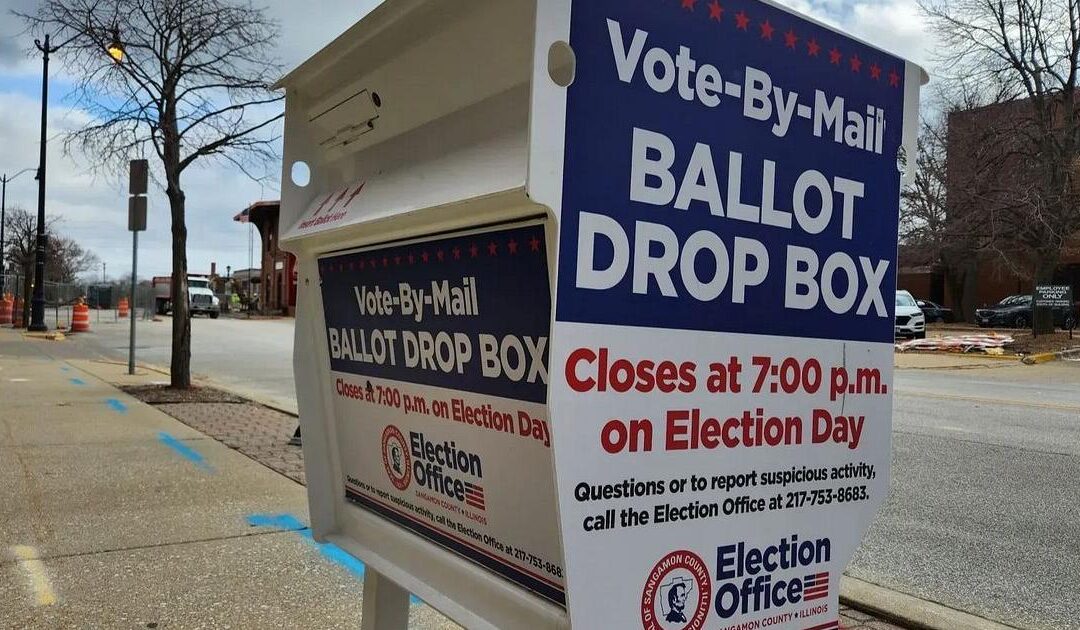
(The Center Square) – A bipartisan election integrity group is warning that the city of Madison’s argument for not counting nearly 200 absentee ballots in the 2024 presidential election could set a dangerous precedent in the state.
Law Forward filed a class action lawsuit in March on behalf of absentee voters in Madison after 193 absentee votes were found sealed in courier bags and had not been counted in the Nov. 5, 2024, election.
The city of Madison recently argued in a motion to dismiss that state law establishes a process to absentee vote but states that absentee voting is not a constitutional right that must be protected.
“The argument made by the city of Madison and former Clerk Witzel-Behl would set a dangerous precedent as we enter a midterm year with mail-in balloting across the country in the forefront of voter’s minds,” Democracy Defense Project – Wisconsin board member Mike Tate said in a statement. “Over and over again, claims of fraud have been shown to be minimal and are subsequently prosecuted, while cases of human error such as this result in more disenfranchised voters in our state.
“We must come together to improve our system instead of causing confusion through misinterpretation of a law meant to make absentee requirements clear.”
The Wisconsin Constitution states that voting is a constitutional right but that absentee ballots are a privilege exercised outside the traditional safeguards of a polling place.
“The legislature finds that the privilege of voting by absentee ballot must be carefully regulated to prevent the potential for fraud or abuse; to prevent overzealous solicitation of absent electors who may prefer not to participate in an election; to prevent undue influence on an absent elector to vote for or against a candidate or to cast a particular vote in a referendum; or other similar abuses,” the constitution states.
The Madison clerk and city also argue that no part of the law allows for monetary damages and that the only recourse voters have is to file a complaint with the Wisconsin Elections Commission.
“The fact that Plaintiffs’ ballots were not counted is unfortunate,” the brief posted by Votebeat states. ‘But it is the result of human error, not malice. And that human error was not a violation of the Plaintiffs’ constitutional right to vote.”

Report: RTW states lead job growth, lower pension debts

Report: RTW states lead job growth, lower pension debts

(The Center Square) – The latest look at right-to-work states shows big differences in jobs, wages and state debt.
The National Institute for Labor Relations Research released its report this week on the benefits of right to work.
“Right to work continues to free employees by helping protect choice and creating new opportunities,” the report stated. “The cold, hard facts about the freedom and prosperity of right to work are more important now than ever.”
The report notes that between 2014 and 2024, right-to-work states saw the number of people employed jump by 16.4%, compared to 7.4% in forced unionization states.
The growth in manufacturing jobs was even more pronounced. The report states that right-to-work states saw a 10.4% increase in manufacturing jobs, compared to a .2% decrease in forced unionization states.
Total payroll growth was also larger in right-to-work states by more than 7%. The report shows an 8.7% difference in disposable income between right-to-work states and forced unionization states.
“The 26 right to work states – those that protect workers from being required to pay union dues just to keep a job – enjoy substantial advantages over the 24 states that still authorize union bosses to force workers to pay up or be fired,” the Institute said in a statement.
Those numbers don’t include benefits from recent right-to-work states like Wisconsin.
Wisconsin lawmakers approved a right-to-work plan in 2015.
Michigan approved right to work in 2013, West Virginia banned forced union dues and fees in 2016, and Kentucky became right to work in 2017. The Institute said those numbers were excluded from its “multi-year analyses.”
Michigan, however, is no longer a right-to-work state. Lawmakers there repealed its law in 2023, and right to work ended in 2024.
Wisconsin could be next. Democrats have fought against right to work in Wisconsin since 2015 and continue to fight it.
Many in the state expect the liberal-majority Supreme Court to overturn right to work in the near future. The court is currently working through a challenge to the state’s collective bargaining limits, known as Act-10, and many expect the justices to take up right to work after that.

Wisconsin state tax collections up 4.9% for fiscal year through November

Wisconsin state tax collections up 4.9% for fiscal year through November

(The Center Square) – Wisconsin has collected 4.9% more in general purpose revenue taxes and fees through November compared to the year before, according to recently released numbers from the Wisconsin Department of Revenue.
The increased collections come as Wisconsin is in the first year of a $114.2 billion two-year budget that is projected to spend down the state’s budget surplus to $770.5 million by June 30, 2027.
The surplus was $4 billion heading into the two-year budget.
The November numbers showed that sales tax collections were up 4.9% over the start of the fiscal year from the year before while income tax collections were up an adjusted 6.5%. Income and sales tax represent nearly $7 billion of the $8 billion collected by the state for the fiscal year through November.
The increased collections come as state lawmakers continue to look at income tax cuts, including cutting state income tax on overtime to match a federal government executive order and Gov. Tony Evers’ push to send $1 billion in state tax funds to local governments that agree to freeze property tax levies.

Wisconsin business owners cool on state economy, skeptical of U.S. economy

Wisconsin business owners cool on state economy, skeptical of U.S. economy

(The Center Square) – Most business owners in Wisconsin say the state’s economy is okay, but they’re not going beyond that.
Wisconsin Manufacturers & Commerce, the state’s largest business group recently released its first Wisconsin Employer Survey for 2026, measuring the confidence Wisconsin business leaders have in the state’s economy.
“Seventy-three percent saying it was ‘moderate,’ versus 19% saying it was either ‘very strong’ or ‘strong’,” WMC said in a statement. “Just 8% rated the Wisconsin economy was ‘weak.’”
While that is not great, WMC said the view of Wisconsin’s economy is much better than the business owners’ view of the national economy.
“When asked to rate the current state of the U.S. economy, 60% said it was ‘moderate,’ while 18% said it was either ‘very strong’ or ‘strong,’ and 21% said it was ‘weak.’.”
But WMC said 70% of business owners said the country is headed in the right direction, compared to just 46% of owners who said Wisconsin is headed in the right direction.
“This survey reveals that we have something of a bipolar economy,” WMC President & CEO Kurt R. Bauer said. “We have some good news and some bad news, but hiring trends are a sign that the economy is strengthening.”
Perhaps the best news in the Employer Survey is that most business are making money.
“Ninety percent of respondents said they were profitable in the last 6 months of 2025, up from 86% in the summer. Ninety-six percent predict they will be profitable during the first half of 2026,” WMC added.
Still, business owners in the state are worried about health care costs, and labor availability.
“Sixty percent [of business owners] said they were having trouble finding workers, up from 52% six months ago, which was the lowest percentage in a decade,” the survey revealed. “For context, that metric peaked at 88% in the winter of 2022.”
“Overall, Wisconsin employers seem to be lukewarm,” Bauer said. “Although we see hints of optimism like increased hiring and a relatively good outlook for the U.S. economy, businesses are still frustrated with high healthcare costs and finding capable employees.”

Wisconsin data center bill receives first public hearing

Wisconsin data center bill receives first public hearing

(The Center Square) – A group of Wisconsin Republicans are pushing a data center bill that would require utility rate increases are paid by data centers and not the general public, that the centers used closed-loop cooling systems to limit water use and that they submit annual water-use reports to the Department of Natural Resources.
Assembly Bill 840 had its first public hearing in the Assembly Committee on State Affairs on Wednesday.
“Wisconsinites deserve certainty that their electric bills won’t go up simply because a data center moves into our state,” Rep. Jerry O’Connor, R-Fond du Lac, said in a statement on the bill. “AB 840 is designed to protect all Wisconsin consumers, not just those who live near a data center.”
The bill would charge the state’s Public Service Commission with ensuring that utilities do not increase rates based on data center energy use.
The bill comes as Microsoft – which is building a pair of data center projects worth a combined $7 billion at the former Foxconn site in Racine County – made similar promises to pay for energy costs itself, limit water use and replenish more than it uses, create jobs and that the company won’t ask for reduced local property tax rates.
The Wisconsin data centers are in a tax increment district, meaning property tax value increases from the development will be eligible to be captured and returned to Microsoft instead of going to the general property tax base. Wisconsin data centers are also excluded from having to pay sales tax on electricity or construction materials.
“We’ll pay our full and fair share of local property taxes, adding revenue to local towns and cities,” Microsoft wrote in a press release authored by Vice Chair and President Brad Smith. “This is obviously critical to supporting the growth a local community often experiences when data centers are built or expanded. And most importantly, at a time when many communities are facing revenue shortages that threaten vital public assets like hospitals, schools, parks, and libraries, we know from experience that this can make a big difference.”
The bill also mandates on-site renewable energy generation to reduce strain on the electric grid. Evergreen Action, an advocacy group, warned against the approach, saying it would force data centers to “rely solely on on-site renewable generation, blocking them from using off-site wind and solar projects that deliver cheaper, scalable clean power” in a statement from State Advocacy Director Courtney Brady.
“Most of what we do in everyday life involves a data center in some type of way – using the internet, cell phone, artificial intelligence, and cloud storage – which is why this bill is so important,” Rep. Alex Dallman, R-Markesan, said in a statement. “It balances the demand for data centers while ensuring that data centers do not interfere with our rights, pocketbooks, or natural resources. I am looking forward to making sure this bill gets through the legislative process.”

Wisconsin felony grooming law headed to Senate

Wisconsin felony grooming law headed to Senate

(The Center Square) – A bill that would make grooming a felony in Wisconsin is now headed to the Senate.
Rep. Amanda Nedweski, R-Pleasant Prairie, said she was compelled to propose the bill after the Kenosha case of a teacher that led to 12 misdemeanors and sentence of 450 days in jail and three years of probation.
During that case, Nedweski said prosecutors were looking for an enhanced charge and she began working to create a specific grooming law. The legislation was then introduced soon after a series of investigative stories from The Capital Times highlighted how state Department of Public Instruction investigations into 200 cases of sexual misconduct and grooming in Wisconsin schools had been concealed.
Assembly Bill 677 passed the Assembly with a 93-6 vote and is scheduled for the Senate Committee on Education.
DPI supported the legislation, saying that it aggressively moves to act swiftly and decisively to protect children and “a clear statutory definition of grooming will support that work, giving the department and law enforcement additional means to protect students.”
“AB 677 treats grooming as the serious crime that it is, closing the gap in state law and giving prosecutors greater ability to hold predators accountable and give families and victims the justice that they deserve,” Nedweski said in a statement after the bill passed the Assembly. “This bill specifically targets the intentional, calculated, and manipulative behaviors that predators use to exploit our children’s innocence.”
The Kenosha case involved former teacher Christian Enwright, who was convicted of the misdemeanors after evidence of thousands of text messages over two school years with a then-12-year-old student were shown in court.
The new law would make grooming a felony charge that could lead to 10 years in prison, with further penalty if the offender was in a position of trust over the victim, if there are multiple victims, or if the victim has a disability.
The bill defines grooming as “a course of conduct, pattern of behavior, or series of acts with the intention to condition, seduce, solicit, lure, or entice a child for the purpose of engaging in sexual intercourse or sexual contact or for the purpose of producing, distributing, or possessing depictions of the child engaged in sexually explicit conduct.”
“I have seen firsthand that grooming is frequently a deliberate, gradual process; one that may unfold over weeks or months and often occurs through digital communication, emotional manipulation, isolation, or the abuse of trust,” bill sponsor Sen. Jesse James, R-Thorp, wrote in testimony for the bill. “By the time enticement or physical contact occurs, substantial harm has already been done. This bill allows law enforcement to intervene earlier in that process, when prevention is still possible.”

Critics: Evers’ tax relief plan doesn’t cover past tax, spending increases

Critics: Evers’ tax relief plan doesn’t cover past tax, spending increases

(The Center Square) – The reaction from Wisconsin Republicans to Gov. Tony Evers’ property tax relief plan was immediate, and almost unanimous.
Republican candidate for governor Tom Tiffany said Evers’ $1.3 billion in tax relief is not enough to cover the costs of the property tax increases his 400-year school funding order caused.
“It’s a Band-Aid,” Tiffany said during an interview Wednesday on News Talk 1130 WISN. “[Gov. Evers] will do anything to pump more money into schools.”
Evers this week proposed a property tax relief plan as a response to the property tax increases Wisconsin homeowners are seeing this year.
He also defended his 400-year school funding increase as necessary, saying Republicans “failed” for years to spend more on public education.
Will Flanders, with the Wisconsin Institute for Law and Liberty, said that’s not the case.
Flanders on Tuesday took to social media to point out that Evers’ 400-year school funding increase could raise property taxes across the state by $1.5 billion in just the next four years.
“A lot of concern about property taxes & the 400-year veto this year. But this is just the beginning. If districts tax to the max, it’s an additional ~$250 million per year. By 2030, taxpayers will be on the hook for ~$1.5 billion in new costs,” Flanders wrote. “Even if a district didn’t tax to the max this year, the new authority remains and snowballs.”
Quinton Klabon, with the Institute for Reforming Government, said taxes will likely snowball because many local schools “binged” on federal money during COVID and have not rolled that spending back.
“They did not let go of staff, even as enrollment collapsed, and, in many cases, they even hired a lot more staff! The solution: raise your property taxes,” Klabon said. “[For example] when teacher health care costs rise 12% and student enrollment drops 3%, they blow holes in their budget and raise your property taxes through referendum.”
Tiffany said Wisconsin needs to get rid of the 400-year school funding increase, freeze property taxes, and spend much less across all levels of government in order to get the state’s tax bills under control.
“There is a whole series of things that can be done here to get us back to fiscal responsibility,” Tiffany added. “We spend plenty of money. We are in the top 10 in property taxes in the United States. We spend plenty of money.”

Wisconsin Assembly vote on sports wagering bill could come soon

Wisconsin Assembly vote on sports wagering bill could come soon

(The Center Square) – An Assembly vote is expected to come early this year on a bill to allow online sports wagering in Wisconsin but it’s less certain when the full Senate will take up the bill.
Both Assembly Speaker Robin Vos, R-Rochester, and Majority Leader Tyler August, R-Walworth, a bill sponsor, told media outlets they expect to hold a vote on the bill that was pulled from the Assembly calendar late last year.
The proposal would change the state’s definition of “bet” to allow the state’s tribes to offer mobile sports wagering if the bettor is in Wisconsin and the sportsbook servers are on tribal land, an amendment to current compacts allowing for casino gambling and sports wagering on tribal lands despite the state’s ban on betting.
“This legislation is really about allowing Wisconsin tribes to enter the same marketplace and compete,” August told Spectrum News.
August did not expand on what hang-ups led to the vote delay in November and his staff did not respond to interview requests or questions on what amendments could be coming to the bill.
“There’s really no rush on this,” August said in November. “… I had a conversation with a couple members over the weekend that brought up some points that I hadn’t considered yet, so we’re going to work through those and I expect that we will be voting on it early next year.”
Since the delay, both Fanatics and DraftKings have opened prediction markets in the state and FanDuel could be next.
Kalshi already had a prediction market related to sports in the state and is facing a lawsuit from the Ho-Chunk Nation that a national coalition of tribes recently joined.
August previously cited prediction markets as a “gray area” in state law as entities that are not subject to state laws or state taxes.
“Along with offshore, there’s also what are called prediction markets, a handful of which have already launched in Wisconsin,” August told Spectrum News. “These are extremely similar to online gaming. They’re regulated at the federal government level and so, these things are already happening and, unfortunately, or tribal partners aren’t able to participate in it right now.”
If passed, the bill would need to then be approved by the Senate and signed by Gov. Tony Evers, who has indicated he would support the bill.
Then Evers’ Administration would have to reach compacts with the tribes on topics such as state revenue share, which would then be subject to federal approval before legal sports wagering can launch.
“If you are a Republican who doesn’t necessarily trust Tony Evers on this, or if you are a Democrat who doesn’t necessarily trust Donald Trump on this, the good news is they actually both have to agree that this is the right way to do things here in Wisconsin and I’m confident that we can come to that sort of agreement,” August said.
Sen. Chris Kapenga, R-Delafield, is one lawmaker who opposes the expansion of sports wagering in Wisconsin beyond the current in-person allowances on tribal land. He said he will vote “No” on the bill if it reaches the Senate floor.
Kapenga wrote in a recent newsletter that legislative offices “got slammed with emails urging opposition” before the Assembly vote delay. He compared the arguments saying that sports wagering is already happening in the state to the arguments supporting the legalization of marijuana.
“Besides the dangers of gambling addiction and its social costs, I’m not a fan of funneling more money to one party that holds a monopoly on sports wagering in Wisconsin,” Kapenga wrote. “The Governor has expressed support for this proposal and has tremendous power over its outcome. I certainly wouldn’t want to bet the house on him doing the right thing, and I will be watching to see if this topic picks up steam in January.”

Evers wants to send $1B from state to local governments that freeze property tax

Evers wants to send $1B from state to local governments that freeze property tax

(The Center Square) – Wisconsin Gov. Tony Evers wants to rehash his proposal to send $1 billion of state tax money to local entities that agree to freeze property taxes.
Republican leaders, however, say that it is a request to backfill after Evers’ partial veto raised property taxes on Wisconsin residents for the next 400 years.
Evers said Tuesday that he would again push for the property tax proposal that legislative budget leaders rejected in the last budget negotiations. Evers plan included sending the $1 billion in state funds to local governments along with spending $237 million on property tax relief programs for “veterans, seniors, individuals with disabilities, and others struggling to afford the property taxes.”
Evers blamed Republicans for 7.8% statewide average increases in K-12 property taxes that Wisconsin Policy Forum said were due to referenda and Evers’ partial veto, which allows school districts to make a $325 per student per year property tax funding increase for the next 400 years instead of just the next budget.
“Republicans want to blame my 400-year veto (for) property taxes going up,” Evers told media at a press conference. “The problem with that is … Wisconsinites were going to referendum for an increasing number of years, long before I became governor.”
The $325 per student increase will allow for an approximately $250 million increase in property tax levies each year, which adds up to a $1.5 billion increase by 2030, according to Will Flanders, research director for the Wisconsin Institute for Law and Liberty.
“After months of ignoring our warnings of massive property tax increases due to his outrageous 400-year veto, the governor is now asking us to backfill his mistake,” Assembly Speaker Robin Vos said in a statement on Tuesday. “We will pass a repeal of his 400-year veto and we ask him to urge Democrats in the legislature to join that effort.”
This year’s Wisconsin property taxes saw the largest percentage increase in K-12 since 1992, a jump from the 5.7% increase a year ago. The K-12 costs on property tax bills are more than 50% of the property taxes collected statewide.
“Recent property tax increases fall primarily on his shoulders and unless he’s willing to fix that, taxpayers in Wisconsin will be driven out of their homes due to these unaffordable increases,” Vos said.

Wisconsin free marketers push regulation rollback ahead of legislative Session

Wisconsin free marketers push regulation rollback ahead of legislative Session

(The Center Square) – The latest plan to jumpstart Wisconsin’s economy has nothing to do with taxes or state spending.
A statewide coalition of free market groups is taking aim at Wisconsin’s volumes of regulation.
“Wisconsin has 165,000 restrictions on the books. If you think about it this way these are rules that have words that you must do something or you cannot do something but it’s really the only good way to measure it,” Wisconsin Institute for Law and Liberty policy director Kyle Koenen said on News Talk 1130 WISN. “When you look at Wisconsin we’re not in a great place nationally ranked 13th overall, and 13th is not great. In the Midwest, we have a second highest level of regulation, second only to Illinois.”
Koenen said rolling back just 20% of Wisconsin’s regulations could save nearly $2.5 billion a year or close to $23 billion over a decade.
WILL is part of the coalition that includes the Wisconsin Manufacturers and Commerce, the IRG Action Fund, and the Associated Builders and Contractors in Wisconsin.
There are four pieces of legislation at the Capitol that directly target regulations.
* AB 274/ SB 277 would require lawmakers to review every single one of Wisconsin’s regulations every seven years.
*AB 275/ SB 276 would help people challenge burdensome regulations by allowing them to recover attorneys’ fees for any legal challenges.
*AB 276/ SB 275 would limit the number of new regulations by requiring any new rules be limited to one-per-proposal.
*AB 277/ SB 289 would require state agencies to offset the cost of any new regulations by ending old regulations or eliminating old rules. If lawmakers.
Koenen said that is necessary because the Wisconsin Supreme Court last year issued a ruling that opened the door to a lot more regulations, with a lot less input from legislators.
“Before [that] decision, the legislature had tools to pause or block agency rules that exceeded their statutory authority. After the decision, those tools are all gone,” Koenen added.
This is not the first time Wisconsin has seen a Red Tape Reset proposal. Republican candidate for governor Tom Tiffany is making a similar plan part of his campaign.

Wisconsin hospital price transparency bill’s next stop will be Senate floor

Wisconsin hospital price transparency bill’s next stop will be Senate floor

(The Center Square) – A bill that would require Wisconsin health care providers to transparently post a list of the prices for their 300 most common procedures will next head to the full Senate after it passed committee on a 3-1 vote.
Hospital groups and the Wisconsin Hospital Association opposed the bill, saying it’s a repeat of federal policy already in place, but bill sponsors say the topic is popular with the public and adds teeth to requirements that hospitals and providers comply and are transparent about the cost of services.
Sen. Julian Bradley, R-New Berlin, told The Center Square on Monday that the bill sponsors are highly supportive of doctors, nurses and providers but the measure is requiring administrators to show patients how much a procedure would cost before receiving the service instead of receiving a surprise bill total later.
Bradley said that he sat down at a computer with those who oppose the bill and showed them how providers in the state do not currently show the prices on their websites.
“There’s no other industry in the world where you find out the price of something after you’ve purchased it and it’s been delivered,” Bradley said. “This is about transparency.”
Bradley added that the bill directly follows the federal guidelines in President Donald Trump’s executive order, so it isn’t duplicative, but it will put those requirements in place permanently in Wisconsin.
He said that sponsors amended the bill to delay fines for hospitals that are actively working to comply with the requirements after meeting with them.
“We’ve tried to overcome every possible objection that the hospitals can come up with and, keep in mind, the only people in opposition of this are the hospitals and the hospital association,” Bradley said.
Hospitals, meanwhile, say that they are being transparent with patients on pricing.
“Hospitals across Wisconsin have provided patients with price transparency tools that far exceed their obligations under federal regulation,” the WHA said in testimony against the bill. “Due to advancements in technology and integration with electronic health records systems, hospitals and health systems have increasingly utilized “push” estimates to patients. A ‘push’ estimate is proactively sent to patients in advance of their service without the patient requesting it.”
Bradley said the largest difference between Senate Bill 383 and the federal requirements is that the Wisconsin bill requires a button to be prominently displayed on a provider’s website for price transparency.