pewaukee
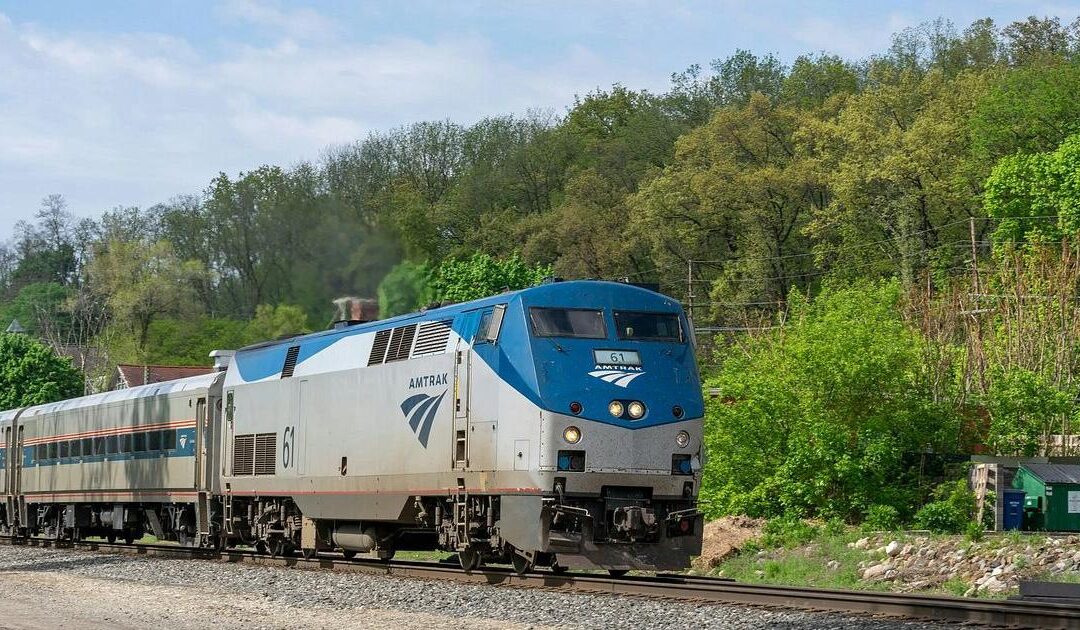
Evers, WisDOT want grant expanding train service from Milwaukee to Madison

Evers, WisDOT want grant expanding train service from Milwaukee to Madison

(The Center Square) – Wisconsin Gov. Tony Evers, the state’s Department of Transportation and Amtrak have applied for a federal grant to expand the Amtrak Hiawatha train line into Dane, Jefferson and Waukesha counties.
The announcement did not include a cost to state taxpayers or the amount requested but did acknowledge it includes capital costs “to improve track capacity and speeds for passenger service, enhance safety, and increase existing service reliability.”
The plan involves using existing rail lines and building infrastructure to expand the two daily Hiawatha Chicago to Milwaukee trains to Madison, Watertown and Pewaukee.
Madison last had passenger rail service in 1971. Madison completed a Passenger Rail Station Study last year that looked at eight potential sites for a train station.
State leaders have long debated funding a passenger line between Madison and Milwaukee with former Gov. Jim Doyle applying for grants and agreeing to a deal to build two trains for a high speed line.
Gov. Scott Walker then turned down the $810 million in federal stimulus funds for the project, citing the long-term maintenance costs to maintaining the line, which could be used instead on road repair. He asked U.S. Dept. of Transportation Secretary Ray LaHood to spend the money on roads and bridges instead.
Waiker maintained a website, notrains.com, during his campaign for governor. The money was then granted to other states for train projects.
The company that built the trains, Talgo, reached a $50 million settlement with the state over the trains, which ultimately went to Nigeria.
“My administration has been working hard to fix the darn roads, make sure Wisconsinites can get from Point A to Point B safely, and expand reliable transportation alternatives to make it even easier to get to and from work, school, home, and everywhere in between,” Evers said in a statement. “After years of neglect and disinvestment, Wisconsin’s roads, bridges, and infrastructure had fallen into disrepair, and we’ve spent seven years working to reverse that trend.
“The opportunity to expand passenger rail has haunted Wisconsin for a generation because of a short-sighted political stunt—that decision cost our state dearly, and we want to right that wrong.”
Evers and Amtrak cited numbers from the Borealis train service, which saw more than 416,000 passengers between its opening in May 2024 and this May.
Wisconsin warns of childcare cost increases

Wisconsin warns of childcare cost increases

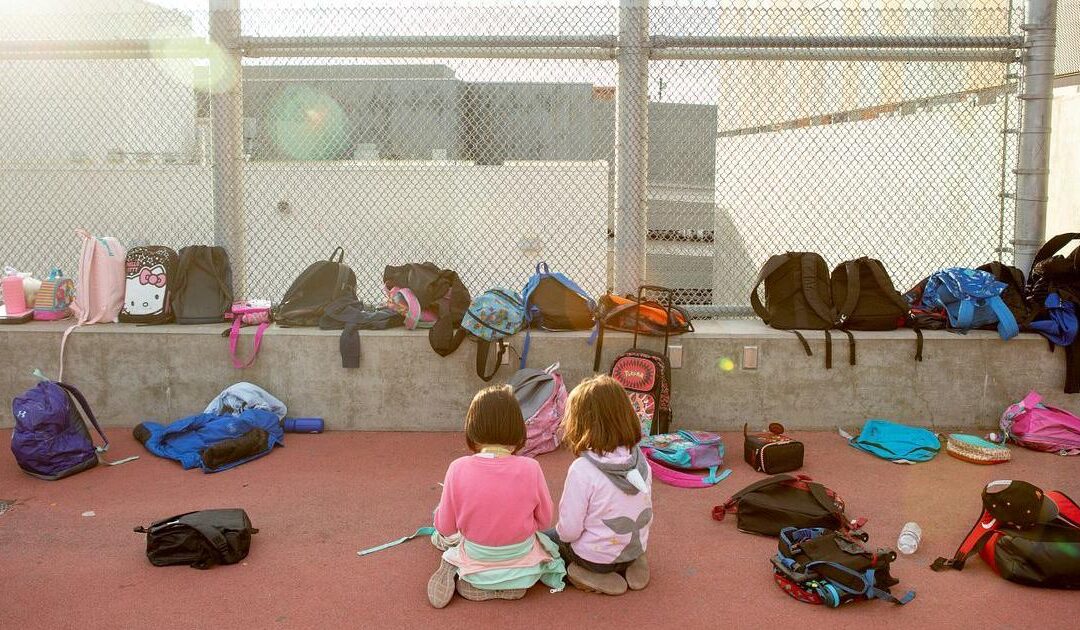
(The Center Square) – Wisconsin parents already paying $17,400 a year for infant care face higher bills as a $110 million federal childcare subsidy ends Tuesday, the state’s child welfare agency warns.
The state’s Department of Children and Families said the end of the federal bridge payment program is almost certain to drive costs higher.
The total taxpayer cost for the bridge payment program in Wisconsin is $110 million, running from July 2025 to Tuesday’s scheduled end.
The program makes monthly payments directly to providers.
Reports show the end of the program could be any increase in childcare expense between $1,300 and $2,600 for the average Wisconsin family.
“Childcare costs in Wisconsin significantly outpace inflation,” the department wrote in its report. “Families with an infant in center-based care are seeing an average 8% increase in monthly tuition prices, while families with an infant in family-based care are seeing an average 13% increase.”
“At the gas pump and grocery store, everyone is feeling the national affordability crisis. But the end of Child Care Counts and Bridge payments are leaving families with growing child care bills in addition to everything else,” DCF Secretary Jeff Pertl said. “With childcare costing more than UW tuition and as much as a mortgage, families need us to build on these investments and permanently lower costs.”
The bridge payment program is the COVID-era federal program that sent money to providers across the country. It was meant to be a temporary COVID subsidy.
DCF is also is pointing to a recent Market Rate Survey that shows childcare prices are already high in the state.
“The average annual cost for full-time infant care is now $17,400 in center-based programs (22% of median household income) and $13,000 in family-based programs (17% of the median household income) in Wisconsin,” DCF said.
Republicans in Wisconsin tried to head-off childcare price spikes in 2023, but Democrats at the Capitol balked at their plan.
Republican lawmakers introduced a package of childcare reforms that would have allowed parents to save up to $10,000 tax-free for childcare costs. The package also included regulatory changes to open more spots in daycares and allow some home-based daycare centers to hire people as young as 16.
Then-Senate Democrat Leader Melissa Agard, D-Madison, said the GOP plan was “completely insufficient in addressing Wisconsin’s childcare crisis.”

Wisconsin 1 of 9 states to avoid SNAP payment error rate penalty

Wisconsin 1 of 9 states to avoid SNAP payment error rate penalty

(The Center Square) – Wisconsin was one of nine states to avoid paying penalties for having a Supplemental Nutrition Assistance Program error rate on payments of more than 6% in fiscal 2025.
Wisconsin’s 5.72% error rate fell below the 10.62% payment error rate average in the U.S.
Only South Dakota (2.45%), Idaho (3.85%), Wyoming (3.95%), Kentucky (4.7%), Iowa (5.34%), the U.S. Virgin Islands (5.36%), Vermont (5.38%), Utah (5.54%) and Nebraska (5.9%) avoided the penalty.
Wisconsin’s penalty would have been $205.5 million. Wisconsin’s 2024 error rate was 4.47%.
Gov. Tony Evers’ office sent a press release claiming that error rates “do not measure fraud, are based on unintentional mistakes states do not control, and no state will ever have a zero-percent error rate.”
Wisconsin Act 116, signed at the end of March, provided $72 million in funding toward SNAP administration in the state. But the error rate numbers announced this week were for the fiscal year ending on Sept. 30, 2025.
“Wisconsin’s low FoodShare error rate is a reflection of the hard work and expertise of all the people across our state who run one of the best SNAP programs in the nation,” Wisconsin Medicaid Director Amanda Dreyer said in a statement. “I applaud the incredible staff and partners who make this program possible. We are committed to doing what it takes to help every Wisconsinite who needs assistance buying food and, at the same time, meet the highest standards of accuracy. Thank you to everyone who helps feed Wisconsin families.”

Wisconsin unemployment rate decreases in all 72 counties

Wisconsin unemployment rate decreases in all 72 counties

(The Center Square) – Wisconsin saw the unemployment rate drop in all 72 counties and all 13 of the statistical metropolitan areas in May while only the La Crosse-Onalaska area saw unemployment remain the same year over year and the other 12 metropolitan areas saw a yearly decrease in unemployment.
The local data follows last week’s announcement that the statewide unemployment rate had dropped 0.1 percentage point to 2.4% in May while year over year employment went up 5,800 for the month.
Wisconsin Department of Workforce Development Office of Economic Advisors Section Chief Scott Hodek called last week’s overall numbers “a bit of a mixed bag” that “speaks to the strength of the U.S. economy that we’re still seeing growth” despite the war in Iraq and U.S. tariff implications.
Unemployment rates went down in 67 of the state’s 72 counties year over year.
Fitchburg has the lowest unemployment rate of the state’s largest 35 cities at 2.3% in May while Milwaukee was the highest at 4.1% and Racine was next at 3.9%.

Bangstad loses first beer bust appeal, promises F-DOR beer

Bangstad loses first beer bust appeal, promises F-DOR beer

(The Center Square) – Kirk Bangstad is offering a new, profane beer as he continues to battle the state of Wisconsin over a bootlegging bust.
Bangstad, the one-time candidate for governor, took to Facebook to update his followers on his court battle to get his seized beer back.
“Dane County Circuit Court Judge Brian Jones, a brand new judge that comes from the Department of Public Instruction, denied our Emergency Injunction to retrieve our stolen beer back from the Wisconsin Department of Revenue,” Bangstad wrote. “I think his decision was fundamentally flawed, but I respect him as a judge because he seemed to really try hard to understand the nuances of Wisconsin’s very complicated liquor laws before making his decision.”
Bangstad claims the state’s Department of Revenue seized about $25,000 worth of beer earlier this month. The DOR has not offered any specifics about the case, but Bangstad said the beer was seized because he brewed it in Illinois and didn’t pay the required excise taxes to sell it in Wisconsin.
“In our state, if Wisconsin brewery ‘A’ contracts with Wisconsin brewery ‘B’ to make its beer, Wisconsin brewery ‘A’ can serve it at their taprooms. If Wisconsin brewery ‘A’ contracts with Illinois brewery ‘A’ to make its beer, Wisconsin brewery ‘A’ can’t serve it at their taprooms,” Bangstad added. “Unfortunately, we believe the Wisconsin Department of Justice’s attorney buried Judge Jones in other complaints against us that made him lose sight of this clear violation of our rights under the Dormant Commerce Clause of the 21st Amendment.”
Bangstad has claimed since the bust earlier this month that he is being targeted by the state because of his opposition to Gov. Tony Evers, and his opposition to the powerful Tavern League.
But on Tuesday, Bangstad turned his anger toward the Department of Revenue.
“We’re going to call the beer we’ve made in the last few weeks “F the DOR,” and it will only be available in half barrels at our taprooms in Madison and Minocqua because we don’t have enough money to package it up and put it into cans – given that a ton of the beer we’ve already made for the summer season is sitting in ‘beer jail’ right now,” Bangstad wrote on Facebook.
Bangstad said he plans to continue his court case to try and get his beer out of “beer jail,” but he didn’t say how long he expects the case to take.
Bangstad entered the Democrat race for governor this year, but he failed to make the ballot.

Fourth of July food costs see 7.5% increase in Wisconsin

Fourth of July food costs see 7.5% increase in Wisconsin

(The Center Square) – Food will cost more this Fourth of July holiday, according to a new survey from the Wisconsin Farm Bureau.
The group showed the cost of 12 food items to hold a summer cookout for 10 people would cost $75.50, the highest cost since the Marketbasket survey began in 2013 and 7.5% more than last summer. Nationally, that same cost estimate from the American Farm Bureau is $73.82, up 4% from last year.
The largest cost increase was from ground beef, which cost $7.30 per pound, is a 23.3% increase from 2025, which the group attributed to cattle supply and demand for beef.
“Wisconsinites can expect to see a higher total when shopping for their Fourth of July barbeque,” WFBF Senior Director of Public Relations Cassie Sonnentag said in a statement. “From availability to inflation, we are seeing increases across many of the food items on the shopping list.”
U.S. consumers have high demand for beef with one-third ranking it as their top protein choice and 75% eating beef weekly, according to Beef Checkout.
Each year, there are $422 million worth of ground beef sales during Fourth of July week and $337 million for Memorial Day.
“While consumers are seeing higher prices due to limited cattle supplies and strong demand, ground beef continues to be a versatile, nutritious protein that can stretch across multiple meals,” Wisconsin Beef Council Executive Director Tammy Vaassen said in a statement. “Looking for sales, stocking up when prices are lower and freezing extra product are great ways to save.”
Items such as fresh strawberries and vanilla ice cream saw 25% increases over the year as well.

Microsoft’s 1st Mt. Pleasant data center fully online with 500 employees

Microsoft’s 1st Mt. Pleasant data center fully online with 500 employees

(The Center Square) – Microsoft says that it has 550 full-time employees on site at the recently completed Fairview data center in Mount Pleasant.
The company also says that the number of employees will “grow over time” to an expected 800 when a second data center comes online in 2028.
The employers were defined as “on site” employees of both Microsoft and its contractors.
The project is the first of the $20.6 billion in data centers that the company has planned in the state.
Microsoft says that it spent $4.7 billion between 2024 and 2028 on the construction of hyper scale data centers in the state.
Microsoft is building an adjacent second data center that is scheduled to open in 2028. The company said that 10,000 construction workers were involved in the Fairview project.
“With our Fairwater data center now fully operational, Wisconsin is now home to the world’s most powerful supercomputer,” Microsoft Vice Chair and President Brad Smith said in a statement. “This campus will help power the next generation of AI innovation globally and provide long-term economic opportunity locally through hundreds of highly skilled jobs and continued investment in the region.”
Data centers have been unpopular in polling both with Wisconsin voters and nationally.
A recent Center Square Voters’ Voice Poll showed that voters believe data centers on not worth the strain on local electricity, water and infrastructure and that the negatives outweigh the importance for national security and competing with China.
The poll also found that voters believe local governments should be cautious about new data centers and those concerns outweigh the jobs, tax revenue and support for America’s digital economy that they bring.
Microsoft is expected to be the largest beneficiary of a wide-ranging Wisconsin sales tax exemption on everything from construction materials to electricity that is estimated to lose the state $1.5 billion in initial foregone state sales tax from four data center projects, according to a new Legislative Audit Bureau report.
In addition, the state will lose $369 million annually once construction on the projects are complete.
Wisconsin’s Department of Revenue originally estimated the value of the incentives would be $8.5 million for the full multi-year construction of a facility and $735,000 recurring afterward.
But hyper-scale data centers have changed that math with Microsoft alone announcing more than $20.6 billion in data centers in the state.
The state is expected to have $36.9 billion in data centers from just four companies with the state forgoing an estimated $40 million in sales tax for every $1 billion in company investment.
OpenAI, Oracle and Vantage Data Centers have announced more than $15 billion in data center investments in Port Washington. Epic Hosting is expected to spend $347 million in Verona. Meta has announced a $1 billion project in Beaver Dam.

New ads sharpen focus in Wisconsin’s race for governor

New ads sharpen focus in Wisconsin’s race for governor

(The Center Square) – The latest ads in Wisconsin’s race for governor are zeroing in on what is expected to be the biggest issue in November’s election.
Three candidates released new ads this week.
Democrat Joel Brennan released a statewide televisoon ad that both introduces himself and frames him as the experienced candidate in the Democrat race.
“I’m Joel Brennan and I’ve got real plans to move Wisconsin forward,” Brennan said during the ad where he’s playing basketball with his son. “Shooting to expand BadgerCare to make healthcare more affordable. Guarding against Trump’s chaos and defending our democracy. Blocking corporations from buying-up our homes. And changing how our schools are funded.”
The ad is Brennan’s second campaign commercial.
Brennan is polling at the bottom of the now six person race for the Democrat nomination. Former WEDC boss Missy Hughes quit the race on Monday.
Hughes, who like Brennan polled in the single digits, said she didn’t see a path to victory.
The second ad came from Milwaukee County Executive David Crowley. His commercial features him inside a screen on a gas pump and reiterates his push to end Wisconsin’s minimum-markup law.
“It’s called the Unfair Sales Act, but all it does is unfairly raise prices on us,” Crowley explained. “As governor, I’ll stop it. That’s something we can all get pumped about.”
Crowley has already said he wants to end minimum-markup and save drivers in the state nearly 40 cents per gallon. But critics have been quick to say Crowley could not end the law on his own and point out that he never introduced legislation to end minimum-markup while he was a state lawmaker.
The final ad came from Republican Tom Tiffany.
It is a 60 second radio ad that focuses his message on schools, healthcare price transparency and affordability.
“It’s time we stop pointing fingers, and start fixing problems,” the ad begins. “I’ve watched Madison continue to fail working folks who see money vanish from their paychecks. Wasted on reckless spending and fraud.”
The ad is more serious and focused than Tiffany’s earlier campaign commercials, including his last two that both featured cows.
Tiffany is the only Republican candidate running for governor this year.
Frontrunner Francesca Hong has not yet released a statewide commercial for her campaign, but rising third place candidate Sara Rodriguez has.

School choice advocates questions effort to kill education scholarship plan

School choice advocates questions effort to kill education scholarship plan

(The Center Square) – School choice supporters are questioning why one of Wisconsin’s members of Congress is pushing so hard to kill the new federal Education Freedom Tax Credit.
Milwaukee Democrat Gwen Moore last week introduced a piece of legislation to end the tax scholarship program and redirect the money earmarked for scholarships toward direct aid to public schools.
“Instead of vouchers and tax cuts for billionaires, we could be investing more in Title I funding to serve low-income students,” Moore said. “We could put these monies into Head Start and special education. We could be securing universal school meals for our babies and not just gutting SNAP and expanding vouchers.”
Brian Jodice. the National Press Secretary for the American Federation for Children, said that is misleading at best and wrong at worst.
“One of the most consistent findings in the research on increases in education spending is that what matters most is not simply how much money you pump into the system but whether those dollars are being directed toward productive uses. That is exactly where legacy federal programs like Title 1 or Head Start run into trouble,” he said. “Alongside some of the positive long run outcomes due to these programs is a substantial amount of ineffective and wasteful spending. That is a big part of why the overall research evidence for these programs is so mixed. We should be surprised if pushing even more funding through these aging bureaucratic channels continues to produce less than stellar results and little innovation.”
The Education Freedom Tax Credit looks to target education money toward things like tutoring, new computers and other extra help for students, both in private school and public school.
Jodice said much of the opposition from Moore and other Democrats comes because of their absolute support for the country’s teachers’ unions.
“The teachers unions will stop at nothing to protect their stranglehold on education in America. They have politicians at every level singing from the same sheet of music, despite the truth that the Education Freedom Tax Credit will be funded through donations and available for students across educational settings. The reality is that big schooling unions benefit when dollars flow through the system, and students benefit when scholarship dollars flow directly to them and their parents,” Jodice explained. “Teachers, schools, and students all stand to benefit under the EFTC, but not the unions, and that is a very good thing.”
Wisconsin is not a part of the Education Freedom Tax Credit program. Gov. Tony Evers has refused to opt the state.

Milwaukee mayor criticizes investigation into 2020 election

Milwaukee mayor criticizes investigation into 2020 election

(The Center Square) – Milwaukee’s mayor is again questioning and criticizing the federal investigation into Wisconsin’s 2020 election.
Mayor Cavalier Johnson was on UpFront over the weekend and framed the FBI’s questioning of Milwaukee County election officials and Milwaukee police officers as an attempt to undo the 2020 presidential vote.
“We’ve got a president who, for whatever reason, just refuses to abide by the will of the voters – unless he wins,” Johnson said. “He’s not challenging election results in states or cities where he won. He’s only challenging those results in places where he did not win.”
The Justice Department is investigating Wisconsin’s 2020 election. Investigators have spoken with the Wisconsin Elections Commission and managers at Milwaukee County’s election office.
This month, the Milwaukee Journal Sentinel reported that federal investigators spoke with at least two police officers who were at Milwaukee’s election headquarters on Election Day in 2020.
Johnson said he did not know what those officers were asked or what they said.
Johnson was not asked and did not say anything about the outside law firms that have volunteered to represent Milwaukee in a lawsuit aimed at stopping the investigation into the 2020 election.
Johnson did say that he worries the investigation will continue to breathe life into election conspiracies that have lingered about Wisconsin since the 2020 election.
“I do have another issue, and issue with other people that sign on to some of this nonsense that undermines faith in elections,” the mayor explained. “We are celebrating the 250th anniversary of our country, of American democracy, and it’s a shame to me that we’ve got people at the highest level of our federal government who are trying to undermine those elections.”

Wisconsin gas down to $3.72 per gallon, dropping 72 cents over month

Wisconsin gas down to $3.72 per gallon, dropping 72 cents over month

(The Center Square) – The price of a gallon of unleaded gas in Wisconsin was $3.77 on Friday morning, down 72 cents from a month ago.
Wisconsin ranked sixth with a 16% decline in price over the month, behind Colorado (94 cents), Florida (87 cents), Ohio (87 cents), Illinois (83 cents) and Michigan (76 cents) over the month, according to GasBuddy.
The U.S. average is now down to $3.94, 61 cents below its cost a month ago.
“If everything goes well and no major hurricane disruptions, we could see the national average fall below $3/gal again late this year with diesel falling back below $4/gal,” GasBuddy Petroleum Analyst Patrick DeHaan wrote.
Wisconsin was one of several Midwest states that were impacted late this spring by both the conflict in the Middle East and issues at a BP refinery in Whiting, Indiana.
Those caused Wisconsin prices to rice to $4.37 per gallon in May while diesel prices in the state hit a record high with an average price of $5.62 per gallon, topping the previous record set in 2022.

May home sales dip in Wisconsin, prices continue to climb

May home sales dip in Wisconsin, prices continue to climb

(The Center Square) – Homes in Wisconsin continue to get more expensive, even as last month saw a bit of a slowdown in sales.
The latest Wisconsin Realtors Report shows a nearly 3% dip in sales compared to May of last year.
“Existing home sales fell 2.8% year over year in May,” the report noted. “Year-to-date sales increased by 2.6% compared to the first five months of 2025.”
The dip in sales, however, did not translate to a dip in prices. In fact, prices went up last month.
“The statewide median home price rose 6.8% to $352,500,” the report added.
One of the reasons why prices continue to grow, real estate agents say there simply aren’t enough homes for sale.
“Inventory remains constrained at 4.1 months statewide, unchanged from last year. [And] new listings increased 0.8%, and total listings increased 2.5% year over year,” according to the report.
“Millennials represent our largest population cohort, and the current inventory weakness has a big impact on that demographic group,” Realtors CEO Tom Larson said. “Although the homes listed at the top of the price distribution show plenty of inventory, very few first-time buyers are buying homes at or above $500,000. It’s the homes listed under $350,000 that are primary targets for new buyers, and these homes are unfortunately in very short supply.”
There are some parts of Wisconsin where buyers can find homes less than $500,000, but not many.
The report said the median home price in central Wisconsin is $289,900. But the median price in the Madison-area remains the highest in the state at $415,000. In the Milwaukee and southeast Wisconsin area, the median price last month inched-up to $365,000.
Unsurprisingly, most of the homes sold last month were in the Madison and Milwaukee areas.
In all, the report said 6,553 sales closed in May. Those homes spent an average of 69 days on the market.

Wisconsin senator wants to reinstitute race-based scholarships via zip code

Wisconsin senator wants to reinstitute race-based scholarships via zip code

(The Center Square) – A Wisconsin state senator is pledging to make changes after a Thursday Wisconsin Supreme Court ruling that a minority scholarship aid program was unconstitutional.
Wisconsin Sen. Dora Drake, D-Milwaukee, said that she intends to introduce a bill that will restart the grant program for students based on income and zip code instead of the qualifications in the program since it began in 1985, including those who are “Black American,” “American Indian,” “Hispanic” or a former citizen of Laos, Vietnam or Cambodia who entered the country in 1976 or later.
Drake received the scholarship while she attended Marquette. The program awarded between $250 and $2,500 per year to students. The scholarships went to private college and technical college students.
The Wisconsin Supreme Court ruled that the program violated the Equal Protection Clause in the 14th Amendment. The case was filed by filed by six taxpayers against the Wisconsin Higher Educational Aids Board and Executive Secretary Connie Hutchinson, who was in charge of administering the grants.
The ruling was based on precedent from a 2023 U.S. Supreme Court ruling.
“That federal case was based on admissions while this program is about a student retention enacted by the state legislature and funded since 1985,” Drake, Chair of the Wisconsin Legislative Black Caucus, said in a statement. “They are setting a dangerous precedent by applying this federal ruling to distinctly different programs.”
Sen. Eric Wimberger, R-Gillett, applauded the ruling and said that it showed that a bill he sponsored, Assembly Bill 669, was the right move because it would have ended race-based scholarships in the state. That bill was vetoed by Gov. Tony Evers.
“Giving benefits based solely on race presumes someone has individual personal characteristics simply because they belong to a race category,” Wimberger said in a statement. “That is stereotyping and racism at their plainest and simplest.
“The Higher Education Aids Board could not identify to the Court any objectives or benefits it hoped to achieve through the policy. The Court is right today to call race-based government policies for what they are: odious.”
Wimberger vowed to continue to work to end other state programs that are solely based upon race because he wants to “pursue equality under the law.”
Drake said that the decision “emboldens an extreme conservative agenda” that hopes to end all protections and programs “to remove all disparities in America and secure a fair democracy for all.”
“We can’t continue to make the same mistakes like our nation did post reconstruction and Jim Crow if we do we will never achieve true equity in our democracy.” Drake said.
Drake called a constitutional amendment on the Nov. 3 statewide ballot “misleading.” The billt would prohibit Wisconsin governmental entities from giving preferential treatment based on race, sex, color, ethnicity or national origin. She said the programs are meant to eliminate disparities between those groups.
“Legislators like State Sen. Dora Drake benefitted from these programs, and now countless Black and Brown Wisconsinites won’t have the same opportunities because of the Supreme Court’s decision,” WisDems spokesperson Philip Shulman said in a statement. “Even worse is this decision will undoubtedly set the stage for more rulings that undercut similar programs and further disenfranchise Wisconsinites.
“This fight is not over, and I am confident we will see Democrats fight this ruling and continue to give every Wisconsinite the best chance possible to make a better life for themselves.”

Wisconsin unemployment rate drops to 3.4% in May

Wisconsin unemployment rate drops to 3.4% in May

(The Center Square) – Wisconsin’s unemployment rate dropped to 3.4% in May, down from 3.5% in April.
The state also saw 5,800 more people employed year over year while the labor force participation rate remained at 64.4% in what Wisconsin Department of Workforce Development Office of Economic Advisors Section Chief Scott Hodek called “a bit of a mixed bag.”
Hodek said it “speaks to the strength of the U.S. economy that we’re still seeing growth” despite the war in Iraq and U.S. tariff implications.
Hodek said the data was similar to prior seasonal patterns and the economy has “cooled a bit overall” while “this month’s data relatively positive.”
The state has 9,000 more construction jobs than the year with 8,900 more in private education and health services and 7,100 more in leisure and hospitality.
Wisconsin was down 11,600 jobs in trade and 3,700 in manufacturing over the year.

Property tax rates remain a top issue in Wisconsin elections

Property tax rates remain a top issue in Wisconsin elections

(The Center Square) – The future of property taxes in Wisconsin remains one of the largest topics along with affordability heading into this fall’s elections.
This week, congressman and candidate-for-governor Tom Tiffany pointed to a ranking that showed Wisconsin is 43rd in terms of property tax rates, just higher than Iowa (42nd) and trailing only last place Illinois in the Midwest.
“We have to fix this,” Tiffany wrote while sharing the property tax map. “There is no reason Wisconsin should rank alongside New York, New Jersey, and Illinois for some of the highest property taxes in America.
“Wisconsin Democrats stuck you with a 400-year property tax hike and told you to ‘deal with it.’ That ends on day one.”
Wisconsin voters will have the opportunity to block a future governor from repeating the partial veto from Gov. Tony Evers that led to the 400-year K-12 school funding increase with a constitutional referendum on the November ballot that would end a governor’s ability to “create or increase or authorize the creation or increase of any tax or fee.”
Evers used the current veto power to erase numbers and a hyphen to change the year “2024-25” to “2425” in a school appropriation in the budget bill.
That meant a $325 per student per year funding increase for the next 400 years was allowed and later upheld in a 4-3 ruling from the Wisconsin Supreme Court.
A Marquette Law School poll earlier this year showed that 58% of registered voters polled were more concerned about property taxes than funding for K-12 public schools while 41% said the opposite.
Republicans have pointed to Evers’ partial veto as a reason property taxes have and will continue to increase in the state while Democrats have said that those increases have been necessary because the state needs to fund more of the cost of K-12 schools.
The K-12 education portion of Wisconsin property tax bills rose 7.8% this year, the largest rise in more than three decades, according to a Wisconsin Policy Forum report released in December.
All Wisconsin Senate Democrats voted against a $1.8 billion surplus bill that 80% of voters in a Marquette Law School poll believe should have been passed. The bill was a bipartisan agreement between Evers, outgoing Assembly Speaker Robin Vos and Senate Majority Leader Devin LeMahieu.
The bill included $300 or $600 income tax refund checks, $600 million for schools and an end to taxes on tips and overtime. It passed the Assembly and was voted down 18-15 in the Senate.

Wisconsin Supreme Court rules against race-based scholarships

Wisconsin Supreme Court rules against race-based scholarships

(The Center Square) – A Wisconsin college grant program that sent financial aid to students based on specific race, national origin and ancestry cannot legally operate because it violates the Equal Protection Clause of the 14th Amendment, the Wisconsin Supreme Court ruled Thursday.
The ruling came after a Wisconsin Court of Appeals ruling that attaining diversity in higher education is no longer a compelling interest that allowed for an exception to the Equal Protection Clause. The case was filed by filed by six taxpayers against the Wisconsin Higher Educational Aids Board and Executive Secretary Connie Hutchinson, who was in charge of administering the grants.
The grans program began in 1985 for students attending private and technical colleges in the state who were a minority undergraduate who was a “Black American,” “American Indian,” “Hispanic” or a former citizen of Laos, Vietnam or Cambodia who entered the country in 1976 or later.
Justice Jill Karofsky concurred with the opinion of the court but wrote separately in her opinion, joined by Susan Crawford, on the benefits of the scholarship program.
“Despite this documented success, the grant program’s explicit reliance on race is fatal to its constitutionality for the reasons explained in Justice Dallet’s concurring opinion,” Karofsky wrote. “A suggested alternative means of maintaining a grant program to improve retention would be to target individuals who are economically disadvantaged, since there is also a statistical correlation between economic disadvantage and low retention rates.
“While this alternative aligns with the Supreme Court’s ruling in SFFA, it falls short because it does not acknowledge the racial inequality underlying the problem.”