Polls
Kinser: School board elections are too important to ignore

Kinser: School board elections are too important to ignore

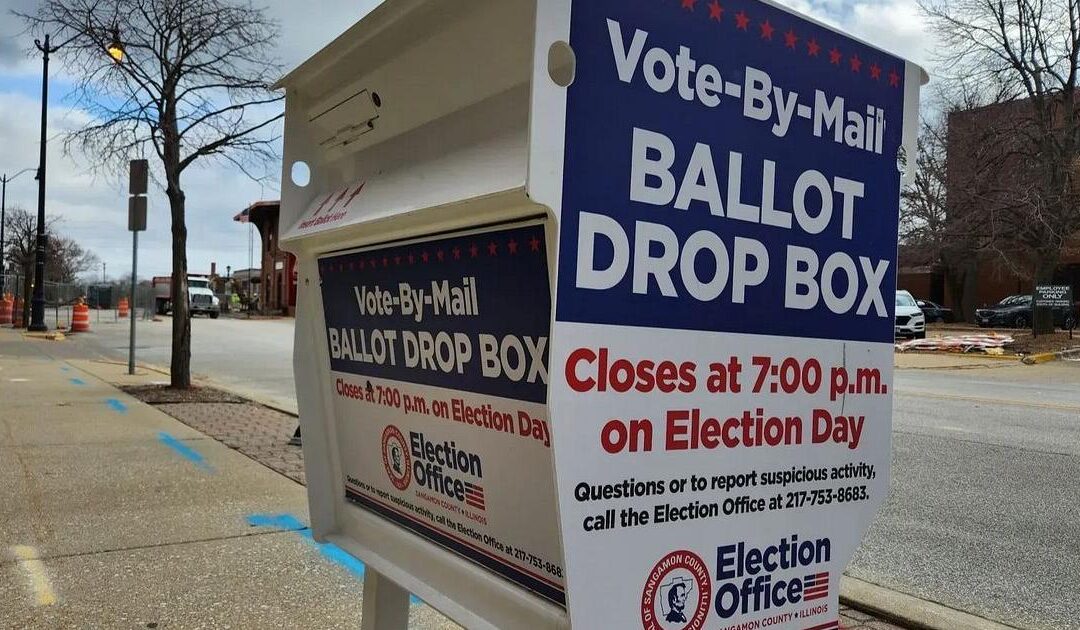
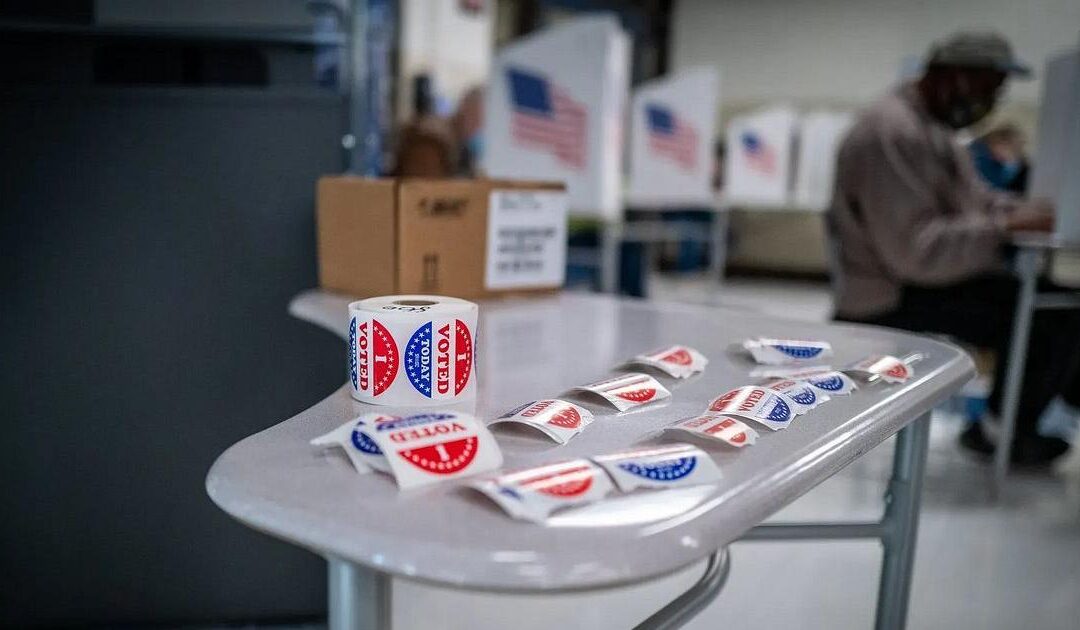
(The Center Square) – As voters get ready to cast their votes in Wisconsin’s April election, there is a reminder about just what’s on the ballot.
Brittany Kinser, who ran for Wisconsin State Superintendent last year, has a new op-ed that explains how important local school board elections are.
“School board members and school board candidates are the largest elected official body in our entire country,” Kinser said during an interview Monday on News Talk 1130 WISN. “And they are the ones deciding so many important things for our schools.”
Kinser said the main job of a school board is to make sure that students are reading, writing, and doing math proficiently.
But in Wisconsin, most school students are not.
“Only one in three kids in Wisconsin are,” Kinser explained. “That means two out of three kids are not [reading proficiently.]”
Kinser said one of the biggest challenges for voters is that many voters don’t know who the candidates are or what those candidates want for local schools. But she suggested some questions voters could ask.
“I would ask, especially coming from Kids Win, where we’re focusing on literacy, ‘Do you know the current third grade literacy rate in our district?’” Kinser said. “Then I would ask ‘What systems will you put in place to monitor progress, celebrate growth, and move us towards 95% of students reading proficiently?’ So right there they’re going to be able to tell you whether or not they’re aware of academic results, are they focused on the kids, and then what are they going to do.”
Kinser’s website, KidsWin.org has reading proficiency scores for every school district in the state.
She also said parents should look into the science of reading and ask if their school board candidates are familiar with it.
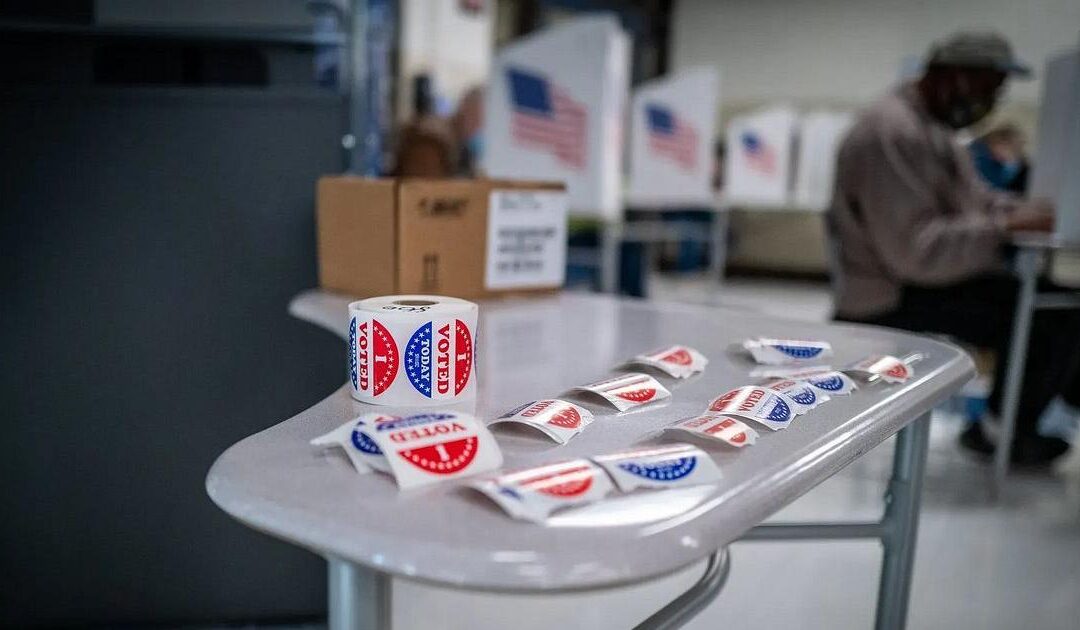
Early voting for Wisconsin’s spring election begins Tuesday. Election Day is April 7.

Evers signs Wisconsin FoodShare bill with $72M in funding, candy and soda ban

Evers signs Wisconsin FoodShare bill with $72M in funding, candy and soda ban

(The Center Square) – Wisconsin Gov. Tony Evers signed a bill Monday that would send $72 million to the state’s FoodShare program along with banning candy and soda purchases in Wisconsin’s Supplemental Nutrition Assistance Program.
The bill was a compromise between Evers and Republican legislative leaders as Evers claimed that the state was at risk of going over a 6% error rate on SNAP Program benefits, which would incur more than $200 million in federal penalties. Wisconsin had a 4.47% payment error rate as of late 2024–2025.
“After months of urging and asking the Legislature to approve these funds, I am glad to be able to sign this bill today so we can continue to provide for the over 700,000 Wisconsinites who rely on FoodShare and depend on the state to support this critical program and keep our error rates low,” Evers said in a statement. “In spite of the chaos at the federal level and the continued attacks on our FoodShare program, I am proud of the work my administration has done over the past year to ensure our kids, families, veterans, and seniors across our state receive the resources they need to access basic food and groceries.”
Legislative leaders like Sen. Chris Kapenga, R-Delafield, questioned whether the state was actually at risk of going over 6% on its error rate.
“We have asked him to show us the data and he hasn’t,” Kapenga told Badger Institute. “But that’s the way he has always operated.”
The Assembly passed the latest version of the bill, 71-22, while the Senate passed the bill 25-8.

Wisconsin makes fraudulent claims for unclaimed funds a felony

Wisconsin makes fraudulent claims for unclaimed funds a felony

(The Center Square) – It is now a felony to intentionally file a claim for someone else’s unclaimed property in Wisconsin without consent after Gov. Tony Evers signed the bill into law.
The Department of Administration estimates that there will be 12 fraudulent claims each year with a value of $260,000 that could be impacted by the new law with local district attorneys expected to prosecute the cases using existing resources.
“By finally holding these fraudsters accountable, we will be able to better protect our residents from being swindled out of their hard-earned money,” bill sponsor Sen. Patrick Testin, R-Stevens Point, wrote on social media on Monday.
I am pleased the governor has signed into law my bill that focuses on preventing fraudulent activity within the Wisconsin Unclaimed Property system. Since 1970, the state has been statutorily required to hold on to abandoned or forgotten financial assets until they can be… pic.twitter.com/05cFJck3ZC— Sen. Patrick Testin (@SenatorTestin) March 23, 2026
Rep. Jerry O’Connor, R-Fond Du Lac, testified that the unclaimed property inventory is now $866.8 million with 48,763 claims totaling $44.1 million processed and approved to return to property owners in fiscal year 2025.
He said that 126 fraudulent claims worth $2.6 million were denied due to fraud in 2025 and a claim worth $800,000 fraudulent claim to a Georgia recipient was blocked when a bank in Georgia flagged the check.
“Unclaimed property is an easy target for fraudsters, as Wisconsinites are frequently unaware that they have it, and doctoring documents is only getting easier with Artificial Intelligence,” O’Connor testified.

Oconto Falls sexual misconduct accusers propose student rights legislation

Oconto Falls sexual misconduct accusers propose student rights legislation

(The Center Square) – A group of plaintiffs in a federal civil rights lawsuit against the Oconto Falls School District over sexual misconduct from staff are proposing that state lawmakers create a Student Bill of Rights related to handling sexual misconduct from staff.
The legislation would do everything from requiring prompt investigations of complaints and protecting victims from retaliation to blocking school employees from engaging in romantic or sexual relationships with former students until they turn 24.
“Enforcement mechanisms include a private right of action for harmed students, Department of Public Instruction oversight, potential loss of state funding for non-compliant districts and mandatory annual public reporting of misconduct statistics,” the proposed legislation reads.
The proposal comes from victims through the Disparti Law Group, which said that six additional students and two former teachers have come forward since the lawsuit was initially filed with more details claiming the school district did not respond appropriately to complaints.
Disparti Attorney Cass Casper said that the two former teachers provided sworn declarations that they reported teacher sexual abuse and sexual harassment directly to the school board in 2015 and, not only do they say the board did not take them seriously, they claim the man was then promoted while one of the accusers left the district and the other had her contract not renewed.
Casper said the new accusations “add to this picture of a school district that had created an environment where sexual abuse is allowed to flourish and nothing was being done to prevent it.”
The proposed legislation would need legislative sponsors in order to be introduced in the next session.
The eight proposed students rights include a right to a safe learning environment, prompt investigation of misconduct reports, protection from retaliation and removal from contact with accused employees.
It also includes mandatory obligations for school boards, including beginning an investigation within five business days of a report, reporting accused employees to licensing authorities and maintaining confidential student reporting systems as well as annual training for staff to recognize grooming behavior.

Evers vetoes UW free speech, aid, online course fee bills

Evers vetoes UW free speech, aid, online course fee bills

(The Center Square) – Wisconsin Gov. Tony Evers vetoed a set of three University of Wisconsin-related bills Friday that included free speech protections on campus, a block of additional online course fees and a bill that would change minority programs to programs for disadvantaged students.
Senate Bill 532 would prevent University of Wisconsin schools from assessing the online class fees unless the school can show actual additional costs to conduct the classes online.
Bill sponsors say that fees for online-only or hybrid courses can add up and be a hidden way for the university to add cost to college.
Evers called the bill an attempt to undermine the Board of Regents.
“If lawmakers sincerely cared about the soaring costs of higher education for students on Wisconsin campuses, they would have approved any number of the countless measures and investments I have proposed over my tenure to ensure the University of Wisconsin System can survive and thrive without having to frequently rely on raising tuition or increasing various fees for students and families,” Evers wrote. “Moreover, this legislation risks reducing the availability of online course opportunities that students rely on for a flexible and accessible education.”
The campus free speech bill would carry a punishment of two academic years of frozen tuition if a school violates any of the requirements of the bill multiple times in a five-year period.
“Having personally served on the Board of Regents as State Superintendent of Public Instruction and having visited most if not all University of Wisconsin System and Wisconsin Technical Colleges System campuses, respectively, during my time as governor, I am happy to report to members of the Wisconsin State Legislature that the First Amendment and freedom of speech remain alive, well, and thriving on Wisconsin college campuses,” Evers wrote.
The third veto came on a bill that would have changed minority student aid programs to programs that provide aid to disadvantaged students of all races.
“I am vetoing this bill in its entirety because I object to the Wisconsin State Legislature creating new censorship rules that are designed to police language on our higher education campuses and ultimately prevent our state’s higher education institutions from acknowledging students come to our college campuses with unique and diverse backgrounds, experiences, and needs,” Evers wrote.

Evers vetoes Wisconsin Red Tape Reset bills

Evers vetoes Wisconsin Red Tape Reset bills

(The Center Square) – Wisconsin Gov. Tony Evers vetoed a set of four bills dubbed the red tape reset on Friday that would have cut down on the 165,000 restrictions currently in state law.
The set of bills include regulatory sunsetting, regulatory budgeting, a one rule per scope statement and a proposal challenging the validity of administrative rules.
Evers said that he vetoed the bills because he feels like it is an attempt by the Legislature to encroach on administrative rulemaking.
“Further, I also object to the Legislature making state government less efficient, less effective, and less responsive to the people of Wisconsin,” Evers wrote. “Ironically, for a Legislature fraught over purportedconcerns of inefficiency, regulations, and any “growth” of government, the Legislature asks me to sign a bill that will do just that.”
The laws would have required that, when a new rule adds costs for businesses, families or local governments, those costs must be offset.
“People are struggling with rising costs. Instead of providing relief, the Governor chose to protect bureaucracy,” Sen. Julian Bradley, R-New Berlin, said about the vetoes. “The Red Tape Reset was about making it easier to build a home, start a business, or simply get ahead. Today, the Governor chose to stand in the way of that progress.”
The single scope bill blocks allowing agencies to use a single scope statement to create multiple regulations over time.
The challenge bill would require courts to award attorney fees and costs to plaintiffs who successfully challenge unlawful administrative rules.
“This veto is telling of the Democrat approach,” Bradley said. “We can protect public safety and our state without burying Wisconsinites under layers of unnecessary red tape. I remain committed to working with my colleagues to bring accountability to our unelected bureaucrats.”

Wisconsin tax collection were down year-over-year in February

Wisconsin tax collection were down year-over-year in February

(The Center Square) – Wisconsin collected 8.8% less in taxes and fees in February than it did the year before, a $90 million drop in general purpose revenue.
The state is still 4.5% ahead of what it collected last fiscal year through February, according to numbers released Friday by the Department of Revenue.
The largest drop was in individual income taxes, a 30.3% drop from the year before, representing $122 million of the drop. The state is 4.8% above the year before in adjusted income tax collections for the fiscal year.
Overall, Wisconsin has collected $13.5 billion of general purpose revenue through February compared to $12.9 billion the year before.
Wisconsin is expected to have $2.3 billion more than estimated in surplus at the end of its current two-year budget cycle. That was due to an estimated nearly $1.4 billion in increased tax collections over that span.

California co-leads states suing EPA over greenhouse gases

California co-leads states suing EPA over greenhouse gases

(The Center Square) – California Attorney General Rob Bonta is co-leading a nationwide lawsuit against the U.S. Environmental Protection Agency over its rescission of a finding on greenhouse gases.
The 2009 Endangerment Finding was the federal government’s recognition that the gases threaten public health and welfare. The finding also provided the legal basis for regulating emissions from motor vehicles, power plants and industry under the Clean Air Act.
“It’s grounded in science, it’s been upheld by the courts, and some would just refer to it as common sense,” said Bonta during a Thursday morning press conference announcing the lawsuit. “Now President Trump and his EPA are trying to erase it entirely.”
President Donald Trump has referred to climate change as a “hoax.” Trump is also on record as saying green policies harm consumers and the economy, and the EPA says the new lawsuit is motivated by politics.
Plaintiffs say it’s motivated by environmental concerns.
“The federal government is attempting to overrule the science and do away with the protections that limit harmful pollution from vehicles, the largest source by the way, of greenhouse gas emissions in the United States,” said Bonta, who boasted about this being the 63rd lawsuit California has filed against the Trump administration in 63 weeks. Bonta is joined in the suit by Democratic attorneys general and other Democrats from states throughout the U.S.
California Gov. Gavin Newsom, a Democrat who’s a frequent critic of the president and is widely expected to run for president in 2028, joined Bonta for the “Trump Is Making Deadly Pollution Great Again” press conference.
Newsom said the last decade between 2015 and 2025 was the hottest one in history as the world deals with climate change. The Southwest is undergoing a heat wave that is bringing unseasonal triple-digit temperatures this week.
“There’s no Republican thermometers; there’s no Democratic thermometers,” said Newsom. “If you don’t believe in science, you’ve got to believe your own eyes.”
According to Newsom, places, lifestyle and traditions are “being quite literally wiped away.”
He pointed to Paradise, Grizzly Flats, and Greenville, Calif., as examples. Newsom and others believe climate change played a role in the fires that damaged those areas.
By repealing the Endangerment Finding, California Air Resources Board Chair Lauren Sanchez said the Trump administration is abdicating its responsibility to protect Americans.
“California is not going to sit back and watch while the federal government dismantles critical public health protections,” said Sanchez. “We are going to fight back.”
The federal lawsuit is filed in the U.S. Court of Appeals for the Washington, D.C. circuit.
The EPA Thursday told The Center Square, “It is revealing that the plaintiff-states ran to the press before even filing their complaint.” The EPA added that this illustrates that, for them, this is not about the law or the merits of any argument. According to the EPA, the plaintiffs are clearly motivated by politics.
“EPA carefully considered and reevaluated the legal foundation of the 2009 Endangerment Finding, the text of the CAA, and the Endangerment Finding’s legality in light of subsequent legal developments and court decisions,” the EPA press office said. “This included a robust analysis of the law following the U.S. Supreme Court decision in Loper Bright Enterprises v. Raimondo and West Virginia v. EPA.”
The agency concluded that Section 202(a) of the CAA does not provide EPA statutory authority to prescribe motor vehicle emission standards for the purpose of addressing global climate change concerns.
“In the absence of such authority, the Endangerment Finding is not valid, and EPA cannot retain the regulations that resulted from it. EPA is bound by the laws established by Congress, including under the CAA,” said the EPA press office. “Congress never intended to give EPA authority to impose GHG regulations for cars and trucks.”
The other attorneys general co-leading the lawsuit are from Massachusetts, New York, and Connecticut. They are joined by the attorneys general of Arizona, Colorado, Hawaii, Illinois, Maine, Michigan, Minnesota, New Jersey, New Mexico, Nevada, North Carolina, Oregon, Rhode Island, Vermont, Virginia, Washington, Wisconsin, and the District of Columbia.
Pennsylvania Gov. Josh Shapiro, a Democrat, also joined the lawsuit along with the cities of Boston, Chicago, Cleveland, Columbus (Ohio), Denver, Los Angeles, New York City, San Francisco, Santa Clara and Harris County, Texas.
Bonner Cohen, a senior fellow at the Committee for a Constructive Tomorrow, thinks the suit will end up at the U.S. Supreme Court.
“I suspect the Supreme Court will uphold what the EPA is proposing to do because nowhere in the CAA does it say specifically that the EPA is authorized by Congress to regulate greenhouse gas emissions,” Cohen told The Center Square Thursday. “The language there is very vague, and the current Supreme Court has been very particular in saying that regulatory agencies cannot make regulations up out of whole cloth. They must have specific congressional authorization to exercise their power, and the EPA administrator recognizes that his agency does not have that power.”

Report: Wisconsin roads rank 31st in cost-effectiveness, performance

Report: Wisconsin roads rank 31st in cost-effectiveness, performance

(The Center Square) – Wisconsin’s highway system ranks 31st in performance and cost-effectiveness, a drop from ranking 26th a year before in a report from Reason Foundation released Thursday.
The report and 50-state rankings take into account 13 categories of data that include everything from highway expenditures per mile to Interstate and primary road pavement conditions, urbanized area congestion, bridge conditions and fatality rates.
Wisconsin ranks 28th in capital and bridge disbursements, 14th in maintenance disbursements, and its administrative disbursements rank 22nd of the 50 states.
Wisconsin ranked 21st in traffic congestion with drivers spending 17 hours a year stuck in traffic jams. And the state ranked 45th in urban arterial pavement condition while ranking 26th in rural Interstate pavement condition and 40th in rural arterial pavement condition.
“In terms of improving in the road condition and performance categories, Wisconsin should focus on improving its Rural Arterial and Urban Arterial Pavement Conditions, as well as addressing inefficiencies in Other Disbursements,” Baruch Feigenbaum, lead author of the 29th Annual Highway Report and senior managing director of transportation policy at Reason Foundation, said in the report. “While the state performs strongly in Maintenance Disbursements (14th), Urban Fatality Rate (5th), and Other Fatality Rate (7th), its poor performance in arterial pavement condition and spending inefficiencies remain challenges.”
Wisconsin ranked 29th in structurally deficient bridges while ranking fifth in urban fatality rate and 14th in rural fatality rate.

Wisconsin Senate Majority Leader LeMahieu won’t seek reelection

Wisconsin Senate Majority Leader LeMahieu won’t seek reelection

(The Center Square) – Wisconsin Senate Majority Leader Devin LeMahieu announced Thursday afternoon he will not seek reelection.
He joins Assembly Speaker Robin Vos and Republican Sens. Van Wanggard, Steve Nass and Rob Hutton as key Wisconsin legislative Republicans who will not run again.
LeMahieu was criticized by fellow Republican Senators this week for pushing through a sports wagering bill and University of Wisconsin name, image and likeness bill despite a lack of 17 Republican Senators supporting the bills.
“The time has come for a new chapter in my life,” LeMahieu said in a statement. “I am looking forward to spending more time with my wife in our new Madison-area home and, for the first time since 2006, rooting for bold conservative reform from the sidelines.”
The Wisconsin Senate finished its session Tuesday. Vos announced he would not seek reelection on the final day of the Assembly’s session.
LeMahieu has been Senate Majority Leader since 2020 after jointing the Senate in 2015 after serving on the Sheboygan County board.
“All four will leave behind some rather big shoes to fill, but I am confident that our caucus is up to the challenge of forging ahead and continuing our work of making state government more efficient and less costly for taxpayers,” Sen. Patrick Testin, R-Stevens Point, said in a statement. “I consider them close friends and I wish them well in their future endeavors.”
Senate Minority Leader Dianne Hesselbein, D-Middleton, has worked with LeMahieu on bills including NIL and sports wagering.
“Senator LeMahieu is a dedicated public servant whose tireless service to his constituents has spanned more than 10 years,” Hesselbein said in a statement. “I have found him to be a man of his word and I wish him and his family the best as he begins this next chapter.”

FoodShare bill with $72M in funding, ban on candy and soda, sent to Evers

FoodShare bill with $72M in funding, ban on candy and soda, sent to Evers

(The Center Square) – Wisconsin Gov. Tony Evers told reporters on Wednesday that his deal with the Legislature to agree to $72 million in funding for the state’s FoodShare if the food stamp program did not allow the purchase of candy or soft drinks was all about compromise.
Evers and Democratic legislators did not want the purchase restriction in place, arguing that many in food deserts had to rely on the occasional purchase of candy or soft drinks to get by.
“I’d rather have someone go to bed with food in their stomach than go to bed hungry,” Minority Leader Dianne Hesselbein said.
Evers had argued that the $72 million in funding was needed to prevent Wisconsin from going over a 6% error rate on Supplemental Nutrition Assistance Program benefits, which would incur more than $200 million in federal penalties.
Wisconsin had a 4.47% payment error rate as of late 2024–2025.
“Making sure folks have food to eat is one of the most basic things we do as a society—we should be doing everything we can to make sure Wisconsinites and Americans can access basic necessities like food,” Evers said in a statement. “It’s pretty simple.”
Lawmakers, however, questioned why Wisconsin’s payment error rate would suddenly rise.
“The governor wants the Legislature to bail him out,” Sen. Chris Kapenga, R-Delafield, recently told Badger Institute. “I don’t think DHS is going to get anywhere close to that six percent error rate, and he’s scared (it’s going to be higher than 6 percent). We have asked him to show us the data and he hasn’t. But that’s the way he has always operated.”
The Assembly passed the latest version of the bill, 71-22, while the Senate passed the bill 25-8.

Some signs of affordability hope in latest Wisconsin home sales report

Some signs of affordability hope in latest Wisconsin home sales report

(The Center Square) – Home prices in Wisconsin continue to rise, and there continues to be a shortage of homes for sale, but real estate agents in the state say there are some signs of hope.
The Wisconsin Realtors Report for February again shows prices jumped year-over-year, hitting a median price last month of $315,000.
The housing supply also continues to be half what agents say would be a “balanced market.” But interest rates are falling, and the Wisconsin Realtors Association’s Amy Curler said February saw a slight uptick in sales listings.
“New listings increased 4.6% in February. This led to a moderate improvement in total listings, which increased 1.2% relative to February 2025,” Curler said in a statement. “It’s still a seller’s market, but it was good to see a return to the trend of improved annual growth of total listings first seen in September 2024.”
The Realtors’ report said there were 5,579 homes listed for sale across the state in February, 3,750 of those homes actually sold.
As expected, most of those homes were sold in either the Madison/southern Wisconsin area or in southeast Wisconsin.
Those areas also saw the highest prices.
The median home price in Madison and southern Wisconsin hit $365,250 last month. In southeast Wisconsin, the price tag jumped to $325,000.
Realtors President Tom Larson said he’s not just watching prices but watching the overall affordability of homes.
“Wisconsin Housing Affordability Index grew at a healthy pace in February. Compared to a year ago, family income was up slightly, and home prices grew at a modest pace, but the key factor was the ongoing reduction in the 30-year fixed mortgage rate,” Larson explained. “That rate fell just over three quarters of a percent compared to a year earlier and averaged just 6.05% in February 2026. In fact, the rate fell below 6% in early March, which is good news going into the spring market.”
Central Wisconsin continues to have the lowest median home price in the state. The price tag for February went to $247,000, but there were also just 237 homes sold there.
That’s a fraction of the 1,403 homes sold in Milwaukee and the rest of southeastern Wisconsin.

Wisconsin voters will see November referendum on governor’s partial veto power

Wisconsin voters will see November referendum on governor’s partial veto power

(The Center Square) – Wisconsin voters will have the opportunity to block a governor from using a partial veto to “create or increase or authorize the creation or increase of any tax or fee” on the November ballot.
The Senate passed a joint resolution with an 18-15 party-line vote after the Assembly previously passed it on a 54-41 vote.
The proposed constitutional amendment comes after Gov. Tony Evers used the current veto power to erase numbers and a hyphen to change the year “2024-25” to “2425” in a school appropriation in the budget bill.
That meant a $325 per student per year funding increase for the next 400 years was allowed and later upheld in a 4-3 ruling from the Wisconsin Supreme Court.
“Wisconsin’s unique ‘partial veto’ is widely regarded as one of the most expansive executive powers in the nation,” Rep. Amanda Nedweski, R-Pleasant Prairie wrote in testimony on the amendment. “While most states limit an ‘item veto’ to striking or reducing appropriations within appropriations bills, Wisconsin’s Constitution permits the governor to selectively strike words, numbers, and punctuation in ways that can significantly alter legislative intent – even producing outcomes the Legislature never intended or explicitly rejected.”
The resolution was supported by Americans for Prosperity, MacIver Impact, the National Federation of Independent Business, Wisconsin Institute for Law and Liberty, Wisconsin Manufacturers and Commerce, Wisconsin Property Taxpayers and the Wisconsin Realtors Association.
The Wisconsin Education Association Council registered against it.
Sen. Chris Kapenga, R-Delafield, said in testimony that Evers’ partial veto upended the balance of power in the state.
“This was a deeply egregious move on the governor’s part, and one that this proposed constitutional amendment aims to stop from ever happening again,” Kapenga testified.

Tiffany: ‘I am the person, this is the time’

Tiffany: ‘I am the person, this is the time’

(The Center Square) – Tom Tiffany is not telling former Wisconsin Gov. Tommy Thompson not to run again, but he is making it clear that this is his year.
“As we saw with all the people who are supporting me, broad and deep is the support across the state of Wisconsin. There is one person that can take us to win the governorship in 2026, and that is Tom Tiffany,” Tiffany said during an interview Wednesday on News Talk 1130 WISN. “I am the person, and this is the time for Tom Tiffany.”
Reports started making the rounds this week that Thompson, who was elected as governor four times in the 1980s and 1990s, is looking to run again this week. Tiffany said he hasn’t heard anything official, but he’s heard the rumors as well.
“It’s up to Tommy Thompson, what he’s going to do,” Tiffany added. “I never say to anybody ‘You should or shouldn’t do whatever.’.”
Tiffany has President Donald Trump’s endorsement, and said he has support and/or endorsements from across the state as well. The endorsement from Trump was enough to clear the field for Tiffany back in January.
“After President Trump’s endorsement, the next day Josh Schoeman who was the first in the governor race, very graciously called me,” Tiffany explained. “He said ‘I see the handwriting on the wall, and I want to support you because the most important thing is to win the governorship,’.”
Many Republicans in Wisconsin say a Thompson campaign would sap time and money that could be spent campaigning against Democrats.
Seven Democrats are running to replace Gov. Tony Evers this year. Tiffany, is so far, the only Republican.
If there is a Republican primary, voters will make their choice in August.

Senate approve Wisconsin athletics $15M NIL bill, sweeping records exemption

Senate approve Wisconsin athletics $15M NIL bill, sweeping records exemption

(The Center Square) – The Wisconsin Legislature has approved sending $15 million each year to the Universities of Wisconsin for athletics facilities along with creating a sweeping public records exemption related to all spending and revenue within the athletic department.
The Senate approved the bill on a 17-16 vote without discussion.
UW-Madison Athletics Director Chris McIntosh said in committee that the $14.6 million in funding annually to the school’s athletic department for facilities debt is essentially for the athletic department to remain competitive and supporting 23 sports and 600-plus athletes. He said that women’s and Olympic sports were at stake related to the bill.
“In the event that this legislation is not passed, we will be forced to reconcile our revenues with our liabilities, like we always have,” McIntosh told the Senate committee. “And that will come through a series of painful reductions, further emphasis on increasing our revenues.
“And, what I fear is, that through those reductions in support of our sport programs, all of our sport programs, all 23 of our sport programs, we’ll be left in a situation in which it will be difficult to say the least, for us to be competitive in the sports that generate in excess of 80% of the revenues. And it will also be difficult to be competitive.”
UW-Madison athletics operated with a $4.3 million surplus in its most recent annual NCAA financial report released earlier this year covering the financial year that ended in June 2025.
Sen. Steve Nass, R-Whitewater, called both the University of Wisconsin name, image and likeness bill and sports wagering bills highly unpopular.
“The public is overwhelmingly opposed to the tribal online gaming bill (AB 601) and UW/NIL bill (AB 1034), but the voters of this state clearly don’t matter to legislative leaders when campaign cash is flowing to grease the skids,” Nass said in a statement. “… Wisconsin Republicans have done little to economically help families and small businesses, but our GOP leaders fought to force taxpayers to begin subsidizing million-dollar payments for UW athletes and further enrich tribal casino operators.
“Simply disgusting.”
The football program accounted for 80% of the program’s revenue, equaling $113.6 million last fiscal year, according to the NCAA report, which showed the football program brought in $72 million in excess during the year.
The Wisconsin Newspaper Association, meanwhile, warned lawmakers and the public that a public records stipulation in the bill could have a sweeping unintended impact that goes well beyond NIL records.
The bill would exempt records related to the “generation, deployment, or allocation of revenue generated by an intercollegiate athletic program.”

Wisconsin Senate approves sports wagering bill; heads to Evers

Wisconsin Senate approves sports wagering bill; heads to Evers

(The Center Square) – Wisconsin got a step closer to legalized online sports wagering Tuesday when the Senate approved a bill that would allow the state’s tribes to offer sports wagering throughout the state with a bipartisan 21-12 vote.
The bill would have to be signed by Gov. Tony Evers, who has voiced support for the proposal, and then new compacts related to payments to the state would have to be negotiated and approved federally.
Nine Republicans voted for the bill and nine voted against it.
Sen. Steve Nass, R-Whitewater, called the process of bringing the bill to the Senate floor “very corrupt” in prioritizing “special interests.”
“The problem for legislative Republicans is that our core voters will hold us to account for selling out their interests and the passage of these two unpopular bills will help pave the way to minority status for Republicans come November,” Nass said in a statement.
Sens. Andre Jacque, R-New Franken, and Chris Larson, D-Milwaukee, also spoke on the bill and the perils of problem gaming before several Democrats spoke on the importance of tribal sovereignty and retaining the right of Wisconsin’s tribes to have exclusive rights to gaming.
The proposal would change the state’s definition of “bet” to allow the state’s tribes to offer mobile sports wagering if the bettor is in Wisconsin and the sportsbook servers are on tribal land, an amendment to current compacts allowing for casino gambling and sports wagering on tribal lands despite the state’s ban on betting.
The law would allow for a similar sports wagering model as Florida, where the state’s sportsbook operators have servers on federally recognized tribal lands while users can be in the state of Wisconsin.
The proposal cites the U.S. Supreme Court’s 2024 decision not to hear a challenge to the sports wagering pact between Florida and the Seminole tribe of the hub-and-spoke sports wagering model.
Wisconsin receives payments that are a portion of the net win from tribal casinos but does not separately report sports wagering payments.
In 2024, the state received more than $66 million in shared revenue payments with nearly $66 million in 2023 and nearly $57 million in 2022.
The bill could be challenged legally since the Wisconsin Constitution states “the legislature may not authorize gambling in any form” outside a few exceptions, including bingo, raffle games, pari-mutual racing and some forms of lottery.
Bill authors, however, believe that this has already been determined in law and this is simply an extension of the sports wagering already offered on tribal land by the state’s tribes.
“It takes a long time to get the compacts going,” Senate Minority Leader Dianne Hesselbein, D-Middleton, said before the Senate session.