roads
Exclusive: Report shows Wisconsin health care costs 25.6% more than same services in Illinois

Exclusive: Report shows Wisconsin health care costs 25.6% more than same services in Illinois

(The Center Square) – Wisconsin hospitals charge 25.6% more to patients for in-person care than hospitals in Illinois, even within the same company, according to a new report shared exclusively with The Center Square.
Costs for hospital services are negotiated between hospitals and insurance carriers and fewer options on each side of the negotiation mean less leverage to negotiate.
In particular, hospitals that are able to negotiate percentage-of-charge contracts where prices rise over time instead of set fees for particular services are more expensive to patients, according to the study from the University of Wisconsin-Madison’s Anthony Lo Sasso and Capital Policy Analytics’ Ike Brannon.
Lo Sasso said that the results are less about Illinois being cheaper than about Wisconsin being an outlier as more expensive than other states, something he isn’t certain the public knows. He told The Center Square that hospital consolidation in Wisconsin has been a “slow burn” over time that has created less competition and higher costs.
“The speculation is that the Wisconsin local markets are just not very competitive,” Lo Sasso said. “… There’s been a lot of consolidation over the past 10-20 years and so it’s just led to increasing levels of what we in the business call market concentration.”
Lo Sasso said that the higher costs showed up statewide and not just in the competitive Chicago market, but that the difference was even slightly higher between Wisconsin and areas outside of Chicago.
About 45% of patient charges are calculated using percentage-of-charge while 24% are in Illinois.
“Payers generally accept percent-of-charge terms only where they lack the leverage to insist on fixed dollars, so the concentration of such contracts in Wisconsin is consistent with the strong provider bargaining position that a consolidated hospital market confers; and because these contracts give hospitals a standing mechanism to raise realized prices, they may help entrench the very premium this report documents,” the report states.
Wisconsin Advocate Health hospitals in Wisconsin receive 23% more for the same services as the company’s hospitals in Illinois.
Blue Cross Blue Shield and UnitedHealthcare customers are each charged more than 25% more for the same services in Wisconsin as in Illinois “indicating that the gap is a feature of the Wisconsin provider market rather than any single insurer’s contracting strategy,” according to the report.
The same was true for each of the 24 inpatient procedures that were examined in the study across specialties.
Lo Sasso said that he plans to study the reasons that the Wisconsin is more expensive and what can be done to combat that in future research. He said that Wisconsin must first acknowledge that the cost of health care is an issue before combating what led to it.
He said that encouraging new facilities in the marketplace and greater scrutiny of future hospital mergers could have an impact.
“Building new hospitals and facilities that can act as and create a competitive market at a state and local level I think would be very important, long run,” Lo Sasso said. “A hospital is not going to spring up overnight but, basically, encouraging that to the extent possible would have very positive downstream effects.”

Wisconsin agrees to sell Madison state office buildings below appraised value

Wisconsin agrees to sell Madison state office buildings below appraised value

(The Center Square) – Wisconsin is selling the Department of Natural Resources and former Department of Public Instruction buildings in downtown Madison for $12.6 million, below the more than $45 million assessed value of the buildings at 101 and 125 S. Webster St.
That sale was approved by the State Building Commission after objection from some lawmakers who believe the sale was below what the state should receive for the buildings, which need an estimated $213 million in repairs to meet modern safety and operational standards.
“Selling these state buildings and land that is on prime real estate in downtown Madison for pennies on the dollar is a bad deal for Wisconsin taxpayers and needs a lot more scrutiny before being transferred to a developer in a sweetheart deal while nobody is watching,” Rep. Dean Kaufert, R-Neenah, said in a statement. “We’ll have a new Governor in a few months and the new administration should get a chance to see if this fits their new goals and policies.
“Even if it is decided to sell these properties in the future, we should negotiate a much better deal for taxpayers – we’ll always be able to sell it at fire sale price, but if approved, it’s gone forever and taxpayers foot the bill and lose the value.”
Rep. Robert Wittke, R-Caledonia, spoke with the developer purchasing the property and said that he believes the gap in appraisal and reality is that the buildings were appraised as office space but ultimately will be redeveloped into residential space.
“If it was such a sweetheart deal, why don’t we have 15 offers on the table for it?” Wittke said during Building Commission discussion.
Sen. Andre Jacque, R-New Franken, said that “if the appraisal is the problem, then we need to fix the appraisal before we move forward with a sale of this magnitude.”
The sale was approved 7-1 with Jacque as the only objection.
“I don’t believe that this is a good deal for taxpayers at this time,” Jacque added.
Kaufert, a former member of the commission, added that he was concerned the sale will make it more difficult to have state employees return to more in person work in the future, stating that some state agencies have employees working just one day per month in an office.

Midwest Dems push ‘unity’ with socialist, moderate primary winners

Midwest Dems push ‘unity’ with socialist, moderate primary winners

(The Center Square) – With the wins of socialist, progressive and moderate Democrat candidates in recent midwestern primaries, top leaders in the party are embracing “unity” with the far-left wing of their party.
Former Detroit public health official and progressive candidate Abdul El-Sayed defeated U.S. Rep. Haley Stevens, D-MI., in the Michigan Senate Primary.
State Sen. Mallory McMorrow, D-Royal Oak, also ran for the Senate seat, but dropped out weeks before the election.
Both Stevens and McMorrow were quick to endorse the candidate they both targeted for his views in the weeks before.
“What is most important now is that we recognize that for all of the differences we may have had in this primary, that those differences pale in comparison to the contrast that we face in November,” McMorrow said after the Senate race was called.
Among other top Democrats from across the country, Illinois Gov. J.B. Pritzker has made calls to winning candidates in recent primaries.
“After an election I often call the victors and those who lost in the elections just to say ‘congratulations on your victory,’ or, ‘I went through an election where I lost some number of years ago. It’s a hard thing to do.’ I always remind people who are losing in Democratic primaries as I did, it’s really important to go and support the victor,” Pritzker said.
He said he wants Democrats to keep their eye on winning in the elections to win back a majority in Congress.
Pritzker wouldn’t go as far to back socialist candidates outright.
“I don’t think it’s a matter of ideological differences. I do think it’s a matter of team fight versus team cave and I think the voters want people who are going to go to Washington and fight for them,” Pritzker said.
Michigan isn’t the only midwestern state to embrace the party’s “unity” approach following their primaries.
Both in Minnesota and Wisconsin, the Democratic-Farmer-Labor Party and Democrats respectively followed a similar playbook Wednesday.
Minnesota DFL U.S. Senate nominee Peggy Flanagan in Minnesota said in a statement that the party’s unity in their state would help Democrats earn a majority in the Senate, despite her party already holding both seats.
State Rep. Francesca Hong, D-Madison, a Democratic Socialist Wisconsin gubernatorial candidate, lost her race to the more moderate David Crowley, the Milwaukee County executive.
Crowley said this week he plans to do a “unity tour” with his more radical counterpart.
“We’re going to be getting together relatively soon to actually start our unity tour,” Crowley said Tuesday night.
Crowley said later in the week to note that he wouldn’t be embracing some of Hong’s policies, such as a moratorium on data centers.
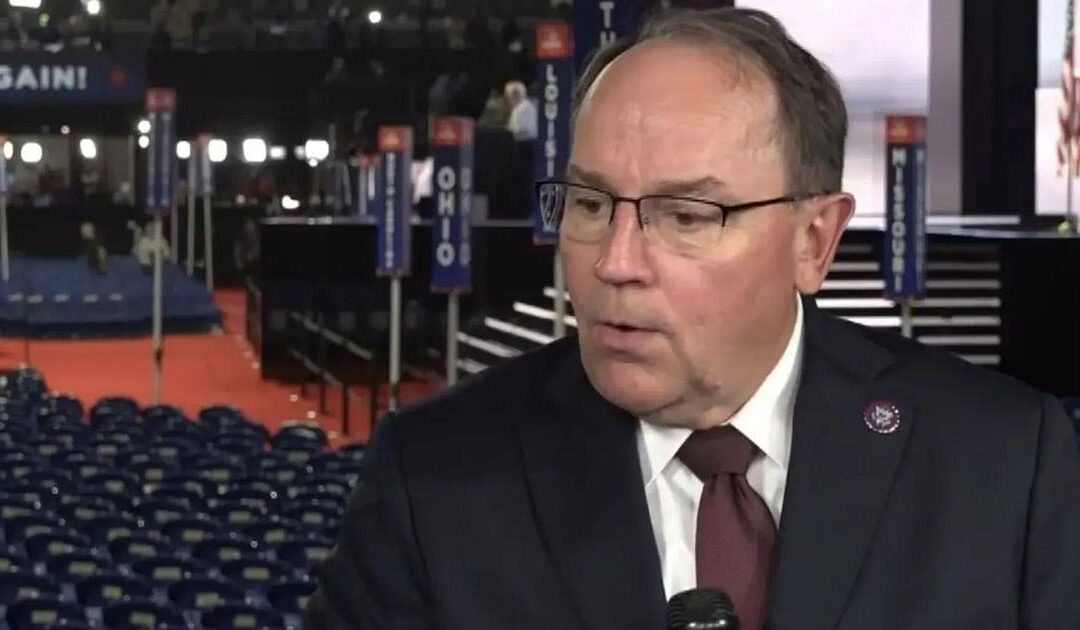
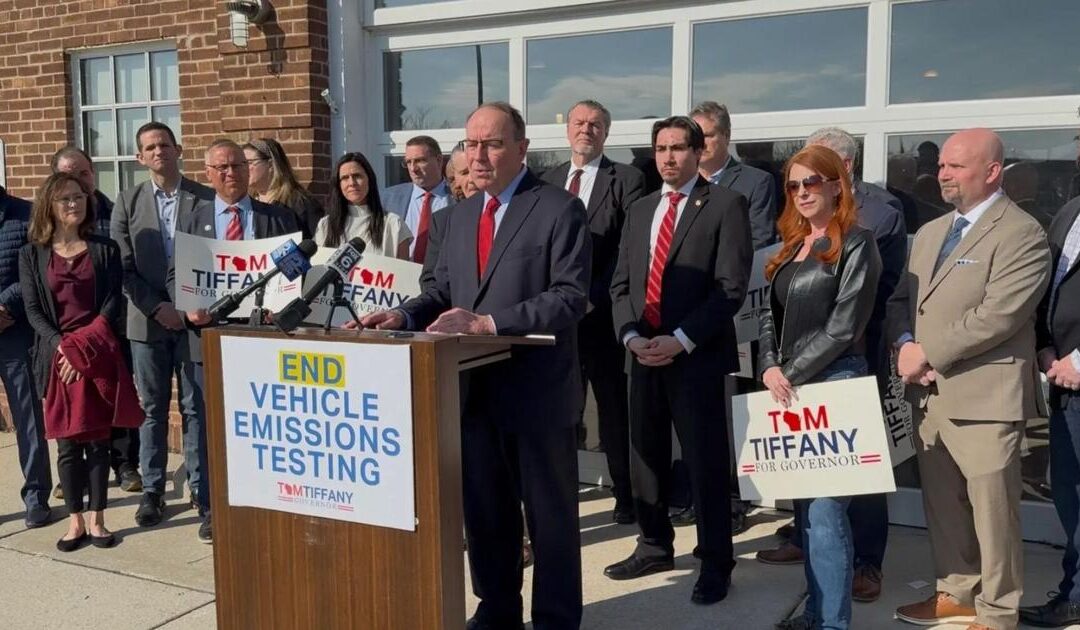
His general election opponent, U.S. Rep. Tom Tiffany, R-Wi., said he would back widely bipartisan supported restrictions on data centers – including ending tax incentives, ensuring no rate hikes and heavier regulation on construction.
In many primary races, turnout for Democrats has been higher than anticipated. Pritzker attributed the turnout to Republicans choosing to take Democrat ballots this year.
“As to why progressives are winning in some places, and not, you know, maybe some in others, Democrats are seeing this huge turnout again because whoever it is that’s articulating a message that they’re going to go to Washington and fight for people,” Pritzker said.

Wisconsin Supreme Court to decide if Kohl’s can be sued over ‘misleading’ discounts

Wisconsin Supreme Court to decide if Kohl’s can be sued over ‘misleading’ discounts

(Legal Newsline) — A federal appeals court has asked the Wisconsin Supreme Court to decide if a Wisconsin state law allows customers from across the U.S. to sue retail chain Kohl’s over claims the retailer misleads customers over how much money they are actually saving.
The underlying litigation stems from a lawsuit filed by named plaintiff Michelle Cortez Gomez. Gomez claims she bought a $100 portable speaker in May 2023 and said she only did so because of the advertised $30 discount. She said she later learned the chain almost never sold the product at the regular price.
She and other named plaintiffs want to sue Kohl’s under the Wisconsin Unfair Trade Practices Act state law.
U.S. District Judge James Peterson dismissed the complaint, saying a federal law known as the Class Action Fairness Act only gives federal courts jurisdiction over complaints alleging damages of more than $5 million. The judge further said Gomez wasn’t entitled to recover any damages under Wisconsin state law because she couldn’t show she bought something defective or worth less than the price paid.
When the case reached the U.S. Seventh Circuit Court of Appeals, Judges Thomas Kirsch, Candace Jackson-Akiwumi and Nancy Maldonado found the question about how to apply Wisconsin state law less clear. They said they could find no prior Wisconsin state court rulings addressing the issue.
So, the Seventh Circuit judges invited the Wisconsin Supreme Court to weigh in on the question in an order issued decision Aug. 3.
The order was issued as a “per curiam” opinion. “Per curiam” is a Latin phrase, meaning “by the court.”
The order opened by noting “the line between legitimate enticement and improper deception can be fuzzy, and sometimes retailers cross it in their eagerness to make a sale.”
The panel said the U.S. Federal Trade Commission began regulating price comparison advertising in the 1960s to make sure retailers weren’t citing inflated prices solely to offer purported discounts, thereby creating a false bargain. Like many states, Wisconsin enacted its own price comparison laws. Retailers can only advertise a “claimed regular price,” the panel said, if the goods or services actually were sold at such a price within 90 days before the sale advertisement or if the advertisement discloses when such sales were made.
Whether a class action can proceed, the panel said, depends on whether the complaint alleges a “pecuniary loss” under state law. A pecuniary loss is a legal term meaning a loss of money.
“That’s easier said than done, because no court has discussed pecuniary loss in the context” of the relevant Wisconsin state laws, the panel wrote, “or false price comparison advertising, and there’s a split in the persuasive authority.”
Earlier this year the Wisconsin Supreme Court, in Koble Investments v. Marquardt, held a tenant didn’t show a pecuniary loss despite alleging her lease violated state law because there was no evidence she “suffered any loss from paying rent in exchange for a place to live.” The appeals panel said the Kohl’s argument is similarly rooted in the concept of suffering “loss in the form of a purchase price for a product she was wrongfully induced to buy” and identified three state appellate court decisions supporting the position, albeit not as relates to false comparison advertising.
Conversely, the panel continued, “the Wisconsin Court of Appeals held that pecuniary loss could be either the purchase price of a product or benefit of the bargain damages, depending on the proof,” in a 2014 decision, Mueller v. Harry Kauffmann Motorcars, while several federal court decisions endorse the idea a plaintiff has to allege more than that they wouldn’t have bought something but for the facts their complaint asserts.
“Considering the available persuasive authority, we’re left with a close call on an important question of Wisconsin law,” the panel wrote. “The Wisconsin Supreme Court’s ruling in Koble is ambiguous — it can be read to support either party’s interpretation.”
Even if there was a loss, the panel continued, would it be just the difference between what was advertised and what was paid? Or would a shopper be entitled to keep the product and get a full refund? Because uncertainty about whether a loss exists and, if it does, how to calculate the value, the panel said the Wisconsin Supreme Court needs to decide.
“The case concerns a matter of vital public concern, because every Wisconsin retailer who uses price comparison advertising and every consumer who purchases the advertised products has a potential stake,” the panel said. “Similarly, retail sales are common, and so the issue is likely to recur.”
The panel said its own opinion shouldn’t limit the Wisconsin Supreme Court’s consideration of the question, to the point of reframing the query if needed. The underlying litigation is stayed pending a response.
Gomez is represented in the action by attorney Martin Woodward, of the firm of Kitner Woodward, of Dallas; and attorneys Kiran H. Bhat and Ethan H. Ames, of Keller Postman, of Chicago and Washington, D.C.
Kohl’s is represented by attorneys with the firms of Skadden Arps Slate Meagher & Flom, of New York; Godfrey & Kahn, of Milwaukee; and Kelley Drye & Warren, of New York and Parsippany, New Jersey.

Marquette Poll explains shift to Crowley in Wisconsin primary

Marquette Poll explains shift to Crowley in Wisconsin primary

(The Center Square) – Democrat David Crowley outperformed polling results in winning a close race over Francesca Hong to become the party’s candidate for governor.
That’s after Hong held 38% support in the primary compared to 7% from Crowley in a late July Marquette Poll and a State Navigate poll released on Aug. 6 had similar results.
“The clear thing is that the vast majority of late-deciding voters went to Crowley and very few went to Hong,” Marquette Law School Poll Director Charles Franklin wrote. “The race was complicated by three candidates dropping out, and Crowley reentering, in the final month.”
Former Lt. Gov. Mandela Barnes held 16% support in the Marquette Poll before he dropped out of the race.
Franklin also said that Gov. Tony Evers’ endorsement of Crowley as he reentered the race made a difference.
“In our final poll, more than one-third (36%) of Democratic primary voters said that this endorsement made them more likely to support Crowley,” Franklin wrote. “Evers’ job approval with Democrats was also over 85%.”
Crowley will now take on Congressman Tom Tiffany in the Nov. 3 general election.
There were 792,009 voters in the Democratic primary, up from 640,247 in the 2024 Senate primary and 538,857 in the 2018 primary for governor.
“The chaotic changes of candidates, plus the governor’s late endorsement and increasing electability concerns, all made for a surprising endgame to the race,” Franklin wrote.

Alfonso prevails, Van Orden-Cooke rematch coming in Wisconsin races

Alfonso prevails, Van Orden-Cooke rematch coming in Wisconsin races

(The Center Square) – Michael Alfonso will take on Fred Clark to replace Tom Tiffany in Wisconsin’s 7th congressional district while there will be a rematch in the 3rd Congressional after Tuesday night’s Wisconsin primary elections.
Alfonso, the 26-year-old son-in-law of U.S. Secretary of Transportation Sean Duffy, won the primary by a wide margin with nearly 49% of the vote compared to less than 27% for veteran Kevin Hermening and less than 16% for businesswoman Jessi Ebben.
Clark, meanwhile, received 37.6% of the vote in the Democratic side compared to 31.8% for Ginger Murray and 30.3% for Chris Armstrong.
The Cook Political Report rates the Nov. 3 general election race as solidly Republican for the district, which comprises much of northeast Wisconsin.
Ebben encouraged her supporters to now support Alfonso during her Tuesday night concession.
“While tonight’s outcome was not the one we wanted, I will remain committed to defending the conservative values I campaigned on,” Ebben said in a statement. “That means working to stop the rise of socialism and defeating the Democrats running for office in Wisconsin. It’s time for conservatives to unite behind Michael Alfonso for our next representative in Congress and support Republican nominees up and down the ballot.”
The 3rd congressional race will pit incumbent Derrick Van Orden against challenger Rebecca Cooke again.
Van Orden was elected with 51.3% of the vote compared to 48.6% for Cooke in 2024.
Van Orden spent 26 years as a U.S. Navy SEAL that included five combat tours.
“Rebecca Cooke is exactly who the national Democrats wanted, an anointed candidate they know will carry water for the socialists who have taken over their party,” Van Orden said in a statement. “This election is about what kind of country we are going to leave to our children and grandchildren. It is a battle for the soul of America.”
Van Orden won uncontested while Cooke received 60.0% of the vote and Emily Berge receive 39.9% in the Democrat primary.
“As someone who grew up on her family’s Eau Claire dairy farm, she is a fierce advocate for rural communities and understands what’s needed to bring down costs and make life more affordable for her neighbors,” the Democratic National Committee said about Cooke. “In Congress, Rebecca will fight tirelessly to protect healthcare, lower gas and fertilizer prices, end Republicans’ reckless tariffs, stand up for working families, and invest in Wisconsin’s farmers, producers, and manufacturers.”

Crowley goes from dropping out to winning Wisconsin Democratic nomination

Crowley goes from dropping out to winning Wisconsin Democratic nomination

(The Center Square) – David Crowley went from dropping out of the Wisconsin governor’s race to being the Democratic nominee.
The Milwaukee County Executive holds a more than 3,000-vote lead with 98% of votes reporting and is the projected winner in a close race against state Rep. Francesca Hong to take on Republican Tom Tiffany in the Nov. 3 general election.
“From day one, this campaign has been about what comes next for Wisconsin: making life more affordable, strengthening our schools, creating good-paying jobs, and making sure opportunity reaches every corner of our state,” Crowley campaign manager Darren Randolph said in a statement.
Crowley becomes the projected winner after absentee votes from Milwaukee County’s Central Count were added to the totals just before 1:30 a.m. on Wednesday.
Hong was a distinct leader in polls heading into the race as Lt. Gov. Sara Rodriguez and former Lt. Gov. Mandela Barnes dropped out late but remained on ballots.
“The fight continues no matter what,” Hong said before ending her watch party before the Milwaukee County Central Count numbers arrived.
Republican Tom Tiffany was declared the winner of his primary for Wisconsin governor in the minutes after polls closed.
Tiffany held 95.3% of the early votes while opponent Andy Manske had 4.6%.
“I want to thank Wisconsinites across our state for putting their trust in me,” Tiffany said in a statement. “This fight is bigger than any one party. It’s bigger than any one candidate. This fight is about Wisconsin and protecting the state we know and love. It’s about lowering property taxes, returning the surplus to you, getting utility costs under control, and letting hardworking Wisconsinites keep more of what they earn. Let’s move Wisconsin forward, together.”

Tiffany wins Wisconsin primary; Democrat opponent remains uncertain

Tiffany wins Wisconsin primary; Democrat opponent remains uncertain

(The Center Square) – Republican Tom Tiffany was declared the winner of his primary for Wisconsin governor in the minutes after polls closed but who he will face in the Nov. 3 general election is far more uncertain.
State Rep. Francesca Hong and Milwaukee County Executive David Crowley are the frontrunners with state Sen. Kelda Roys and former Dept. of Administration Secretary Joel Brennan also in the race.
Michael Alfonso was projected as the winner of the Republican 7th Congressional nomination to take over Tiffany’s seat, defeating veteran Kevin Hermening and Ashley Furniture Executive Jessi Ebben.
Alfonso, the 26-year-old son-in-law of U.S. Dept. of Transporation Secretary Sean Duffy, will face one of Ginger Murray, Fred Clark and Chris Armstrong from the Democratic side in November’s general election.
Tiffany held nearly 96% of the early votes while opponent Andy Manske had less than 4%.
“I want to thank Wisconsinites across our state for putting their trust in me,” Tiffany said in a statement. “This fight is bigger than any one party. It’s bigger than any one candidate. This fight is about Wisconsin and protecting the state we know and love. It’s about lowering property taxes, returning the surplus to you, getting utility costs under control, and letting hardworking Wisconsinites keep more of what they earn. Let’s move Wisconsin forward, together.”
Ebben congratulated Alfonso on his victory.
“While tonight’s outcome was not the one we wanted, I will remain committed to defending the conservative values I campaigned on,” Ebben said in a statement. “That means working to stop the rise of socialism and defeating the Democrats running for office in Wisconsin. It’s time for conservatives to unite behind Michael Alfonso for our next representative in Congress and support Republican nominees up and down the ballot.”

UW System leaders announce $90M health care professional training budget request

UW System leaders announce $90M health care professional training budget request

(The Center Square) – The University of Wisconsin system plans to ask for an additional $90 million of funding to use toward training 35,000 new healthcare professionals over a 10-year span in its next budget request.
That request will go to the state’s new governor, elected Nov. 3, for the state’s next biennial budget that will into effect July 1.
The universities announced the initiative Monday without further details on how that funding will be spent, whether it be on instruction, facilities, materials, laboratories or a combination of those costs.
“When healthcare professionals are in short supply, it can be harder to get an appointment, harder to get timely care, and harder for communities to thrive,” Universities of Wisconsin Interim President Renée Wachter said in a statement. “This proposal strengthens the healthcare professional pipeline and involves all UW universities to make it happen.”
Wachter and a group of university presidents will also announce a budget request related to the workforce pipeline and accelerating business and technology at 11 a.m. on Wednesday.

Wisconsin primary in-person voting coming Tuesday

Wisconsin primary in-person voting coming Tuesday

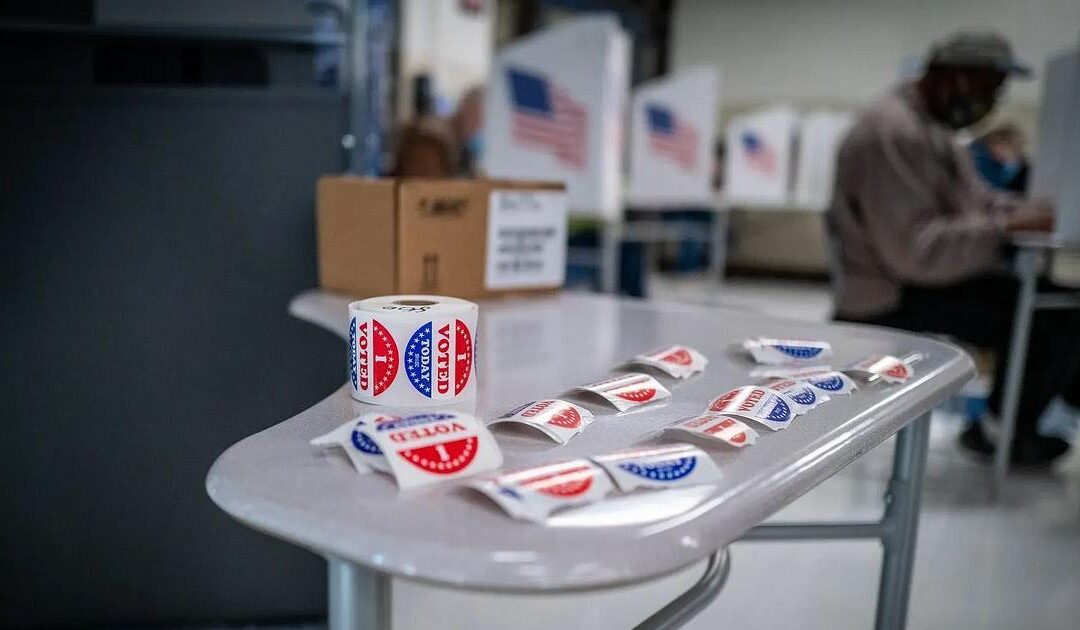
(The Center Square) – Wisconsin residents can vote between 7 a.m. and 8 p.m. on Tuesday in person in the state’s primary, highlighted by the primary for governor.
Voters can check their voter registration status and find their local polling place online. Those who are in line to vote at 8 p.m. must remain in line in order for their vote to count.
Those who have absentee ballots should return them in person. Once a ballot is returned, they cannot be changed. Ballot spoiling was challenged and rejected in court in July.
The most recent wide-spread poll of Democrat voters in the state, released Friday by State Navigate, showed that state Rep. Francesca Hong held a lead with 44% support, ahead of Milwaukee County Executive David Crowley (22%) and state Sen. Kelda Roys (11%).
Other significant primaries include the 7th Congressional District race to replace Tom Tiffany, the presumed Republican candidate for governor, between Michael Alfonso, former Marine Kevin Hermening, Ashley Furniture executive Jessi Ebben, Nina Baum and Don Raihala.
Alfonso, 26, is the son-in-law of U.S. Transportation Secretary Sean Duffy and holds an endorsement from President Donald Trump.
Voters can only vote for candidates from one political party in the primary. Voters can fill out a form and register at their polling place on Election Day with a proof of residence document showing a current address.
The Wisconsin Department of Transportation Division of Motor Vehicles is extending hours at customer service centers on Monday and Tuesday until 6 p.m. to allow extra time for those who need to get identification in order to voter or register.
Voters who don’t already have a Wisconsin driver license, ID or other form of identification needed to vote may still get a Wisconsin ID.
The Wisconsin Elections Commission recently reminded voters of a law that does not allow them to vote if they have wagered on the result of the election.

Investigators find ActBlue donations inflated for many Wisconsin seniors

Investigators find ActBlue donations inflated for many Wisconsin seniors

(The Center Square) – Two donors said they had never before made a political donation. Another said “look where I’m living” when asked if he made 7,878 donations worth $93,168.
And many more Wisconsin seniors confirmed they had not donated nearly as much as had been claimed in federal donation filings to ActBlue with the Federal Election Commission.
All of this came from multiple reports from a group of private investigators led by Kyle Corrigan of Brightline Investigations into Democratic fundraising platform ActBlue’s political donations in Wisconsin that were shared with The Center Square.
Corrigan said the two reports – one in 2023, another in 2025 – were updates on an ongoing look into a practice referred to as “smurfing,” where the group is accused of attributing more donations and higher dollar amounts to individual donors than they actually gave in a process that can shield other donors from transparency.
Corrigan wrote in his report the donations could be qualified as both identity theft and money laundering in the state. He wrote that prior claims were sent to the Door County Sheriff’s Office in 2023 but were not investigated.
“Many of the donors have a high frequency of donations, but low donation amounts,” Corrigan wrote. “These types of financial transactions are often used in money laundering and identity theft crime rings to not arise suspicions with high dollar amount transactions. The victims are chosen carefully because their information is publicly available, and Act Blue already has it.”
ActBlue did not respond to a request for comment on the Wisconsin investigation. The reports were funded and sent back to several groups, including a 2023 report sent by Corrigan to Election Watch and Peter Bernegger and a second report that was sent to Daniel Eastman of Wisconsin Center for Election Justice, Stephen Einhorn with an informal group of five that called itself the voter integrity group, and now-U.S. Inspector General March Bell, who was then senior counsel to Republicans on the House Administration Committee working with Wisconsin Congressman Bryan Steil while working on an investigation into ActBlue.
Eastman’s group is a 501(c)4 that files lawsuits related to voter issues in the state. He has separately represented Bernegger as a private lawyer.
Eastman said that his concerns with smurfing are wide-ranging, including how foreign influence could be involved in Wisconsin elections with foreign money funneled into ActBlue alongside donations attributed to Wisconsin seniors who did not actually donate the money.
Eastman wanted to find out if Wisconsin candidates are being chosen and funded by out-of-state and foreign interests.
“They’re so blatantly camouflaging candidates,” Eastman said. “We don’t really know who the money is coming from.”
Bernegger has testified about voting abnormalities in the state in front of a state committee related to the group’s findings and was convicted of bank and mail fraud in 2009.
Bell was confirmed in his role in the Trump administration on Dec. 22.
ActBlue donations have been the subject of several congressional hearings into both donations and the potential that foreign funds are being filtered into the organization, something the group initially denied in a hearing and then later declined to answer questions after a New York Times report about how the group filters foreign contributions.
The House Administration Committee has been investigating the group since 2023 and most recently requested documents from the organization’s Board of Directors in early June.
“This is a legitimate investigation,” Corrigan said. “These are publicly available records that you can go corroborate on your own and we encourage people to do this.”
The FEC report for Appleton’s Mark Jennerjohn shows repeated small-level ActBlue donations but, when Corrigan said he interviewed Jennerjohn at his door, he scoffed and said “look where I’m living” about his small apartment and said that he donates $5 from time to time but the FEC numbers showing more than $90,000 in donations over a seven-year span were not something he could afford.
Corrigan said that, when explaining the potential issues, he tells donors not to trust him but to look at the FEC data as proof.
Corrigan said that he started with analysis of the data for all Wisconsin voters, including Republican donors.
“From what I’ve discovered over the years of doing this, the Republicans were involved with it as well on a small level as far as I understood these are donations that are being returned,” Corrigan said. “But they were 10-12 years behind Democrats with ActBlue and this entire scheme.
“It was a pretty ingenious thing to figure this out. So far we’re still sitting here talking about DOJ referrals and we have yet to see one and I’ve been working this case for the last three years.”
Henry Timm is a playwright living in Sister Bay who told Corrigan that he had never made a political donation, yet his name is on repeated ActBlue donations amounting to nearly $20,000.
“It is the perfect crime,” Corrigan said. “These people don’t check these records. Most people don’t check their FEC records. They’re not losing any money out of their bank accounts.”

Green Bay clerk resigns days before Aug. 11 primary

Green Bay clerk resigns days before Aug. 11 primary

(The Center Square) – Green Bay Clerk Celestine Jefferys resigned from her post just four days before the state’s Aug. 11 primary.
The Wisconsin Elections Commission said Jefferys broke the law by mailing 152 duplicate ballots before the spring election.
That ruling led to a challenge from the Brown County Republican Party.
The office then sent duplicate ballots to an unknown numbers of voters in late June.
Jefferys had been on leave during an investigation into the duplicate ballots by the WEC.
While the duplicate.ballots were not legal, there is no punishment prescribed for the offense.
“[Jefferys] discusses her duty to prevent more than one ballot from any voter being counted in an election, and the Commission agrees that this is a duty of the Respondent. The Commission disagrees only to the extent the [Jefferys] appears to argue that this is the only relevant duty concerning these allegations. Multiple checks and redundancies exist within the election administration system to prevent duplicate ballots from being either issued or counted. Clerks are required to track each request made, each ballot issued, each ballot returned, and each ballot counted. In this case, there was an error and violation in ballot issuance, but procedures to track, review, record, and, on Election Day, count valid returned absentee ballots appear to have been properly carried out,” the WEC wrote in a memo.

Democrat AGs planned to sue Trump nearly 7 months before he was reelected

Democrat AGs planned to sue Trump nearly 7 months before he was reelected

(The Center Square) – Nearly two dozen state attorneys general banded together as early as April 2024 to plot litigation against President Donald Trump long before he was reelected, according to a confidential document obtained by The Center Square.
The document was signed approximately three months before President Joe Biden exited from the race and Vice President Kamala Harris became the Democratic nominee for president. It was signed nearly seven months before Trump was reelected by 2.3 million more votes than Harris, almost nine months before he was inaugurated.
State attorneys general have sued the Trump Administration nearly 100 times since January 2025. The coordinated effort appears to have a nickname: the “Project for Federal Accountability.”
Former Utah Attorney General Mark Shurtleff, who was a Republican when he was in office but now often votes for Democrats, said he believes the timing was unusual. He described signing similar documents during his tenure from 2001 through 2013, but not for any hypothetical lawsuits planned so far in advance of government action.
“That’s not normal at all,” Shurtleff said. “It’s a big selling point now. I get lots of emails from people running for attorney general, lots of texts and emails saying, ‘We’ve got to stop President Trump’ or ‘We’ve got to work together as state attorneys general. That’s why you need to give me money!’ and vice versa. It goes both ways… I don’t think that’s the best use of an attorney general’s time.”
Not all of the lawsuits have been joined by each attorney general, and some offices take the lead on different cases. At last count, California Attorney General Rob Bonta has participated in 82 lawsuits. Colorado Attorney General Phil Weiser has joined at least 75 lawsuits. Washington State Attorney General Brown has joined 70 lawsuits. Arizona Attorney General Kris Mayes has joined 46 lawsuits.
At a news conference on Tuesday, Bonta stated the lawsuits are “apolitical.” He announced the lawsuits have cost California taxpayers $19 million and that he will continue to file them as needed.
“If (Trump) doesn’t want to get sued, all he has to do is follow the law,” Bonta said. “I don’t think our cases are likely to be dismissed… Trump shows no sign of slowing down, so we will continue to sue him.”
So far, 11 cases have been closed in favor of the plaintiff and four cases dismissed in favor of the federal government, according to Just Security — a nonpartisan digital law and policy journal at New York University.
The document, titled “PRIVILEGED & CONFIDENTIAL COMMON INTEREST AGREEMENT,” also incorporated plans to withhold some information from the public surrounding the lawsuits, indicating the parties “wish to pursue their common interest concerning Federal Accountability issues and litigation(s) addressing such issues, while avoiding any waiver of the confidentiality of those privileged materials.”
At least 22 Democratic attorneys general appear to have signed the common interest agreement. Zero Republican attorneys general appear to have signed it.
Three Democratic attorneys general — in Oregon, Virginia and Wisconsin — have declined to say whether they signed the agreement. The Virginia Attorney General’s Office flipped from red to blue in January 2026.
One year earlier, Pennsylvania went the opposite direction. Voters elected a Republican to succeed a Democrat in January 2025. Pennsylvania Attorney General Dave Sunday has not responded to questions asking whether his state remains part of the common interest agreement.
When attorneys general have sued prior administrations, it was typically after the administration took action — not before. For example, Shurtleff pointed to a 2012 lawsuit challenging the Affordable Care Act (Obamacare) after its passage in March 2010. He was one of 22 Republican attorneys general who signed onto the case, which ended with a partial victory and partial defeat before the United States Supreme Court.
‘Nothing particularly significant’
Seven attorneys general signed the common interest agreement on April 28, 2024, with District of Columbia Attorney General Brian Schwalb’s signature appearing first. California’s signature was left undated, and 13 other attorneys general joined in May or June 2024. Hawaii Attorney General Anne E. Lopez was the last known signatory on Nov. 12, 2024 — seven days after Trump won a second term.
Trump secured enough delegates to become the presumptive Republican nominee in March 2024.
The majority of attorneys general who signed the agreement have declined to comment or answer questions. Some have downplayed the timing of the agreement or otherwise minimized the extent to which they had been preparing for litigation against the Trump Administration.
“There is nothing particularly significant about that date,” wrote Richie Taylor, communications director for the Arizona Attorney General Mayes’ office. “The office has common interest agreements with Republican AG’s as well as Democratic AG’s depending on the litigation.”
Former Washington State Attorney General Bob Ferguson, who is now the state governor, announced one day after the election that his office had already been preparing potential litigation against Trump for “months.”
“We knew from our extensive experience during his first term that we would need to be prepared from day one if he was reelected,” Ferguson said at the time. “My team has gone line-by-line through Project 2025 and has been tracking remarks by Trump on the campaign trail… A concern I have is that Donald Trump, I believe, and his administration, may well be better prepared on their end.”
The Center Square reached out to Ferguson’s office requesting an interview for this story but did not receive a response.
Maryland Attorney General Anthony Brown said the planning began “as soon as it was clear that Trump was going to get the nomination.”
“We’re pleased that we responded before January 2025,” Brown told The Center Square in an interview. “We talked through a host of possibilities, and we wanted to be prepared, not to get caught off guard.”
Brown said none of the lawsuits were filed before the 2024 election, and the attorneys general were not circumventing the will of voters.
“I don’t think we were going after him, or any AG was, because he hadn’t been elected (yet),” Brown said in an interview.
Prominent Democrats who were not state attorneys general have supported the actions.
Sen. Tim Kaine, D-Virginia, described the planning efforts more simply and with more partisanship.
“Look where we are now,” Kaine told The Center Square in an interview at the Capitol. “(The Democratic attorneys general) did what Republican attorneys general did with President Obama’s stimulus plan in 2009: ‘everything he’s for, we’re against.’”
A shared banner
The “Project for Federal Accountability” nickname led directly to The Center Square’s discovery of the confidential document at the center of this report.
Additional records obtained by The Center Square show New Jersey Governor Phil Murphy added an additional $1 million to his state’s budget in fiscal year 2026 related to the Project for Federal Accountability. Budget records indicate the money was “essential” to fund two positions and to “provide critical support… to protect our residents from reckless and illegal actions by the federal government that harm New Jerseyans.”
New Jersey budget records indicate the previous costs of the lawsuits “have been negligible” because the Attorney General’s Office had been “relying on preexisting resources.”
Allison Inserro, a spokeswoman for New Jersey Attorney General Jennifer Davenport, declined an interview request from The Center Square.
After Trump’s election, New Jersey media reported on the state funding. Until now, no outlet has been able to uncover the national plan among attorneys general to sue Trump over hypothetical policies discussed during his campaign.
A bill passed last year in California, SBX1-1, authorized the California Department of Finance to appropriate $25 million for “federal accountability litigation.”
The Center Square first learned about the Project for Federal Accountability nickname from public records released by the Washington State Attorney General’s Office. Documents showed coordination between Democratic attorneys general through a “Rule of Law Working Group” and the “Project for Federal Accountability.”
Most of those records – hundreds of pages – were released entirely redacted by the Washington State Attorney General’s Office due to varying types of attorney work-product exemptions. The Center Square successfully appealed redactions showing the names of people on the original email and is continuing to appeal redactions.
Brown, the attorney general in Virginia, denied having any knowledge of the Project for Federal Accountability nickname in his interview with The Center Square.
The Republican Attorneys General Association has not commented.
O.H. Skinner, a former Arizona solicitor general and current executive director of Alliance for Consumers, has been critical of lawfare against Trump. He believes the timeline is “very revealing.”
“Whatever they said in public, they privately had at least a solid amount of confidence that Joe Biden was never going to win that election,” Skinner said. “They didn’t have a concern about federal overreach until they thought the other team was going to be in charge… They needed to plan ahead and endeavor to build a juggernaut if they wanted to have any hope of slowing down the president’s agenda.”
Common interests, independent states
Legal experts across the United States have started to question whether records related to hypothetical lawsuits and hypothetical policies should be withheld from the public.
“Parties with the same interests need to be able to speak with their lawyers confidentially,” said Thomas Moukawsher, a retired judge in Connecticut. “But what is their common interest? We can’t establish what their common interests are. I don’t like it. If I was sitting as a judge on the case, I’d say you need to have something a little more specific. That’s just a little strange. ‘Federal Accountability?’”
Shurtleff said common interest agreements can be a standard way for attorneys general to try and prevent their litigation strategies from being made public when they coordinate across states. He believes attorneys general became significantly more partisan throughout his 12-year tenure in Utah.
“We would take on bipartisan issues all the time,” Shurtleff said. “But it became more combative over time, which I hated… I left in early 2013, just when it was starting to get nasty.”
State attorneys general filed 122 multistate lawsuits against the Biden Administration during his four years in office, according to data previously collected in 2025 by Marquette University. Not all of them were launched by Republicans. Six of the lawsuits were launched by Democrats and two were bipartisan.
Shurtleff believes the sheer number of lawsuits on both sides have gotten out of hand.
“It’s just horrible. It’s a big, huge waste of attorney general time and the good things that you could accomplish together,” he said. “It’s a shame. It’s way too much. I think it’s ridiculous.”

Report: Wisconsin choice school students outperformed public school peers

Report: Wisconsin choice school students outperformed public school peers

(The Center Square) – Low- and middle-income Wisconsin students fared better after multiple years in private school choice programs than comparable public-school students, according to a new peer-reviewed study.
The Wisconsin Institute for Law and Liberty found students fared better on the English/language arts portion of the Wisconsin Forward Exam in the schools with voucher funding that cost $5,000 less per K-8 student and $2,500 less per high school student in public funds.
“This groundbreaking research provides some of the clearest evidence yet; school choice is a win for students,” WILL Research Director Will Flanders said in a statement. “Our peer-reviewed analysis focuses on low-and-middle-income Wisconsin students who are the sole participants in Wisconsin’s unique choice programs. Our research should serve as a fire alarm for states evaluating new limitations or even repealing their choice programs. Make no mistake, those students will suffer due to their misjudgment.”
The study looked at the results for 100,000 students between 2018-19 and 2022-23 and found that students in the Wisconsin, Milwaukee and Racine programs advanced further with those in the Milwaukee and statewide school choice programs for four or more years gaining the equivalent of one additional year of education.
“Our research was subject to rigorous academic scrutiny during the peer review process,” Scott Niederjohn, the Director of the Free Enterprise Center at Concordia University-Wisconsin. “The result was clear: the longer students participate in the ‘Choice Program’ the better their academic results, on average.”

Report: Wisconsin needs consistent statewide data center power regulations

Report: Wisconsin needs consistent statewide data center power regulations

(The Center Square) – Wisconsin is in need of statewide legislation that ensures large-scale AI data centers in the state all have to follow the same rules and pay for their energy infrastructure, according to a new report.
“America will not outbuild China by copying its model,” the report from the University of Wisconsin-Madison’s Center for Research on the Wisconsin Economy concludes. “It can compete through private capital, abundant energy, enforceable contracts, and faster construction. Wisconsin has the manufacturers, workforce, land, and industrial experience to compete on those terms.”
The report argues that sales tax exemptions for data centers are reasonable because neighboring states provide the same exemptions, and sales taxes are intended for end use sales, not suppliers like data centers where the product would then be subject to sales tax multiple times.
The report entitled ‘Winning the AI Race: Who should pay for Wisconsin’s data center boom’ detailed how the terms for providing energy to the state’s largest AI data center projects are different and therefore is not durable regulation since the protections in the Public Service Commission’s April 2026 order on costs are not extended statewide.
“The order gets the central allocation right: customers that require dedicated generation must pay for it,” the report said. “But it covers only one utility, leaves part of the transmission exposure unresolved, and can be revisited by a future commission.”
The report cites reporting from The Center Square on the amount of exempted sales tax for the state’s AI data centers along with a Legislative Audit Bureau analysis that showed $1.5 billion in forgone state sales tax during construction and $369 million annually once four certified projects are fully operational.
The report then identified supplying data centers as a large opportunity for the Wisconsin economy to succeed.
“Wisconsin’s larger opportunity may be as a supplier,” the report says. “The state already makes the motors, drives, generators, cooling systems, enclosures, and modular infrastructure the buildout requires. Three Wisconsin manufacturers report at least $1.6 billion in data center orders and backlog, while several others report substantial activity without disclosing a dollar value.
“Wisconsin can benefit twice – by hosting data centers and by supplying them. But the first opportunity should not raise the power costs of the firms already selling into the second.”

Lawsuit challenges legality of Wisconsin mobile sports wagering law

Lawsuit challenges legality of Wisconsin mobile sports wagering law

(The Center Square) – A new lawsuit is challenging the Wisconsin law that will allow for mobile sports wagering to be legal across the state.
The Brown County Taxpayers Association and Citizens Defending Liberty sued stating that the law is unconstitutional because of Wisconsin’s ban on the Legislature “authoring gambling in any form” and stating that Gov. Tony Evers’ plan to negotiate tribal gaming pacts violates the Equal Protection Doctrine by allowing for this benefit based upon race.
The lawsuit was filed by the Wisconsin Institute for Law and Liberty.
“Thirty-three years ago, Wisconsinites expressed through a constitutional amendment that the Legislature may not expand gambling in any form,” WILL Associate Counsel Kirsten Atanasoff said in a statement. “Neither lawmakers nor Governor Evers are allowed to flout that constitutional limit. This lawsuit ensures that elected officials remain accountable to the people of Wisconsin by upholding the constitutional limits the people, themselves, called for.”
The lawsuit was filed in circuit court in Waukesha County.
“Wisconsin Institute for Law & Liberty is a radical, right-wing entity that is actively working to undermine the sovereignty of the Tribal Nations in Wisconsin, and @GovEvers will fight that effort every step of the way,” Evers Communications Director Britt Cudaback wrote on social media.
WILL questioned the legality of the law while it was being discussed, including issuing a memo to lawmakers on its belief that the law would violate Wisconsin’s constitution.
Lawmakers, however, claimed that the bill did not authorize wagering but instead expanded what the tribes are already allowed to do by having servers on tribal lands to operate the mobile sports wagering.
At the time, WILL Deputy Counsel Lucas Vebber told The Center Square that the cleaner way to avoid legal challenges would be to create a new constitutional amendment to allow for sports wagering. But that would have to pass two different Legislatures and then go to a statewide vote.
Wisconsin gaming compacts negotiated in 1991 and 1992 by Gov. Tommy Thompson were previously challenged but allowed to state because they were signed before a state constitutional amendment that banned most gaming in 1993.