Scott Walker
Wisconsin committee asks AG Kaul to stop use of privately funded attorneys

Wisconsin committee asks AG Kaul to stop use of privately funded attorneys

(The Center Square) – A Wisconsin special committee is advising Attorney General Josh Kaul’s use of special assistant attorney generals paid for with private funds.
Senate President Mary Felzkowski, R-Tomahawk, said that the attorneys had salary and benefits paid by the Michael Bloomberg-funded New York University State Energy & Environmental Impact Center.
Felzkowski read that the committee found that the use of those attorneys was not authorized by Wisconsin statute, it was never requested to be allowed in the departments budget and it acts as a unallowable gift from an outside influence. Felzkowski noted that a formal complaint about the issue has not been resolved within 412 days.
“We are deeply troubled by the Department of Justice’s practice of allowing volunteer attorneys paid by out-of-state interest groups to prosecute Wisconsinites. Rather than seeking legislative approval or funding for additional staff, Attorney General Kaul brought in progressive, billionaire funded attorneys who do not answer to the taxpayers of Wisconsin,” the committee said in a statement after hearings on the matter. “The lack of transparency is astonishing, and the taxpayers of Wisconsin have a right to that transparency. The Department of Justice is not for sale in Wisconsin.”
Sen. Melissa Ratcliff, D-Cottage Grove, said the report was false and that the two Democratic members of the committee were not consulted on the final report, instead receiving the committee’s report on Monday.
“This report was not done in a collaborative manner,” Ratcliff said.
She called the committee “political theater” instead of a responsible use of time.
The report advised the Legislature to put new rules in place to prevent the special interest money from being used to prosecute Wisconsinites in the future.
It noted that one of the special attorneys was not licensed to practice law in Wisconsin at the start of the attorney’s tenure and that responsive documents to the committee’s questions were not received from Kaul’s office.
Committee member Jodi Habush Sinykin, D-Whitefish Bay, said that the topic could have been addressed by legislation from Sen. Eric Wimberger, R-Gillett, that did not make its way out of committee.
Wimberger said that his bill was about employees but these attorneys are categorized as volunteers, not employees.
Wimberger said that, if this is allowed, then the DOJ is “for sale,” calling it “very concerning.”

Three-judge panel rules against Wisconsin maps challenge

Three-judge panel rules against Wisconsin maps challenge

(The Center Square) – A three-judge panel ruled Tuesday that it cannot overturn the state’s congressional maps because it lacks the authority to do so.
The panel of three circuit-court judges said they collectively “do not have the authority to read into a Wisconsin Supreme Court case an analysis that it does not contain.”
The maps challenge was based on stating that the maps were gerrymandered in an unconstitutional case.
The case was reviewed by a group including Dane County Judge Julie Genovese, Milwaukee County Judge Mark Sanders and Outagamie County Judge Emily Lonergan.
A second challenge from the Wisconsin Business Leaders for Democracy and a group of individual voters will be determined by a panel including Dane County Judge David Conway, Portage County Judge Patricia Baker and Marathon County Judge Michael Moran.
The originally drawn maps were challenged after the 2020 U.S. Census and four maps were submitted to the Wisconsin Supreme Court, including maps from Gov. Tony Evers and the state’s Republican Congress members. Ultimately, the court chose Evers’ maps.

New law requires Wisconsin election signature collectors to live in state

New law requires Wisconsin election signature collectors to live in state

(The Center Square) – Anyone who wants to collect signatures for political candidates in Wisconsin must now live in Wisconsin.
Gov. Tony Evers signed a new law that creates a residency requirement for signature gatherers.
The law follows 2024’s failed recall against Assembly Speaker Robin Vos. In that race, out-of-state crews gathered signatures from voters to try and oust Vos. But many of the people gathering the signatures, and many of the people who signed the recall petitions, were not from Vos’ district or even Wisconsin.
The Wisconsin Elections Commission earlier this month recommended charges against 13 people who gathered those signatures.
State Rep. Jim Hubertus, said requiring the people involved in Wisconsin’s elections be from Wisconsin is a common sense, election integrity issue.
“[The new law is] an important step toward strengthening the integrity of Wisconsin’s election process. This legislation ensures that individuals circulating nomination papers and recall petitions are qualified Wisconsin electors – people who live here, vote here, and have a direct stake in our communities,” he said.
There are exceptions in the new law that allow for people from outside of Wisconsin to get signatures for presidential and vice-presidential candidates. But the law makes it clear that people gathering voter signatures for local and state elections must be from the state.
“This is a commonsense reform,” Piwowarczyk added. “By ensuring that those gathering signatures are Wisconsin residents, we are reinforcing accountability and maintaining public confidence in our elections.”
The proposal passed on a voice vote in the Assembly but faced a party-line vote in the Senate. Senators approved it in February.

Evers vetoes five bills related to gender transition, pronouns and sports teams

Evers vetoes five bills related to gender transition, pronouns and sports teams

(The Center Square) – Wisconsin Gov. Tony Evers vetoed five bills he called anti-LGBTQ bills including bills that would require high school and public college athletic teams to declare if they are for coed, male or female athletes and have that sex defined as their sex at birth.
Evers also vetoed a bill that would create a civil cause of action against health care providers performing gender transition surgery on minors and one that would prohibit medical referrals for minors seeking certain gender medical interventions along with a bill related to how school boards define legal names and pronouns.
“This type of legislation stirs harmful rhetoric, negatively affects Wisconsinites’ and kids’ mental health, emboldens anti-LGBTQ harassment, bullying, and violence, and threatens the safety and dignity of LGBTQ Wisconsinites, especially our trans and nonbinary kids,” Evers said about his vetoes. “Especially in the wake of continued attacks against LGBTQ communities, particularly targeting the trans community, our work to fight this hatred and bigotry is more important than ever. I’m proud to stand with LGBTQ kids and Wisconsinites today and every day.”
Bill authors, however, believe they are protecting athletes and following the public’s desires with Sen. Rob Hutton, R-Brookfield, citing a 2024 Marquette Poll showing that 76% of Wisconsin residents saying that athletes should only compete on teams matching their gender at birth in his testimony.
“In recent years, instances of biological males competing in female sports and denying them the opportunity to compete on a fair playing field have become prominent in the news,” Hutton wrote in testimony on Assembly Bill 100. “As an example, an incident at a Sun Prairie school in 2023 in which a male student exposed himself to four freshman girls in their locker room, triggering a U.S. Department of Education Title IX investigation, raises further concerns about the ability of girls to feel safe and secure in their locker rooms.”
The WIAA instituted a policy change last year that prevents individuals who were born male from competing against girls in high school sports, Hutton noted.
Rep. Amanda Nedweski, R-Pleasant Prairie, wrote in testimony that puberty blockers, cross-sex hormones, and surgical interventions to children are being done at a high cost without long-term studies on the impact of the procedures and Senate Bill 405 would give patients recourse for the impact of those procedures later in life.
“Medical accountability should not be a partisan issue,” Nedweski wrote. “We have a duty to ensure that children are protected from experimental treatments that can inflict lasting damage on their bodies and minds as they enter into adulthood.”

Evers vetoes bill to opt Wisconsin into federal school tax credit program

Evers vetoes bill to opt Wisconsin into federal school tax credit program

(The Center Square) – Wisconsin Gov. Tony Evers vetoed a bill that would have required the state to be part of the Federal Tax Credit Scholarship.
Evers called the program a nationwide expansion of private voucher schools while proponents of the legislation say that it simply allows every taxpayer to donate up to $1,700 to help fund education.
“The ‘Big Beautiful Bill’ created the first major federal program to effectively redirect public funds to private school tuition through tax incentives,” Evers wrote in his veto. “It is the first-ever federal effort to fund private school scholarships through vouchers the federal government will pay individuals in exchange for donating to organizations that award scholarships to attend private schools.”
Evers said that the tax credit is a redirect of tax money that should be received by the government to pay for programs and instead it is being redirected to private schools.
“Put another way, the federal government is now going to use public funds that should be used for public schools to essentially reimburse donors for helping fund private schools instead,” Evers wrote. “No joke.”
The Wisconsin Council of Religious and Independent Schools, however, argued that public schools stand to benefit also.
“The FTCS simply allows taxpayers to make a charitable contribution to the educational entity of their choice,” the group said in a statement. “As public schools have far more students than private schools, public schools stand to gain so much more funding through the FTCS. We see the value of a healthy educational ecosystem in Wisconsin, and the FTCS will help to ensure every student in Wisconsin has the ability and the resources to succeed.”

Tiffany joins Wisconsin lawmakers’ fight to end vehicle emissions testing

Tiffany joins Wisconsin lawmakers’ fight to end vehicle emissions testing

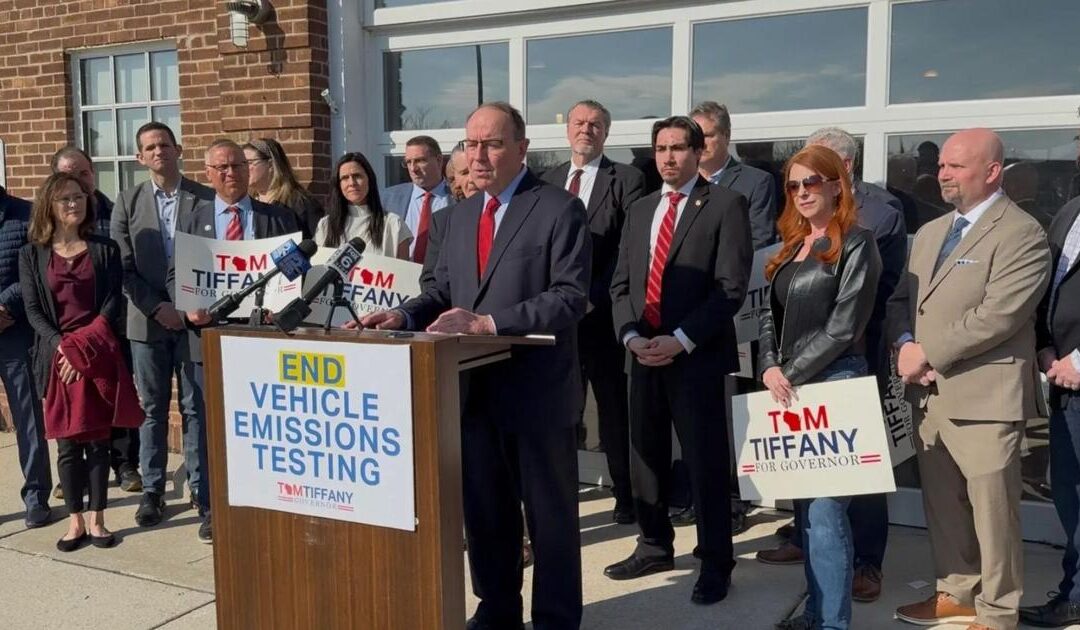
(The Center Square) – Wisconsin congressman and candidate for governor Tom Tiffany said Monday that he plans to work with the federal Environmental Protection Agency in an effort to change Clean Air Act rules and end emissions testing in Wisconsin, calling the program both costly and ineffective.
The proposal was brought to Tiffany and the Wisconsin congressional delegation in December by a group including Rep. Bob Donovan, R-Greenfield. Vehicle emissions testing is currently required in Kenosha, Milwaukee, Ozaukee, Racine, Sheboygan, Washington and Waukesha counties because the area was designated a non-attainment zone.
Donovan and Tiffany both spoke Monday in front of the History Hose Tower in Greenfield about the costs of the emissions testing, including both a 1-cent per gallon petroleum tax and an estimated $271.4 million spent by Wisconsin residents from 1984 to 2022-23.
Congressman and candidate for governor Tom Tiffany and a group of Wisconsin legislators are pushing for an end to vehicle emissions testing in 7 counties pic.twitter.com/oZylAJEUYT— Jon Styf (@JonStyf) March 30, 2026
The Wisconsin lawmakers cited advanced technology and a low failure rate of 3.1% and 3.0% in 2021 and 2022 for the program.
“It is not being done in an effective, efficient manner,” Tiffany said. “So, what we should do is set this program aside, try to get a waiver in regards to this, and allocate those resources – both manpower and money – toward things that are actually going to clean the environment because we want to ensure that we have clean air to live in here in Wisconsin.”
Matt Leppard, who owns a repair shop in Eagle, said that the emissions testing ruins the market for used cars with a check engine light on and can lead to costly repairs that need to then be prioritized over safety concerns such as new tires or other expenses for families.
“People should be allowed to drive a safe car,” Leppard said. “They should be able to put a kid in a car and not worry about that being their grocery budget every month. It’s not just the taxpayer that will save money, everybody will save money and it’s not a partisan issue.”
Tiffany said that he would not instead support a subsidy for those who need repairs, saying that would just be another taxpayer cost for a program that has not proven effective.
“Why are we continuing to do this 40 years later if it is ineffective?” Tiffany said.
Rep, Bob Donovan says it’s time to end emissions testing pic.twitter.com/MbIKfIJ7dM— Jon Styf (@JonStyf) March 30, 2026
Donovan said that he marched in St. Patrick Days parades and heard residents speak up there to him, shouting that he should end the emissions tests.
“I think I speak for most of those residents when I say that each of us is willing to do our fair share of what the government asks of us if it makes sense,” Donovan said. “Well, this doesn’t make sense any longer.”

Democrat candidate pushes back on UW antisemitism law

Democrat candidate pushes back on UW antisemitism law

(The Center Square) – The leading candidate in Wisconsin’s race for governor is unhappy with a new law that defines antisemitism and looks to fight it at the University of Wisconsin.
State Rep. Francesca Hong, D-Madison, who is leading the Democratic race for governor, and who calls herself a Democratic Socialist, took to social media recently to criticize a new law that Gov. Tony Evers signed.
“I am disappointed that Gov. Evers has signed into law a controversial definition of antisemitism that will compromise free speech across the state and academic freedom at our universities,” Hong wrote. “AB446/SB445 will likely make criticism of the state of Israel a discriminatory offense.”
The new law uses the International Holocaust Remembrance Alliance’s definition of antisemitism, which is “Antisemitism is a certain perception of Jews, which may be expressed as hatred toward Jews. Rhetorical and physical manifestations of antisemitism are directed toward Jewish or non-Jewish individuals and/or their property, toward Jewish community institutions and religious facilities.”
The governor didn’t offer any comments on the new law when he signed it.
But Juliana Bennet, another Wisconsin Democratic Socialist who is looking to replace Hong in the State Assembly, did comment.
“Gov. Evers signed AB446 into law. He did so knowing the Wisconsin GOP’s intent to silence Palestinians & anyone speaking out against the apartheid state of Israel and the genocide Israel is committing in Palestine,” Bennet wrote on X. “I reject Governor Evers’ wrongful decision.”
The new law came from legislation from another Madison lawmaker. State Rep. Lisa Subeck, D-Madison, is Jewish. She made the case earlier this year that “antisemitism is real” in Wisconsin.
“This is our opportunity to take a firm stand against antisemitism and to put that definition to be considered. This is guidance that we desperately need at a time when antisemitism is on the rise in our communities,” she said.
Republican Rep. Ron Tusler, R-Harrison, last fall said Wisconsin needs clear rules for what is free speech on college campuses, and what is intimidation.
“This definition shines a light on behavior that might otherwise be excused, dismissed or even justified,” Tusler wrote to lawmakers.

U.S. senators who opposed housing bill got tens of thousands from Blackstone, other groups

U.S. senators who opposed housing bill got tens of thousands from Blackstone, other groups

(The Center Square) – Only 10 U.S. senators voted against the bipartisan housing bill that restricts large institutional investors from buying up single family homes and requires investors to sell build-to-rent homes within seven years.
Those lawmakers also each received tens or sometimes hundreds of thousands of dollars in 2024 election-cycle campaign donations from groups whose profits could drop if the bill becomes law.
Sens. Thom Tillis, R-N.C.; Todd Young, R-Ind.; Mike Lee, R-Utah; Ted Cruz, R-Texas; Rick Scott, R-Fla.; Brian Schatz, D-Hawaii; Rand Paul, R-Ky.; Ted Budd, R-N.C.; Ron Johnson, R-Wis.; and Tommy Tuberville, R-Ala.; all opposed the 21st Century Road to Housing Act.
Their donors include private equity firms, large institutional investors in single family homes, organizations that develop build-to-rent communities, and companies that secure financing for those organizations.
Some senators also received funds from rental housing advocates who publicly opposed the housing bill due to its proposed restrictions.
Due to campaign financing rules, organizations themselves do not donate to the politicians. Instead, their political action committees and employees make the contributions.
Receiving campaign donations from a PAC does not prove that a lawmaker votes or acts according to donor interests. All data is pulled from political donation tracker OpenSecrets.
Sen. Thom Tillis, R-N.C.:
Tillis’ donor profile shows he received at least $468,916 in campaign contributions from large institutional investors and other interested parties.
His top donor was Blackstone Group, one of the most prominent players in the single-family home rental market. Capital Group Companies, Koch Inc., Rock Holdings, and other organizations donated as well.
Tillis did not respond to The Center Square’s request for comment.
Sen. Todd Young, R-Ind.:
Young received at least $291,755 including from large institutional investors Capital Group Companies and KKR &Co. Multiple advocacy groups that oppose the housing bill’s build-to-rent restrictions, such as the National Association of Real Estate Investment Trusts (Nareit), also made donations.
A spokesperson for Young told The Center Square that Young’s vote was not influenced by those donations, but rather “was based on additional changes he hopes can be made to the package to address the clear barriers to building more housing, including encouraging localities to look critically at burdensome zoning regulations.”
The spokesperson also referred to a bipartisan bill Young introduced, the Identifying Regulatory Barriers to Housing Supply Act, that addresses those issues.
Sen. Mike Lee, R-Utah:
Lee received at least $159,459 from potentially impacted organizations, including Blackstone, KKR &Co., and Koch Inc.
A spokesperson for Lee said that the senator “votes according to his own convictions – in this case, because the bill expanded HUD programs eliminated in previous budget requests by President Trump, directed taxpayer dollars to progressive advocacy networks, pushed the federal government further into local zoning and land-use decisions, and failed to deliver the extensive reforms federal public housing programs require.”
Sen. Ted Cruz, R-Texas:
Cruz received at least $145,752 from large institutional investors and other potentially impacted parties, including Maury L Carter & Associates, KKR &Co., Blackstone.
In a statement to The Center Square, Cruz laid out multiple reasons why he voted against the 21st Century Road to Housing Act, including zoning changes in the bill and the impact he thinks the build-to-rent restrictions could have on housing supply.
“Lowering housing costs for all Americans is a priority for this Republican Congress, but this bill fell far short of that goal. Although this legislation prevents the Federal Reserve from issuing a central bank digital currency (CBDC), it only pauses the development until December 31, 2030. My Anti-CBDC Act takes the correct approach by permanently prohibiting the Federal Reserve from ever issuing a CBDC, directly or indirectly. I agree with President Trump that large banks should not be buying single-family homes. Unfortunately, this legislation goes beyond that principle and restricts those hoping to build new rental housing for Americans by requiring build-to-rent homes to be sold within seven years. Restricting the supply of newly built rental units should not be enshrined in law,” Cruz said.
“Additionally, giving the Department of Housing and Urban Development authority to develop zoning and land-use frameworks raises serious concerns. Washington bureaucrats should not dictate zoning decisions for local communities like my hometown of Houston,” Cruz added. “The bill also risked giving a future Democratic administration the ability to impose policies like a rent moratorium by granting the Treasury Secretary broad authority to rewrite key provisions through the regulatory state. I remain optimistic that House Financial Services Chairman French Hill can address these significant concerns through the conference process. I look forward to working toward a final product that actually makes housing more affordable for all Americans instead of expanding the government’s authority to regulate who buys homes.”
Sen. Rick Scott, R-Fla.:
Scott received at least $135,795 from organizations involved in the build-to-rent sector, including Koch Inc. and Blackstone.
Scott did not respond to The Center Square’s request for comment.
In early March, he introduced a bill that would create untaxed savings accounts for Americans saving up for a down payment on their first home.
Sen. Brian Schatz, D-Hawaii:
Schatz received at least $131,500 from organizations that oppose the bill due to its build-to-rent provisions, including the Mortgage Bankers Association, as well as Rock Holdings.
Schatz did not respond to The Center Square’s request for comment.
Schatz had previously told lawmakers that the institutional investor provisions would “demonize people who want to build rental housing for folks.”
Sen. Rand Paul, R-Ky.:
Paul received at least $89,028 from organizations that could suffer adverse impacts from the bill’s build-to-rent restrictions.
Paul did not respond to The Center Square’s request for comment.
In a March social media article, Paul said the bill was equivalent to “the surrender of property and contract rights.”
Sen. Ted Budd, R-N.C.:
Budd received at least $83,525 from interested or potentially impacted groups, including Blackstone, Koch Inc., and the Mortgage Bankers Association.
Budd did not respond to The Center Square’s request for comment.
He introduced a bill in February that would widen eligibility requirements for the federal Home Investment Partnerships (HOME) Program.
Sen. Ron Johnson, R-Wis.:
Johnson received at least $81,662 from institutional investors, including Rock Holdings and Koch Inc.
A spokeswoman for Johnson told The Center Square that “Neither the Senator nor anyone in his office was contacted by those donors.”
“His vote was not influenced by those donations or donors. He voted against the bill for several reasons – many of them laid out in the WSJ column cited below,” she added. “The Senator does not like the government imposing itself into the marketplace and artificially reducing the demand, the number of buyers, and the price homeowners can obtain when they sell their homes.”
Sen. Tommy Tuberville, R-Ala.:
Tuberville received at least $48,650 in contributions from real estate investment groups that might be adversely impacted by the legislation, including Jim Wilson & Associates.
He did not respond to The Center Square’s request for comment.
Tuberville had previously explained that his ‘no’ vote on the 21st Century ROAD to Housing Act was not because he opposed the bill, but because he believed the Senate should focus on passing the SAVE America Act – an unrelated Republican voter ID bill – before addressing issues like housing.
What about House lawmakers?
The U.S. House has yet to take up the Senate-passed legislation, but cautionary comments from lawmakers like Rep. Bill Huizenga, R-Mich., and Rep. French Hill, R-Ark., indicate the bill will face a tough crowd in the lower chamber.

Evers again vetoes WIAA transparency bill on public records, open meetings

Evers again vetoes WIAA transparency bill on public records, open meetings

(The Center Square) – The Wisconsin Interscholastic Athletic Association will not be subject to open meetings and public records requirements after Gov. Tony Evers vetoed a bill that would have added that requirement.
The private organization that governs high school athletics for the state’s public and private schools fought the legislation, saying it is private and does not accept tax money.
“I am vetoing this bill in its entirety because I object the Wisconsin State Legislature forcing a private entity to abide by and comply with the very state public records laws from which the Legislature exempts itself,” Evers wrote. “By the Wisconsin Interscholastic Athletic Association’s own testimony, the organization is committed to transparency, and much of their information is already publicly available.”
Former Gov. Scott Walker vetoed a similar bill in 2015 and Evers vetoed one in 2021 as well.
Proponents of the bill, however, argued that the organization does not make important information available to the public and does not provide enough information when it makes eligibility rulings in particular.
lawmakers that passed the bill argue that the WIAA needs more transparency on its decision-making authority over public high school athletes and schools.
“WIAA’s membership is made up of schools whose boards are subject to open records and open meetings laws, but WIAA is not,” Sen. Cory Tomczyk, R-Mosinee, said in testimony on the bill. “When taxpayer dollars are involved, proceedings should be open and honest. While WIAA receives no taxpayer funds, it uses taxpayer funded facilities and is a fixture in our public school system. While exempting referee and pupil records to keep their personal information safe, SB 16 aims to bring to light what is going on behind the scenes at WIAA and increase transparency between the organization and its members, students, and parents.”
The WIAA’s Executive Director Stephanie Hauser told a committee that the group’s eligibility decisions can become controversial and “I think we’re going to get pummeled with them” regarding public records requests.
“This legislation advances even though the Wisconsin Supreme Court ruled that the WIAA is not a government or quasi-government entity,” the WIAA said in a statement after the vote. “SB 16 imposes burdens typically meant for public offices, and we are concerned this will disrupt our ability to effectively serve our member schools and student-athletes.”

Dane County Republicans denounce violence after Trump supporter shooting

Dane County Republicans denounce violence after Trump supporter shooting

(The Center Square) – The Republican Party of Dane County is condemning political violence after a 31-year-old Madison woman was arrested and accused of shooting and killing her former co-worker in a downtown Madison parking garage.
The criminal complaint stated that 31-year-old Diamond Wallace, who is charged with first degree intentional homicide and possession of a firearm after a felony conviction, worked with 61-year-old victim Christine Jones at a Madison hotel until April 2025.
After that, police believe that Wallace slashed Jones’ tires after accusing Jones of being racist because she supported President Donald Trump, according to WKOW.
It was not clear what motivated the shooting.
“RPDC condemns this killing in the strongest possible terms,” the group said in a statement. “No grievance, no workplace conflict, no personal resentment ever excuses violence. Ever. Some will be tempted to turn this tragedy into a partisan argument or to deflect towards national political debates. We reject that impulse. It is about a woman in Dane County who lost her life.
“We urge every Dane County resident, regardless of background or belief, to recommit to the most basic civic shared responsibility: treating one another as human beings worthy of dignity, safety, and respect for one another.”
Wallace’s cash bail was set at $2 million at a Wednesday hearing, when Wallace appeared via Zoom.
Wallace has a pretrial hearing set for 2:30 p.m. on Wednesday at the Dane County Courthouse.
“As this case moves through the justice system, we call on community leaders, elected officials, and residents alike to reflect on how we can rebuild a culture of respect, accountability, and compassion,” the party said. “Dane County deserves better. Our neighbors deserve better. We must all do better. Be better humans. Choose decency. Reject violence.”
Wallace’s previous felony conviction was from a 2019 charge where Wallace pleaded guilty to resisting an officer with substantial bodily harm and soft tissue injury.

Data centers remain highly unpopular with Wisconsin voters

Data centers remain highly unpopular with Wisconsin voters

(The Center Square) – Wisconsin voters believe that the cost of data centers outweigh the benefits with 69% of those responding to a recent Marquette Poll saying as much.
That’s after 70% said the same thing in a February poll.
One change in those numbers was that more Republicans now oppose data centers while fewer Democrats are now in opposition.
The University of Marquette Law School poll asked 850 registered voters about their preferences from March 11-18.
Large-scale data center projects have popped up across the state in recent years with the tax incentives often hidden in tax increment districts and waiving sales tax on construction materials, something that has led to that $70 million in forgone sales tax in its first two years.
Data centers in Mount Pleasant, Verona, Beaver Dam and Port Washington have been certified by the state to be eligible for the sales tax exemption.
Several bills looking to limit the impact of data centers on energy rates and one looking to block non-disclosure agrees that was backed by comedian Charlie Berens were discussed but did not pass the Legislature before session closed.

Critics question costs of Crowley’s ‘First 30 Day’ plan

Critics question costs of Crowley’s ‘First 30 Day’ plan

(The Center Square) – One of Wisconsin’s Democratic candidates for governor is facing questions about his to-do list if he’s elected.
Milwaukee County Executive David Crowley released his plan for his first month in office if he is elected in November.
“Repeal Act 10; close the special education funding gap; pass universal pre-K and child care utilizing the existing providers already serving Wisconsin families; open BadgerCare as a public health option for every Wisconsin family; strengthen and fund domestic violence prevention and crisis support across rural and urban Wisconsin,” Crowley posted on social media. “Republicans have had years. I’m starting on day one.”
Crowley is not the only Democratic candidate pitching an end to Act-10 and a public health care option.
Mandela Barnes made a similar pledge to end Act-10.
“It’s time to repeal Act 10 and make Wisconsin a union state again,” Barnes wrote Wednesday.
Candidate Joel Brennan also proposed a public option health care plan earlier this week. And candidate Kelda Roys pitched a similar idea last month.
Kyle Koenen with the Wisconsin Institute for Law and Liberty warned, however, that Crowley’s plan will come with a massive price tag.
“Affordability is on the ballot this fall, and this agenda will cost Wisconsinites billions annually,” Koenen wrote in response to Crowley’s list. “Repealing Act 10 is projected to cost the state at least $2 billion per year. Expanding Badgercare would drive up health care costs for all other Wisconsinites.”
The MacIver Institute has reported that Act-10 has saved Wisconsin taxpayers more than $35 billion since 2011. If it is struck down with the liberal-majority Wisconsin Supreme Court, WILL has said those savings will almost immediately disappear.

Wisconsin voters concerned about affordability, property taxes

Wisconsin voters concerned about affordability, property taxes

(The Center Square) – Wisconsin voters are concerned about affordability in all of their lives, including in funding schools.
Seventy-five percent of registered voters said that they were very concerned with inflation and the cost of living while 63% were very concerned with health insurance, 60% with jobs and the economy, 57% with the affordability of housing, 52% with public schools, 51% with illegal immigration and border security and 47% with property taxes in a recent Marquette Poll.
The University of Marquette Law School poll asked 850 registered voters about their preferences from March 11-18.
The poll also showed that Republicans were much more concerned with immigration and border security than Democrats or independents and Republicans were also more concerned with property taxes.
Democrats were more concerned than Republicans about gun violence, inflation, affordability of housing and health insurance.
Overall 35% said they were most concerned with inflation and the cost of living while 14% said illegal immigration and border security, 11% said health insurance, 9% said jobs and the economy, 7% said property taxes and 6% said the affordability of housing.
Fifty-eight percent of those polled said that they are more concerned about property taxes than funding for K-12 public schools while 41% said the opposite. That’s a change from the 60% that said they were more concerned about property taxes in February.
School spending has been a large campaign issue after Gov. Tony Evers’ partial veto that meant a $325 per student per year funding increase for the next 400 years. Voters said that they believe Evers’ power went too far and a November statewide vote on a proposed constitutional amendment will decide if the governor’s partial veto power will remain.
Fifty-two percent said that the veto will require annual tax increases while 48% said they felt the move was necessary to support public schools.
Forty-eight percent said they would vote for a referendum to fund the schools in their community while 51% said they would vote against it.
And, as lawmakers debate the potential of spending what is projected to be a $2.3 billion budget surplus by the end of this budget cycle, 52% of voters said that they would prefer an increase in state aid to schools than a one-time payment to taxpayers.

Lazar not worried about Supreme Court debate postponement

Lazar not worried about Supreme Court debate postponement

(The Center Square) – Judge Maria Lazar said she is disappointed that she didn’t get a chance to debate Wednesday in the race for Wisconsin’s Supreme Court, but she is not worried.
Lazar said postponing the debate with Judge Chris Taylor may help her.
“That’s okay,” Lazar said in an interview on News Talk 1130 WISN. “I think this delay is actually going to light a fire under everyone to go out and vote now.”
Taylor postponed the debate to recover from kidney stones.
“This afternoon Judge Taylor was diagnosed with kidney stones and will rest and recover for the next couple days before returning to the campaign trail,” Taylor’s campaign said in a statement. “Judge Taylor will soon launch a statewide tour to meet voters across Wisconsin and we are committed to rescheduling today’s debate next week on a date that works for WISN, debate partners, and our opponent’s campaign.”
WISN TV now says the debate will be April 2, five days before Election Day.
“So that was my opportunity, last night, to talk about me and this race. It’s okay, it doesn’t matter. I think this lights a fire. I think people are going to get out and vote,” Lazar added. “I know people think that she’s putting this off because she thinks she’s winning, and that way she doesn’t have to talk. She’s had that strategy this whole campaign.”
Taylor’s campaign did not respond to a request for comment from The Center Square.
The debate was supposed to come just one day after the latest Marquette Law School Poll showed Taylor with an 8-point lead over Lazar. But the poll also showed that 46% of voters say they have not yet made-up their minds.
“She spent almost $2.5 million, and $1 million during the Olympics, and the people of Wisconsin have said they don’t like her. They don’t want her. And they want to hear about me,” Lazar said.

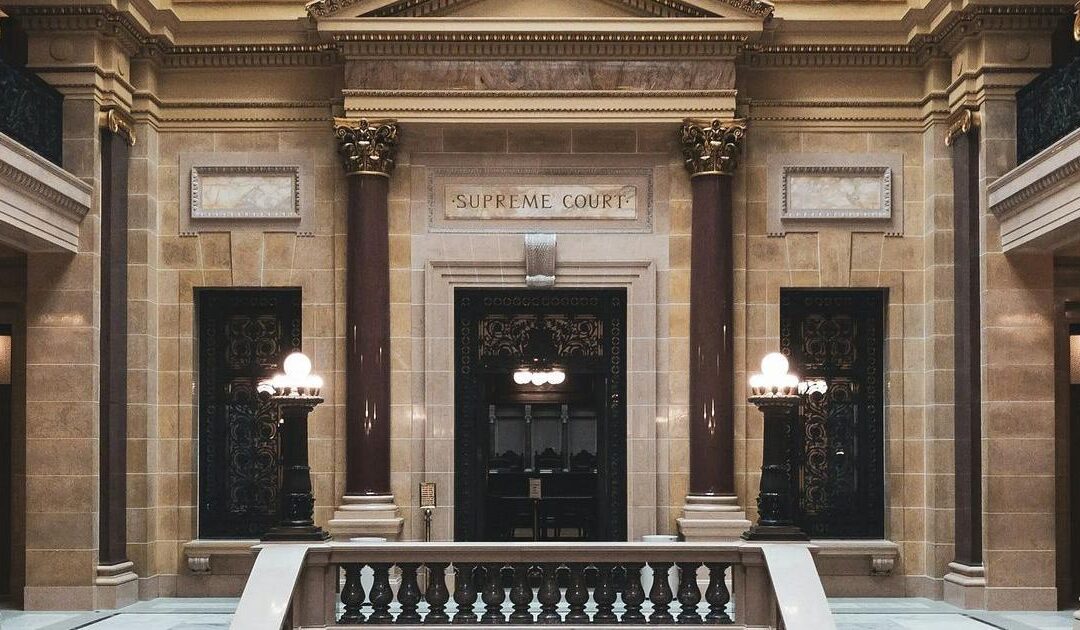
Wisconsin Supreme Court delayed due to Taylor’s illness

Wisconsin Supreme Court delayed due to Taylor’s illness

(The Center Square) – A Wisconsin Supreme Court debate scheduled for Wednesday night was delayed after candidate Chris Taylor said that she could not attend after “feeling unwell” and visiting urgent care.
“Physicians then recommended she visit the hospital for additional evaluation,” Taylor’s campaign said in a statement. “While she is unable to participate in tonight’s debate, we look forward to rescheduling and finding an opportunity for voters to hear from both candidates before Election Day.”
The debate Wednesday night was the first scheduled debate heading into the April 7 election. Early voting has begun in the race.
Taylor’s campaign said that an update on her condition will be released when it is available.
Taylor, a former Democratic state representative, widened her margin of lead over conservative Maria Lazar with 23% of voters compared to Lazar’s 17% in a Marquette Poll released on Tuesday.
“While we hope Chris Taylor gets well soon, votes are already being cast for this election,” Republican Party of Wisconsin Spokesperson Anika Rickard said in a statement. “This debate would allow Wisconsinites to hear Chris Taylor answer for her far-left record, and we hope it gets rescheduled soon.”
The court currently has four liberal members and three conservative justices and this election is to fill the seat of conservative Rebecca Bradley. Conservative Annette Ziegler has announced that she will not run again in 2027.

Steil: Victory in Iran means no nukes

Steil: Victory in Iran means no nukes

(The Center Square) – One of southeast Wisconsin’s congressmen says there is a clear path to victory in the war against Iran.
Republican Bryan Steil said he hopes negotiations can bring an end to the air strikes that have pummeled Iran for nearly a month, but he said the United States can’t walk away and allow Iran to continue to be a threat.
“The best case scenario is that the regime would fall and we would have reasonable leaders,” Steil said in an interview on News Talk 1130 WISN. “But let’s go one level below that. I think what we need to see is that Iran is not capable of developing a nuclear weapon, or the ability to deliver that with ballistic missiles. Second, we need to stop them from being a state sponsor of terrorism the activities.”
Steil said President Donald Trump has been clear that he doesn’t want to allow Iran to have a nuclear weapon, just like every other modern president before him.
“Iran has been threatening the region and the United States through both their funding of terrorism largest state sponsor of terrorism in the globe, as well as their mission to try to develop not only a nuclear weapon but ballistic missiles,” Steil added. “The president is engaged in negotiations to make sure that the broader goal, again not sponsoring terrorism around not having a nuclear weapon that they could deliver with ballistic missiles, to be able to give all of us want to see peace in this region.”
Still, Steil did not say what victory in Iran should look like, or when the attacks should end.
“The activities that have taken by President Trump, in his role as commander-in-chief, have been to degrade Iran’s ability to develop that nuclear weapon, degrade their ability to develop missiles to deliver, and ultimately clip their wings on the financing side so they cannot continue to support terrorism around the globe,” Steil said. “I think what we will see is that part of the actions being successful.”
Wisconsin Democratic U.S. Sen. Tammy Baldwin, however, worried that victory in Iran will come with a huge cost.
“The President just ordered 3,000 ground troops to be deployed to the Middle East,” Baldwin wrote on social media on Tuesday. “These are Americans’ sons and daughters who are at risk now because of this illegal war. Each day, we are getting closer to boots on the ground in Iran, and I’m doing everything I can to stop it.”