Tammy baldwin
Wisconsin brewery’s post about Trump assassination attempt raises ire

Wisconsin brewery’s post about Trump assassination attempt raises ire

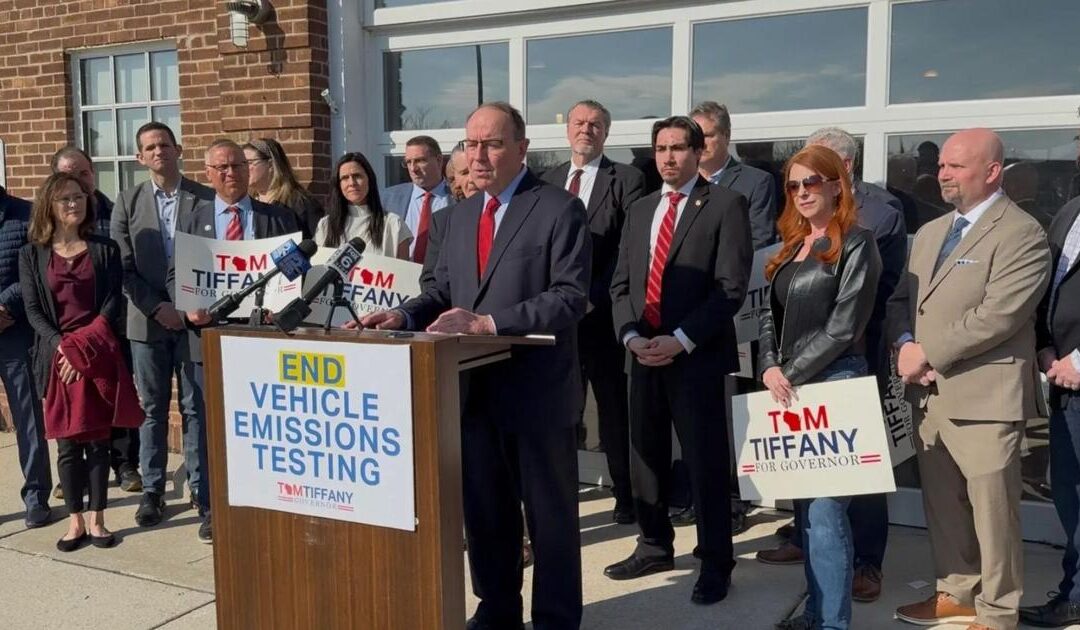
(The Center Square) – Wisconsin gubernatorial candidate Tom Tiffany is asking that Democratic candidate Francesca Hong comment on a post by fellow Democrat Kirk Bangstad and Minocqua Brewing that said a “a brother or sister in the Resistance needs to work on their marksmanship” after a shooter attempted to run past security at the White House Correspondents’ Dinner.
Bangstad’s company posted that it would be a free beer day if President Donald Trump dies.
Hong reportedly donated $25 to Bangstad’s 2020 campaign for state assembly.
Congressional candidate Rebecca Cooke, running again against incumbent Derrick Van Orden, reportedly previously did work for Bangstad’s campaign.
Bangstad’s post caught the attention of social media accounts such as Libs of TikTok and media outlets across the country. In response, Bangstad made several posts about reporters who reached out for comment, posting their cellphone numbers and criticizing the outlets, including Newsweek, Fox News and the Milwaukee Journal-Sentinel.

Milwaukee alderman announces congressional run

Milwaukee alderman announces congressional run

(The Center Square) – One of Milwaukee’s aldermen is jumping into the race for Congress in southeast Wisconsin.
Alderman Peter Burgelis on Sunday said he’s running for Congress against Republican U.S. Rep. Bryan Steil.
“I can’t sit by while Bryan Steil lets Donald Trump take aim at our neighbors, our pocketbooks and our values,” Burgelis said. “Congressman Steil has made a career working for the rich and powerful, from Speaker Paul Ryan to big law firms, and he’s backed Trump’s costly agenda 100%.”
Wisconsin’s 1st Congressional District runs from Racine to the Illinois stateline, and west to Janesville.
The Steil campaign called out Burgelis for now living in the district. The U.S. Constitution only mandates candidates live within a state they represent.
Burgelis was first elected to Milwaukee’s City Council in 2024. Before that, he was a commissioner for Milwaukee County.

Report: Wisconsin will forego $1.5B in sales tax to 4 data center companies

Report: Wisconsin will forego $1.5B in sales tax to 4 data center companies

(The Center Square) – Wisconsin is estimated to lose $1.5 billion in initial foregone state sales tax from four data center projects, according to a new Legislative Audit Bureau report.
In addition, the state will lose $369 million annually once construction on the projects are complete, according to the document obtained by Wisconsin Watch.
Wisconsin has a wide-ranging sales tax exemption for data centers that was created in the state’s 2023-25 budget.
A Legislative Audit Report from fall 2025 showed that $70 million in foregone sales tax had already been foregone, which far exceeded estimates from the time the exemption was initially passed.
The exemption applies to everything from property purchases to computer servers and energy systems at the site to electricity and cooling systems.
Wisconsin’s Department of Revenue estimated the value of the incentives would be $8.5 million for the full multi-year construction of a facility and $735,000 recurring afterward. The department attributed the estimates to the U.S. Chamber of Commerce estimates that a typical data center costs about $215.5 million to construct.
But many of the Wisconsin data centers are much more expensive than initial estimates with Microsoft alone announcing more than $20.6 billion in data centers in Wisconsin.
OpenAI, Oracle and Vantage Data Centers have announced more than $15 billion in data center investments in Port Washington. Epic Hosting is expected to spend $347 million in Verona. Meta has announced a $1 billion project in Beaver Dam.
In all, that means $36.9 billion in data centers are coming to the state from those four companies alone with the state forgoing an estimated $40 million in sales tax for every $1 billion in company investment.
“The announcements and planned investments from these four certified companies combine for a total investment of more than $36.9 billion, spread over the life of each project” currently planned to occur between 2024 and 2028, the report said. “It is estimated that an investment this size would result in $1.5 billion in initial foregone state sales tax revenue. Additional foregone state sales tax revenue of $369 million on an annual basis is estimated once these projects are completed.
“Expenditures eligible for the state tax exemption would also be exempt from local sales and use taxes, resulting in forgone county, city, and premier resort area tax collections, if applicable.”
Those totals have led Congressman Tom Tiffany, a Republican candidate for Wisconsin governor, to declare that he will end subsidies for data centers.
The sales tax exemptions are just one of the tax breaks for data centers with many of the projects also being placed in tax increment districts where they can keep the additional property taxes from their properties to cover money spent on things such as infrastructure at the data center site.

Wisconsin AG sues prediction markets over sports wagering allegations

Wisconsin AG sues prediction markets over sports wagering allegations

(The Center Square) – Wisconsin Attorney General Josh Kaul filed a series of three lawsuits against prediction markets in Wisconsin alleging that the companies are operating illegal commercial gambling in the state.
The tactic has previously been taken in other states, including Arizona.
The lawsuits targeted Kalshi, Robinhood, Coinbase, Polymarket, Crypto.com and their affiliates for operating what the prediction markets on event contracts in the state that look and payout like sports wagering. Kalshi makes $1 billion annually from the event contracts with sports representing 90% of its revenue, the lawsuit stated.
“Thinly disguising unlawful conduct doesn’t make it lawful,” Kaul said. “These companies’ alleged facilitation of sports betting in Wisconsin should be shut down.”
The lawsuits are part of a national debate on whether states or the federal government should have the final say over prediction markets, which allow people to bet on real-world outcomes such as sports and elections. As states ramp up enforcement against these markets, the Commodity Futures Trading Commission has asserted its exclusive authority, setting up a legal battle that could determine the future of event-based trading nationwide.
The lawsuits come as Wisconsin has approved allowing its 11 tribes to start operating online statewide sports wagering after compacts are created and approved for the revenue and state payments that will be made from the operations.
The Ho-Chunk Nation previously filed a lawsuit filed against Kalshi and Robinhood for operating in the state.
Wisconsin’s tribes agreed to a ban on micro betting on small events such as the result of an individual pitch in a baseball game along with several responsible gaming concessions in order to get the votes necessary to pass the state’s new sports wagering bill.

Prices continue to rise, home sales up in Wisconsin in March

Prices continue to rise, home sales up in Wisconsin in March

(The Center Square) – Rising prices are not scaring Wisconsin home buyers away.
The latest Wisconsin Realtors Report, for March, shows another increase in prices. But it also shows a sizable jump in sales.
“Sales rebounded in March after a slow start in January and February. As we enter the peak period for sales, it’s good to see this bounce in closings, and hopefully it continues into the summer,” Realtors chairwoman Amy Curler said.
March 2026 home sales jumped 7% compared to March of 2025. The real estate agends said they closed on 4,750 homes last month, compared to 4,441 last March.
Since January, home sales in Wisconsin have steadily grown.
According to the report, sales were up more than 2% for the first quarter of 2026. That is noteworthy, particularly because prices are growing as well.
“The annual appreciation of home prices ticked up, rising 6.5%, and the modest improvements in family income and mortgage rates just kept pace with that price increase. Supply remains tight, so we really need to see consistent reductions in mortgage rates for affordability to improve,” Realtors CEO Tom Larson added.
The median price for a home in Wisconsin increased last month, jumping to $330,000. That’s a 6.5% increase from March of last year.
That is, of course, the statewide median price. Homes in the Madison-area remain more expensive. The median price for a house in south central Wisconsin hit $395,000 last month. Homes in southeast Wisconsin, which includes Milwaukee, saw a median price of $340,000.
Homes in central and northern Wisconsin remain the only ones with a median price less than $300,000. The Realtors report said the median price there is $272,000. The median price in northern Wisconsin saw a median price of $275,000.
The report adds that interest rates on 30-year mortgages have fallen, but the real estate agents said there continues to be not enough homes for sales.

Tusler: Wisconsin tribes agreed to microbetting ban, self-exclusion practices

Tusler: Wisconsin tribes agreed to microbetting ban, self-exclusion practices

(The Center Square) – Wisconsin’s tribes agreed to a ban on micro betting on small events such as the result of an individual pitch in a baseball game along with several responsible gaming concessions in order to get the votes necessary to pass the state’s new sports wagering bill, according to Rep. Ron Tusler, R-Harrison.
Tusler said on Thursday that the tribes first declined the requests but ultimately agreed with a group of Wisconsin legislators to ban the use of credit cards, use an age verification system, allow self-exclusion and allowing users to put a cap on daily deposits.
“I shared these concerns with many of my Republican colleagues, who expressed similar hesitation,” Tusler said. “For that reason, I opposed the bill throughout most of the legislative process. However, I realize that unregulated sports gambling is already occurring in Wisconsin, unchecked, on sites like FanDuel and DraftKings. Further, there has been no effort to enforce our laws on these sites.”
Wisconsin Gov. Tony Evers signed the sports wagering bill into law April 9 and is negotiating compacts with Wisconsin’s 11 tribes to send revenue from gaming from the tribes to the state. Those compacts must be approved by the federal government.
“Although not perfect, these limitations are better than unregulated and unchecked betting in this state,” Tusler said. “I will be watching closely as the tribes amend the sports gambling compact to include these provisions and work vigorously to provide more resources to help problem gamblers. Our goal should be to reduce the amount of people gambling, and I will work with both Republicans and Democrats to achieve this.”
The law changed the state’s definition of “bet” to allow the state’s tribes to offer mobile sports wagering if the bettor is in Wisconsin and the sportsbook servers are on tribal land, an amendment to current compacts allowing for casino gambling and sports wagering on tribal lands despite the state’s ban on betting.
The law allows for a similar sports wagering model as Florida, where the state’s sportsbook operators have servers on federally recognized tribal lands while users can be in the state of Wisconsin.
“I have long been against sports betting in Wisconsin,” Tusler said. “In 2018, the Supreme Court struck down the Professional and Amateur Sports Protection Act (PASPA), which made sports betting illegal in the United States. Since then, I have had the unfortunate opportunity to see the effects of unchecked, legalized sports betting across the country.
“From what I have seen, unregulated, legalized sports betting has caused more harm than good in these states.”

Wisconsin candidates slam Rodriguez’ secret budget proposal

Wisconsin candidates slam Rodriguez’ secret budget proposal

(The Center Square) – Openness and transparency is now an issue in Wisconsin’s race for governor.
Lt. Gov. Sara Rodriguez, who is one of seven Democratic candidates for the state’s top seat, last week said she would craft a new state budget in secret to avoid Democratic opposition if she is elected in November.
“I have committed to having a budget done before I swear in, and we are going to do this, we are going to do our negotiations behind a curtain so that we are not doing a circular firing squad within the Democratic Party,” Rodrigez said. “We have got to make a difference in people’s lives. We have got to be on the same page.”
Channel 12 broke the story, and on Wednesday, most of Rordiguez’s Democratic opponents responded.
“Latest reminder to everyone that sunshine is the best disinfectant,” Sen. Kelda Roys, D-Madison, said. “Backroom deals are NOT the way to deliver progress for Wisconsinites. Democracy delivers best when it’s transparent and inclusive of everyone in the state.”
“As the only person in the race with experience creating budgets, this sounds like hiding from the people, and that is unacceptable. I have never created or signed a budget in secret. I have done it in the open with town halls, public input, and real transparency because it is your money and you deserve a say,” Milwaukee County Executive David Crowley.
Former Department of Administration secretary Joel Brennan also joined the fray.
“I helped build two budgets with Gov. [Tony] Evers, and I can tell you, it’s one of the hardest and most important things a governor does. You’re balancing the demands of every state agency and every community across the state, all while the clock is ticking and people are counting on you to get it right,” Brennan said on X. “You don’t get a good budget by hiding it from the people it’s supposed to serve.”
Republican Tom Tiffany also slammed Rodriguez’s comments.
“@saraforwi said she will negotiate her budget “behind a curtain” because moderate Democrats will struggle with her ideas,” Tiffany wrote on X. “You deserve transparency. Listening sessions will be held across Wisconsin during the budget process. I won’t govern in secrecy.”
Rodriguez later tried to clarify, and said she is simply trying to be ready to go as soon as she is sworn in.
“My commitment is simple: be ready on Day One as governor to deliver a state budget that reflects our values and priorities,” she added.
Rodriguez’s focus on working with Democratic leaders behind the scenes is also a bit of a criticism of how Gov. Tony Evers crafted three of his four state budget.
Evers routinely worked on a budget on his own, then delivered his spending plan to lawmakers. A number of Democratic lawmakers didn’t like that approach.
Democratic legislative leaders did have more say in the current budget, but that was because Republicans needed Democratic votes to get the plan through the Assembly and Senate.

Poll: 69% nationwide believe data center costs outweigh benefits

Poll: 69% nationwide believe data center costs outweigh benefits

(The Center Square) – A majority of adults in the U.S. believe that the costs of data centers outweigh the benefits with 69% believing the costs are greater and 30% believing that the benefits are higher, according to a new national poll from the Marquette University Law School.
The results were an increase from the 62% who believed that the costs outweighed the benefits in January.
The results mirrored results from a survey of 850 registered voters in Wisconsin, when 69% of those voters said the costs outweigh the benefits.
Questions were asked of 982 voters nationwide between April 8-16.
Large-scale data center projects have popped up across the country in recent years with the tax incentives often hidden in tax increment districts and waiving sales tax on construction materials.
A recent Good Jobs First report showed that 14 states and scores of local governments fail to properly disclose how much revenue they are losing to data center tax breaks while a deeper look at just three states showed that they are losing more than $1 billion per year to data center tax breaks.
A Wisconsin waiver on sales tax on large-scale data center construction materials has led to that $70 million in forgone sales tax in its first two years, a number that is expected to multiply as data centers in Mount Pleasant, Verona, Beaver Dam and Port Washington have now been certified by the state to be eligible for the sales tax exemption.
The new Marquette Poll showed bipartisan opposition to data centers with 62% of Republicans, 76% of Democrats, and 73% of independents saying the costs are greater than the benefits. Those numbers all increased since a January poll.

Well-funded Republican drops out in Wisconsin congressional race

Well-funded Republican drops out in Wisconsin congressional race

(The Center Square) – A reported $3 million campaign was not enough to get Paul Wassgren to the primary in the race for Congress in northern Wisconsin.
Wassgren announced that he is suspending his campaign to replace Tom Tiffany as the congressman in Wisconsin’s Northwoods.
“This election has never been about a position or a paycheck for me – it is about serving Wisconsin families and creating economic opportunities for our state,” Wassgren said in a statement. “While I have the resources and message to win this race and be a fierce advocate for our district in Congress, I recognize that a bloody and highly expensive primary will only benefit the Democrats. In light of the spring election results, I call on all Republicans, including candidates, to prioritize the interests of the Republican Party and the state of Wisconsin.”
Wassgren is a businessman and corporate attorney from Ashland. Campaign records show he spent more than $3 million on his campaign through early April.
Wassgren said instead of running for Congress, he is going to spend his time as Ashland County Republican chairman to get Tiffany elected governor.
“As our next governor, Tom Tiffany will restore common sense and conservative values to Madison. I will proudly advocate for him during this critical election year for Wisconsin,” he added.
Wassgren’s exit thins the crowded field in the Northwoods a bit, but still leaves seven candidates vying for the open seat.
Republicans Michael Alfonso, Jessi Ebben, Nina Baum and Kevin Hermening are still in the race. As are Democrats Fred Clark, Chris Armstrong and Ginger Murray.
Alfonso may be the best-known candidate in the race.
Alfonso is married to one of Transportation Secretary Sean Duffy’s daughters. Duffy held the Congressional seat from the Northwoods for almost eight years.
Alfonso also has President Donald Trump’s backing. Trump endorsed Alfonso back in January.
Voters will make their choices in the primary in August. The actual election will follow in November.

Report: Wisconsin spends between $4.5-$6B annually on criminal justice

Report: Wisconsin spends between $4.5-$6B annually on criminal justice

(The Center Square) – Wisconsin was second in the Midwest and 12th among all states in per capita correctional spending, according to a new wide-ranging report on Wisconsin’s criminal justice system.
Combined spending for the system and all of its functions between local governments in the state is between $4.5 and $6 billion annually, according to the study from the Wisconsin Policy Forum.
Law enforcement spending of $328 per resident in the local level was slightly below the national average but state spending on law enforcement was the lowest of any state in the country at $8 per resident, according to the report.
The next-lowest spending state was Florida with $32 per resident while the average in the country was $60 per resident. There were 22,801 adults in state prisons in 2024, exceeding the 17,648 capacity that the facilities were designed to house.
“Wisconsin’s correctional system carries significant financial and human costs,” the report concluded. “State and local spending on corrections ranked 12th among the states in 2022, and Wisconsin had the highest cost per capita in 2021 to reincarcerate people for violations of community supervision conditions, although these reincarcerations have decreased in recent years.
“Corrections costs are likely to increase both from the significant wage hikes for prison staff that were approved by the Legislature in 2023 to combat persistent understaffing, and from growing medical costs to care for the aging prison population.”
The state also has seen the number of individuals incarcerated whose most serious offense was a violent crime rise between 2000 and 2023 and, over that same time, the number incarcerated who were found guilty of intoxicated driving has quadrupled.
The report reasoned that increase was the result of increased penalties with longer prison stays along with more convictions for those offenses.
“While the overall number of court cases decreased during our period of study, we also observed a rise in the number of cases involving at least one felony across most crime categories,” the report stated. “These trends have contributed to Wisconsin’s prison and community supervision rates remaining high even as overall crime rates fell between 2019 and 2023, including an ongoing decline in property crimes.”

Evers vetoed late-session right-to-race in Wisconsin racing facility protections

Evers vetoed late-session right-to-race in Wisconsin racing facility protections

(The Center Square) – A late-session bill that would have protected local racing facilities in Wisconsin from litigation and law changes was vetoed by Gov. Tony Evers in a flurry of post-session vetoes.
The “right-to-race” bill would prevent neighbors who buy their homes after the racing facility was in place from filing nuisance lawsuits against the facility unless the facility had a substantial and material expansion of operations.
The bill also prevented new laws that conflict with the racing facility’s use.
“I am vetoing this bill in its entirety because I object to creating unfair and unnecessary hurdles for people pursuing legal avenues to vindicate the use and enjoyment of their land,” Evers said in his veto message. “As I have said before, I believe the presumption should be an open courthouse door to anyone seeking justice and an honest debate of the law of the land, and any immunity or deviation from that presumption should be tailored and finite.”
Bill supporters, however, believe that the bill was built to protect racing from subdivisions and home owners who move to an area after the facility was already operating.
“Motorsports is an industry that has enlivened life in Wisconsin for nearly a century,” the Specialty Equipment Market Association wrote in a post-veto message. “Instead of protecting Wisconsin’s economy and network of family-owned dirt ovals, drag strips, and every motorsports facility in between, and instead of fostering American manufacturing, STEM education, and engineering innovation, Evers made it crystal clear whose side he’s on: lawyers and NIMBYs.”
State Rep. Jeff Mursau, R-Crivitz, said in testimony on the bill mirrors right-to-farm legislation already in law.
Sen. Cory Tomczyk, R-Mosinee, said in testimony that the bill would protect everything from the Milwaukee Mile and Road America to smaller tracks like Marshfield Motor Speedway and Golden Sands Speedway in Wisconsin Rapids.
“Wisconsin’s racing heritage runs deep and unfortunately, NIMBYTsm is putting these businesses at risk of closing and decimating a way of life for small town America,” Tomczyk wrote. “Current law allows individuals and local governments to bring actions to stop or correct a public nuisance, but also recognizes that certain longstanding and lawful activities should be protected from nuisance claims when they do not pose a substantial threat to public health or safety. Race tracks certainly fall into that category.”
Evers’ veto said that he did not approve of the block on local legislation against racing facilities because he prefers local control.
“I am also vetoing this bill because I object to removing control from local authorities and preempting their ability to pass ordinances with the interests of their community in mind,” Evers wrote. “This bill removes the ability for local residents in municipalities throughout the state to engage in self-government by passing local ordinances related to nuisance actions involving racing facilities.”

Wisconsin Democrats use 4/20 to push for marijuana legalization

Wisconsin Democrats use 4/20 to push for marijuana legalization

(The Center Square) – There was lots of pot talk on social media in Wisconsin on Monday.
A number of Democrats, including two of the leading candidates for governor, took to X to push for legal marijuana on 4/20.
“It’s about time Wisconsin legalizes marijuana. Illinois got $36 million dollars in tax revenue from Wisconsinites in one year – we are giving our neighbors millions every year by not legalizing,” former Lt. Gov. Mandela Barnes said in a post. “Happy 4/20, please enjoy responsibly!”
4/20, celebrated on April 20th, is the unofficial holiday for marijuana.
Barnes was not the only one who took to X to push for full legalization in Wisconsin.
“Wisconsin is one of the last states without a real cannabis program, and we’re handing our neighbors millions every year because of it,” Rep. Francesca Hong, D-Madison, said in a post. “My Weed for Speed policy sets us up for smart legalization and puts the revenue into rural broadband. We’ll build it right and repair the damage from decades of criminalization.”
Hong and Barnes are the frontrunners in Wisconsin’s Democratic race for governor.
Milwaukee County Executive David Crowley, who is also running for governor, also took to X to show his support for legal marijuana.
“Wisconsin is falling behind. Legalizing marijuana is about fairness, growth, and common sense. Outdated laws hurt communities and waste resources,” Crowley said. “As governor, I will legalize it and invest the revenue in schools, infrastructure, and small businesses.”
Almost every Republican in Wisconsin was silent about Monday’s push for legalized pot, but Republicans at the Capitol have fought full legalization for years.
The only Republican who spoke up on X on Monday was the head of the St. Croix Valley Young Republicans, who pushed back on the statement from Madison’s Democratic Socialist candidate for the Assembly who said Wisconsin needs to join most of its neighbors and legalize marijuana.
“”No, Wisconsinites shouldn’t have to drive to Illinois or Michigan to buy weed,” DSA candidate Juliana Bennet said on X.
“Actually, they should,” said Brady Penfield.

Wisconsin lawmakers still want answers on UW System president’s firing

Wisconsin lawmakers still want answers on UW System president’s firing

(The Center Square) – Wisconsin legislators aren’t giving up on gathering more information on the firing of former Universities of Wisconsin President Jay Rothman.
Sen. Rob Hutton, R-Brookfield, said recently that the Legislature is not done exploring the matter and make sure that the Board of Regents and university leaders are meeting their obligations to students.
“The Regents cited performance reviews and concerns about Mr. Rothman’s style, but they had no documentation for the committee and didn’t provide a single note, memo, or record to support their decision,” Hutton said in a radio address. “Even the smallest private employer has to maintain thorough records for the most routine personnel decisions. The public deserves at least that level of transparency when it comes to one of our state’s most important institutions.”
The Senate Committee on Universities and Technical Colleges recently invited all 10 regents who were up for confirmation to a meeting with two appearing and answering questions about the vote to remove Rothman.
Republican committee members, however, did not believe the response was sufficient and did not vote on the confirmations at its April 9 meeting.
Before the vote for his removal, Rothman said that he was told to resign or be fired. He decided not to resign.
“The UW System is facing major long-term challenges that demand attention, such as declining enrollment, affordability, and the ever-changing needs of employers,” Hutton said. “Instead, this firing has damaged confidence in the institution and created many unanswered questions at this critical moment.”

Wisconsin football’s NIL era downfall had cost; it’s now costing taxpayers

Wisconsin football’s NIL era downfall had cost; it’s now costing taxpayers

(The Center Square) – Wisconsin football’s struggles to win in the five years since name, image and likeness rules allow athletes to receive compensation have been in effect has led to between $29 million and $68 million less in gameday spending, according to a new analysis from UW-Madison’s Center for Research on the Wisconsin Economy.
The report used employment data from Dane County hotels and attendance at Badger home game to extrapolate information on less visitor spending while showing the overall Madison economy did not exhibit an economic downturn independent of the home football games.
Home football attendance dropped from a pre-COVID average of 66,530 fans per game (2006–2019 average) to 56,343 (2021–2025).
The report noted that peer-reviewed research has shown that there are small or null economic effects of sports at the metropolitan level and that gameday losses are partially offset by other local spending.
The report comes as Gov. Tony Evers signed an NIL bill from the Wisconsin Legislature that will send $14.6 million from the state’s general fund annually to UW-Madison athletics for facility debt, a move that the report points out is unprecedented in the Big Ten Conference or in the country.
North Carolina is also an outlier by sending $300,000 to each of 13 state public school collegiate athletic departments.
“The case for the appropriation rests on optimistic assumptions about its effectiveness and on the implicit judgment that general-fund dollars are better spent on athletics than on their next-best alternative use,” the report concludes. “The case against rests on the opportunity cost of those dollars, the availability of private channels (donor collectives) that most Big Ten peers rely on, and the broader question of whether subsidizing a commercial entertainment enterprise is an appropriate use of state resources.
“The effectiveness of AB 1034 should be evaluated in the years ahead against the trajectory of on-field performance, attendance, and hotel occupancy in Dane County—and against the returns that the same dollars might have produced elsewhere.”
The report stated that, while 2025 numbers are not complete, it estimates that a 17,467 attendance shortfall led to more of a gameday spending shortfall.
While Badgers football had long outperformed athletics spending, the start of the NIL era and Chris McIntosh’s time as athletics director at the school saw the team’s results recede back to what would be expected for its athletics spending.
Private donations and NIL funds to athletes are not included in the spending. Even with that not included, conference median athletics spending rose from $31.6 million to $43.5 million in the first three NIL years, with Ohio State and Michigan spending $64–$73 million and Wisconsin spending $43 million, similar to Indiana and below Nebraska, Michigan State, Iowa, Rutgers and Penn State.
“Wisconsin moved from a large positive residual to near or below the spending–wins relationship once compensation restrictions on athletes were lifted,” the report said. “In a labor market where talent can be priced and traded freely, the rents that previously accrued to well-managed but moderately funded programs are now flowing to athletes themselves. Operational efficiency still matters, but it no longer substitutes for compensation.”

MPS superintendent talks belt-tighten, praises possible end of Act-10

MPS superintendent talks belt-tighten, praises possible end of Act-10

(The Center Square) – Milwaukee’s superintendent says she understands that she must make difficult budget decisions, even as she hopes what some people call the most significant school budget reform in Wisconsin history gets struck down.
Milwaukee Public Schools superintendent Brenda Cassellius was on UpFront over the weekend.
She defended her decision to cut nearly 200 jobs at MPS’ central office, while also using a federal grant to hire more than 150 new teachers and paraprofessionals.
“We have to make the very difficult decisions to tighten our belt to make sure that we’re spending within our means. We have been overspending within the district,” Cassellius said.
Cassellius said MPS has to stop “overspending,” largely because the district doesn’t have any extra money to spend.
“We only have about $14 million left on the referendum that we can spend in the budget year past this one, and so we know that by [fiscal year] ’28, which is the funding for the school year ’27-28, we won’t have any new additional referendum dollars,” she added.
Voters approved a $252 million tax increase in 2024 to stabilize MPS’ finances.
That money is already earmarked, and Cassellius said MPS is looking at $20 million in additional insurance costs next year, which means there could be a deficit going forward.
And that is before the Wisconsin Supreme Court decides the fate of Act-10.
Proponents say Act-10 has saved taxpayers more than $35 billion since it was signed into law in 2011. The law limited what teachers can negotiate on, specifically banning insurance rate increases from contract talks.
Cassellius said she wants to see Act-10 struck down.
“I’ve always been a supporter of unions and labor,” Cassellius said. “I think they play a really important part. I actually said to the union I’d want to be one of the first ones to have our contract in place.”
She didn’t offer a guess as to how much the end of Act-10 would cost MPS.
Cassellius also said she can’t rule out a new school referedum to raise more money. She said MPS must also look at its aging buildings.
But Dan Lennington with the Wisconsin Institute for Law and Liberty said MPS, like all schools in the state, don’t need as many buildings because they are looking at fewer students.
“Wisconsin will lose 4.6% of its public school enrollment by 2031. Large school districts MUST plan to cut spending/staff/facilities,” Lennington wrote on social media. “Why should budgets keep growing?”

Report: Wisconsin school referenda have led to funding gap for public schools

Report: Wisconsin school referenda have led to funding gap for public schools

(The Center Square) – The number of school referenda approved in Wisconsin has led to a larger gap in how much school districts can receive from taxpayers.
That means school districts that have passed referenda are receiving much more funding than those that have not.
“The question may eventually be decided in court,” Wisconsin Policy Forum wrote in its report. “In February 2026, a group of school districts, parents, and advocacy organizations sued the Wisconsin Legislature, alleging that it has systematically underfunded K-12 school districts and violated the state constitution in the process. The Wisconsin Supreme Court last found the school aid funding system to be constitutional in 2000.”
The state saw 61.3% of referenda pass in the spring, with 46 of 75 school district referenda being approved by voters. More will be coming in the fall election.
The only lower percentage of approvals in spring elections in an even-numbered year is 55.0% in 2010 with 60.2% in 2024.
Overall, the lowest approval rate in an even-numbered was 52.7% in 2010 and it was 70.1% in 2024.
Will Flanders, research director for the Wisconsin Institute for Law and Liberty, has shown using Department of Public Instruction data that Wisconsin is currently spending more on public schools than it did a decade ago, jumping to $18,592 per student from $16,820 in 2014.
He also has pointed out that there is no correlation between spending more on schools and student performance.
“The relationship between spending and outcomes is generally slightly negative,” Flanders wrote. “When we’re spending nearly $19K per student, we are well past the point of diminishing returns. More money is not the answer.”
The data that Flanders used to present that information, however, has now been removed from DPI’s website.
After WILL exposed that current public school funding is HIGHER than year 2000 levels, @WisconsinDPI suddenly removed the once publicly available school spending data. We need more transparency, not less. pic.twitter.com/mTxtPGvbOQ— WILL (@WILawLiberty) April 13, 2026