water parks
Prohibition on medical training using live animals proposed

Prohibition on medical training using live animals proposed

(The Center Square) – Medical training using live animals would be prohibited if human-relevant or non-animal methods are available instead, a new proposal in Wisconsin says.
The Senate and Assembly versions of the bill are sponsored by Sen. Rachael Cabral-Guevara, R-Fox Crossing, and Rep. Nate Gustafson, R-Fox Crossing.
“No doctor needs to kill an animal to save a patient,” Eric Singer, an Ohio-based pediatric emergency medicine physician who completed medical school at the University of Wisconsin, said in a statement from the advocacy group Physicians Committee for Responsible Medicine. “This bill would ensure that Wisconsin health care providers receive 21st century training.”
The group said that the bills were created in response to concerns over the use of pigs in a surgery program at the Medical College of Wisconsin.
The group said that programs at the University of Wisconsin, Gundersen Lutheran Medical Center in La Crosse, the Mayo Clinic, Northwestern University, and others are general surgery residency programs that teach with only cadavers or advanced simulators modeled on human anatomy and physiology.
Overall, 80% of those programs in the U.S. and Canada do not use live animals.
“We are grateful to Sen. Cabral-Guevara and Rep. Gustafson for leading this important legislation that will maintain MCW’s position as a leader in best educational practices,” said John Pippin, director of academic affairs for the Physicians Committee.
The group said the U.S. Army, U.S. Air Force, Johns Hopkins University, and others have shown that using live animals is not necessary. A 2020 U.S. military study showed using a Human Worn Surgical Simulator improved how quickly trainees resuscitate a wounded patient by 10 minutes and reduced medical errors.


Evers says absentee votes fundamentally must be counted

Evers says absentee votes fundamentally must be counted

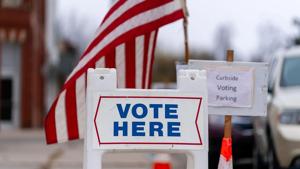
(The Center Square) – Wisconsin Gov. Tony Evers says that he believes that absentee voters need to have their ballots counted if they follow all the rules, calling it a “basic tenet” in a brief in a class-action lawsuit against Madison and former Clerk Maribeth Witzel-Behl.
Attorneys for the defendants had argued that they are not financially liable for not counting 193 absentee ballots from the Nov. 5, 2024, election because the Wisconsin Constitution states that voting is a constitutional right but that absentee ballots are a privilege exercised outside the traditional safeguards of a polling place.
“Voting is one of the most basic but fundamental rights we have in a democracy – it’s the right that affects all the others,” Evers wrote in an amicus brief. “Wisconsinites who choose to vote absentee are not second-class citizens, and I cannot and will not accept the suggestion that they have any fewer rights or that their vote counts any less than a Wisconsinite who chooses to cast their ballot in-person on Election Day,”
Law Forward filed a class action lawsuit in March on behalf of absentee voters whose ballots were found sealed in courier bags.
The Madison clerk and city also argue that no part of the law allows for monetary damages and that the only recourse voters have is to file a complaint with the Wisconsin Elections Commission.
“All Wisconsin voters – whether voting absentee or in-person on Election Day – have a constitutional right to vote,” Evers wrote in the brief. “If a voter follows all of the rules when casting a ballot, their vote must count and their constitutional right to vote must be respected.
“In Wisconsin, we are proud of our democracy. We have one of the highest voter turnout rates in the nation. We have an election system that is centered on our communities, with more than 1,800 local, municipal clerks running free, fair, and secure elections. … If there was any doubt that absentee voters are exercising a constitutional right to vote, Wisconsin’s ‘long history’ respecting the will of the voter should extinguish any questions.”

First the 400-year veto, then $1B this year in property tax relief

First the 400-year veto, then $1B this year in property tax relief

(The Center Square) – Providing more than $1 billion in property tax relief is possible because of common ground, says the top Republican in the Wisconsin Assembly.
He also says there is one big catch.
Assembly Speaker Robin Vos says he’s open to Gov. Tony Evers’ proposal to provide $1.3 billion in property tax relief this year.
“That’s definitely one of the things we’re looking at,” Vos said told a state media outlet. “I assume we’ll use a substantial part of that for additional relief, and I hope Governor Evers agrees. I mean, he came out and said he was wanting, I think, $1.3 or $1.4 billion in property tax relief. It seems like a reasonable number to me. Maybe we could even get there.”
The governor proposed a property tax relief plan earlier this month. Evers said he wants to help homeowners in Wisconsin who have double-digit increases on their property tax bills this year.
“Under this proposal, we can make sure the average homeowner does not see a property tax increase – period,” Evers said on Jan. 13.
But Vos said before there is any agreement on a tax relief plan, he wants the governor to undo his 400-year veto that led to Wisconsin’s property tax increases.
“I want to work on that first because filling a bucket that has holes in it doesn’t make a lot of sense to me,” Vos added. “We’ve got to first plug the holes in the bucket. Then you begin to refill it, so I want to have those conversations before I make any kind of promise.”
Vos did not say if he’s had any one-on-one conversations with the governor, or if any are planned.
Evers has said he may be open to rolling back his veto and tax increase, but said he wants to make sure there is more money for the state’s public schools first.
Time may also play a role.
Vos and the Assembly are scheduled to wrap up for the year sometime next month. They only have a handful of session days on the calendar.
After that, lawmakers are looking at a busy summer of campaigning for the November election.

Report: Evers won’t sign transgender college sports bill

Report: Evers won’t sign transgender college sports bill

(The Center Square) – Wisconsin Gov. Tony Evers does not plan to sign a bill currently in the Senate that would prevent individuals who were identified as male at birth from competing on women’s athletic teams in the University of Wisconsin system or at the state’s technical colleges.
Evers said “it’s a non-starter for me” to the Daily Cardinal.
Bill sponsor Sen. Rob Hutton, R-Brookfield, testified that the bill codifies the current National Collegiate Athletic Association rule that prevents someone who was born male from competing in women’s sports.
“While we should support the rights of individuals to live as they wish, one person’s rights should not result in unfair or unsafe outcomes for others – in this case, for women in college athletics,” Hutton testified. “Unfortunately, policies meant to ensure fairness and safety for women in sports have become a political football, and a political change at the national level could make this policy change temporary. Any policy should also address biological males’ ability to use locker rooms meant to be safe spaces for women.”
The bill requires the college or university to designate a team by sex and then prohibit male students from using locker rooms designated for females or competing on teams designated for females.
“When I first introduced this legislation in 2021,1 was told that I was creating a solution in search of a problem,” said Rep. Barbara Dittrich, R-Oconomowoc. “Last legislative session, I brought up that I had only been made aware of six different instances where parents had concerns. At that point, I was roundly mocked and dismissed as this wasn’t much of a problem, according to my detractors.
“The fact is that we don’t know how many transgender students are on Wisconsin K-12 teams because the WIAA refuses to tell us. However, it only takes one transgender athlete to create difficulties for an entire conference of female athletes.”
Ditrich cited a March 2023 instance at Sun Prairie High School where she said a male student “claiming to be transgender disrobed in front of freshmen girls in a locker room.” She said that one in four women statistically will be abused by the time she becomes an adult and this issue can make that issue worse.
“As we force these females to share their locker rooms and showers with individuals who are fully physically intact males, we compound their trauma and anxiety, then force them to go out and compete with or against these same individuals,” Ditrich said.

Wisconsin Assembly approves nuclear power incentive bill

Wisconsin Assembly approves nuclear power incentive bill

(The Center Square) – A bill that would incentivize nuclear energy by providing credits and allowing companies to charge customers for developing the nuclear energy in Wisconsin passed the Assembly with an 86-11 vote despite opposition from multiple groups.
Clean Wisconsin and Americans for Prosperity–Wisconsin opposed the bill following discussions with Rep. Shae Sortwell, R-Gibson, who called AFP and Clean Wisconsin’s opposition “dishonest opposition” after he worked with both to amend the bill to their liking.
The bill creates a $1.21 per megawatt-hour of generation credit for companies for the first 10 years after 2030 and then a gradually reduced credit for the next 10 years.
“Despite making the exact changes that they requested, these interest groups moved the goalposts, showing dishonest opposition,” Sortwell said in a statement. “I can understand Clean Wisconsin’s position because they only want expansion of wind and solar energy, but AFP lobbied aggressively against what they thought were energy monopolies earlier this session. Yet now they oppose energy source diversity. However, with their organization being primarily funded by those with a large stake in fossil fuels, their opposition makes more sense.”
AFP–Wisconsin reiterated that it supports nuclear energy development but believes that shouldn’t come from the pocketbooks of ratepayers.
“Charging ratepayers upfront and guaranteeing a rate of return before any energy is produced is a model that utilities are looking to implement across the country,” AFP-WI Legislative Director Jerry Ponio said in a statement. “But our organization is under no obligation to protect or advocate for the interests of investor-owned utilities; our organization will continue to advocate for all Wisconsin ratepayers. We believe that effort is more crucial now as families and businesses have seen energy rates in Wisconsin increase over $2 billion since 2019.”
The bill also authorizes the Public Service Commission to approve electric tariffs to large customers so that residential customers don’t pay for the electricity demand from large customers.
Assembly Bill 472 will next head to the Senate, where it must be approved before it can be sent to Gov. Tony Evers.

Higher prices, fewer homes didn’t stop Wisconsin home sales in 2025

Higher prices, fewer homes didn’t stop Wisconsin home sales in 2025

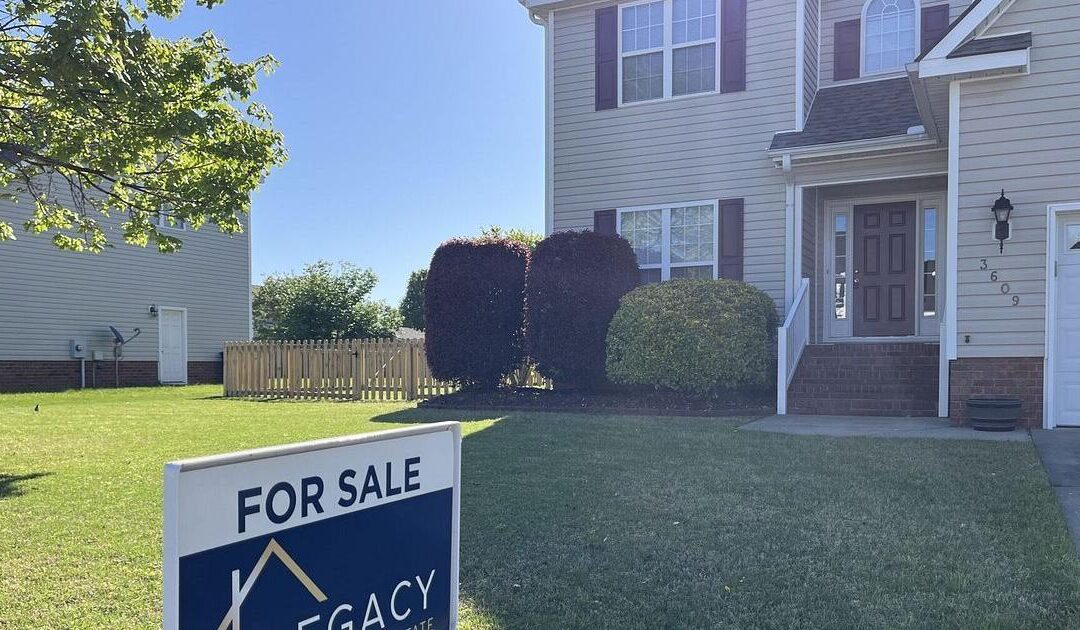
(The Center Square) – People in Wisconsin didn’t let higher prices or higher interest rates stop them from buying a home last year.
The Wisconsin Realtors released its final monthly home sales report for 2025, which showed that in December, and for the year, sales were up.
“Existing home sales rose 4.4% in December 2025 compared to December 2024,” the report noted. “For the full year, existing home sales in 2025 were 2% higher than 2024 totals.”
Prices rose as well.
The median home price in December jumped to $312,750. For all of 2025, prices jumped 4.8% to $325,000.
But the real estate agents said there is some good news for people looking to buy a new home. Interest rates began to fall in 2025.
“Now that we’ve closed out 2025, it’s clear that mortgage rates have consistently moved downward since peaking at nearly 7% just 11 months ago in January,” Realtors President Tom Larson said. “Hopefully this trend continues into 2026 and combines with moderate sustainable price appreciation and income growth to improve the affordability of Wisconsin homes.”
The biggest challenge for people looking for a home in Wisconsin continues to be availability. The report said there are simply not enough homes for sale.
“New listings were down 5.9%, and months of available inventory dropped 3.3% compared to December 2024,” the report noted.
The real estate agents said Wisconsin remains “a strong seller’s market statewide.”
The report add that Wisconsin would need to double the number of homes for sale to become a balanced market.
Homes in the Madison area and the Milwaukee area continue to drive sales, and drive price increases.
The December report shows the median price for homes in the south central part of the state have a median price of $376,803. Homes in southeast Wisconsin have a median price of $328,000. All other regions of the state are seeing median prices less than $300,000.

Republican Hutton won’t run for another term in Wisconsin Senate

Republican Hutton won’t run for another term in Wisconsin Senate

(The Center Square) – Wisconsin state Sen. Rob Hutton, R-Brookfield, will not be running for another term in the Senate.
Hutton said “while this decision was very difficult, increasing personal and professional obligations have made it clear that stepping aside is the right decision at this time.”
Hutton owns two industrial coatings firms that serve manufacturers and is a partner in a metal fabricating firm in southeastern Wisconsin, according to a bio on his campaign website.
Hutton’s District 5 includes Brookfield, Elm Grove, parts of Pewaukee and part of West Allis.
He was a Waukesha County supervisor from 2005-2012 before joining the Wisconsin Assembly.
Hutton and his wife recently won a $3.46 billion award from a Waukesha County jury related to a dehumidifier made by a Chinese manufacturer that spontaneously combusted and caused their Brookfield home to catch fire, according to the Waukesha Freeman.
Hutton did not cite the award in his announcement.
“I look forward to continuing to work hard in this final year and beyond to push for more needed reforms that streamline government, address affordability for families, support law enforcement, and increase access to quality education, healthcare, and economic opportunity for all Wisconsinites,” Hutton said.
Hutton’s lawyer told the paper that the award was likely the highest ever awarded in the county but said the number was largely symbolic as punitive damages in the case amounted to just more than $1.3 million.

Wisconsin unemployment remains steady as number employed continues to drop

Wisconsin unemployment remains steady as number employed continues to drop

(The Center Square) – Wisconsin’s labor force has dropped by nearly 67,000 while the state’s unemployment rate has remained stead at 3.1%, according to numbers released Thursday afternoon for December.
It’s part of what Scott Hodek, Section Chief of the Office of Economic Advisors for the state’s Department of Workforce Development, called a “major driver” of what is going on in the state’s economy.
Wisconsin is losing population and is expected to continue to lose labor force as baby boomers age out of the workforce and the birth rate is not high enough to keep up.
“It’s the underlying challenge and it’s demographic,” Hodek said.
Thursday’s numbers mark the first time the unemployment rate data has caught up to a regular cycle since the federal shutdown last year, which prevented October numbers from fully being collected and delayed the release of September and November data.
Overall, there remained 3,021,200 individuals employed in Wisconsin while the state remained below the national 4.4% average unemployment rate.
Wisconsin’s labor force participation rate was at 64.2% in December, above the 62.4% national rate but below the 65.9% participation rate from December 2024.

IRG demands Wisconsin K-12 education authority release records

IRG demands Wisconsin K-12 education authority release records

(The Center Square) – The Institute for Reforming Government is joining a push to get Wisconsin’s Department of Public Instruction to release information related to changes in its benchmarks for the Forward Exam.
IRG sent a demand letter related to the request to DPI on Thursday.
DPI was found by the Wisconsin Institute for Law and Liberty to have lowered school report card cut points in 2020-21, changed the labels on those in 2023-24 and lowered the cut points again that year as well.
In response, DPI formed a committee, held meetings and adjusted standards again last year.
But the Dairyland Sentinel requested internal communications, analyses and meeting documentation related to the Forward Exam benchmarks on Jan. 21, 2025 and still has not received those records.
The delay is similar to when Gov. Tony Evers and the Wisconsin Economic Development Corp. waited more than six months to release documents to The Center Square related to more than $160,000 in expenses for a trade trip to Europe.
DPI acknowledged the request by sending Dairyland Sentinel reference to a list of nearly 100 “experts” that Supt. Jill Underly claimed worked on the revised standards but has yet to reveal who the expert were, how they were chosen, where they met, whether non-disclosure agreements were used and the full cost to taxpayers including staff time, travel, lodging, food and materials.
“Transparency delayed is transparency denied,” Jacob J. Curtis, IRG General Counsel and Director of the Center for Investigative Oversight, said in a statement. “Wisconsin law is clear: records must be provided ‘as soon as practicable and without delay.’ Keeping the public in the dark for a year is not just a bureaucratic failure, it is a violation of the law. We are hopeful that DPI will choose transparency over litigation.”

Plan to require citizen vote on wheel taxes clears Wisconsin Senate

Plan to require citizen vote on wheel taxes clears Wisconsin Senate

(The Center Square) – The plan to give people a say on wheel taxes in their communities has cleared its first major hurdle at the Wisconsin Capitol.
The Wisconsin Senate approved Senate Bill 467, which would require local leaders to take wheel taxes to the voters. Sen. Rob Hutton. R-Elm Grove, wrote the plan.
“By placing these decisions directly in the hands of voters, our bill strengthens accountability and transparency in local tax decisions, which is particularly important for those least able to absorb new costs like these wheel taxes,” Hutton said.
The legislation passed on a mostly party-line vote, with Republicans voting for it, and Democrats largely voting against it.
The vote comes a day after city leaders in Cudahy re-worked their wheel tax.
Cudahy’s city manager proposed a $50 wheel tax as a way to find new money for the city budget. But after almost unanimous pushback from voters who attended Cudahy’s city council meeting, the council agreed to add a $25 wheel tax.
Cudahy is not the only community to look at or adopt a wheel tax in Wisconsin.
Currently 53 municipalities and 14 counties have wheel taxes. But Hutton said the numbers don’t tell the full story.
“In 2011, only four Wisconsin communities imposed a wheel tax, but since 2020, at least 24 additional local governments have adopted one. In some areas, residents pay the tax twice – once to their municipality and again to their county,” he said in a statement.
Wheel taxes, which are essentially an extra fee to renew license plates, typically range between $10 and $50.
And unlike other local tax increases, local leaders can adopt a wheel tax without voters’ approval.
“This bill doesn’t take away options from local governments, but it does require local officials to make their case directly to the people and ensures taxpayers have the final say at the ballot box,” Hutton added.

Wisconsin Senate approves resolution to limit governor’s partial veto power

Wisconsin Senate approves resolution to limit governor’s partial veto power

(The Center Square) – The Wisconsin Senate voted to approve a measure that would allow Wisconsin voters this fall to limit the governor’s partial veto power.
The Senate voted 18-15 to approve Senate Joint Resolution 116, which would state that the governor “may not create or increase or authorize the creation or increase of any tax or fee” while exercising partial veto power.
The resolution needs to be passed by the Assembly and then would be on the November ballot statewide for voters to decide.
The proposed constitutional amendment comes after Gov. Tony Evers used the current veto power to erase numbers and a hyphen to change the year “2024-25” to “2425” in a school appropriation in the budget bill.
That meant a $325 per student per year funding increase for the next 400 years was allowed and later upheld in a 4-3 ruling from the Wisconsin Supreme Court.
“The partial veto was never meant to be used as a tool to raise taxes,” Sen. Julian Bradley, R-New Berlin, said after it was passed. “This amendment restores balance and ensures that no Governor can abuse his authority and act like a king.”
Sen. Chris Kapenga, R-Delafield, said that the amendment would take unintended power away from the governor and provide more balance with the Legislature.
“In wake of what the Governor did, taxpayers are already feeling the sting of the Governor’s partial-veto,” Kapenga said in testimony on the bill. “Wisconsinites simply cannot afford more increases on their property tax bill.
“Wisconsin Governors currently enjoy one of the most powerful partial-veto pens in the country. Even under Republican Governors, this has been something I have always been opposed to. If adopted, this amendment would rebalance power between the executive branch and the legislative branch and further restrict the executive from rewriting laws passed by representatives of the people.”

Assembly committee passes bill to block DATCP’s authority to raise fees

Assembly committee passes bill to block DATCP’s authority to raise fees

(The Center Square) – A group of Wisconsin lawmakers are pushing a bill that would end the ability of the Department of Agriculture, Trade and Consumer Protection to raise fees for animal market licenses, animal dealer licenses, animal trucker licenses and animal transport vehicle registrations after DATCP proposed significant increases in those fees last year.
DATCP had proposed increasing a livestock market fee from $420 to $7,430, trucker license fees from $60 to $370 and animal dealer fees from $220 to $670 last year before receiving significant pushback and later proposing smaller increases.
The changes came following a Wisconsin Supreme Court ruling that blocked legislators from oversight on rulemaking with Gov. Tony Evers telling agencies to bypass having rules heard in committee and instead simply enact them.
Both the Wisconsin Farm Bureau and Americans for Prosperity–Wisconsin worked to collect and share public feedback on the impact of the proposed fee increases.
Assembly Bill 627 passed the Assembly Committee on State Affairs on Wednesday with a 7-3 vote. The fees would instead be determined by statute if the bill passes the Assembly and Senate and then is signed by Evers.
Rep. Travis Tranel, R-Cuba City, said that he the bill is still necessary despite DATCP relenting on the proposed fees late last year.
“That willingness to engage stakeholders is appreciated, but concerns still remain,” Tranel, a bill sponsor, said in testimony to the committee. “However, the authority to raise fees through administrative action remains, which is why legislative oversight is still necessary.”
DATCP said in a fiscal estimate that the bill would force the agency to operate with a negative cash balance unless the fees or a funding source are changed.
“This bill would remove DATCP’s ability to propose fee adjustments through the statutorily set administrative rulemaking process,” the fiscal estimate said. “Without revenue adjustments, the appropriation will operate in a negative cash balance until additional funding sources are identified.”
DATCP Secretary Randy Romanski said in testimony that the programs had a negative cash balance of $267,000 at the end of last fiscal year, which is expected to grow to more than $1.1 million by the end of this fiscal year and said that Evers’ last budget proposal asked for seven new full time positions while four were ultimately granted.
Romanski said that he welcomed the opportunity to discuss with lawmakers the cost of underfunding the programs but the sponsoring lawmakers believe legislative oversight of the fee increases is necessary.
“Any discussion about future fee adjustments should be during the next budget process, which is the appropriate forum to work collaboratively and transparently with stakeholders on departmental needs,” Tranel said.

SC candidate Lazar: I am not trying to change Wisconsin’s abortion law

SC candidate Lazar: I am not trying to change Wisconsin’s abortion law

(The Center Square) – One of the candidates for supreme court in Wisconsin continues to want to take abortion out of the conversation for this spring’s election.
Judge Maria Lazar this week penned another op-ed explaining her stance on Wisconsin’s 20-week abortion law.
“Sensationalized headlines have twisted my comments to suggest I am seeking to change Wisconsin’s abortion laws. Let me be clear: I am a jurist, not a politician. I am not running to impose a heartbeat bill from the bench, and any insinuation to the contrary is false,” she wrote.
The Milwaukee Journal Sentinel last week ran a story that said Lazar would be open to a heartbeat bill. She was speaking with students at UW-Whitewater in November.
The paper quoted her as saying “Just make a decision, and make a fair, good decision,” Lazar said. “If they’re going to say heartbeat, I think maybe people can live with that.”
Wisconsin Democrats picked the story up and ran with it, calling her comments an “extreme stance on abortion,” and said she revealed “that she would support a federal heartbeat law – which would ban abortion at roughly six weeks.”
“[Lazar] doesn’t even know if there should be exceptions when a mother’s life is in danger. Voters have rejected these extreme positions before and they will again in April,” Judge Chris Taylor campaign manager Ashley Franz said in a statement.
Lazar said that’s mischaracterizing her stance.
“While I have been honest about my personal values as a mother, those feelings do not dictate my rulings. My role is to follow the law, not to legislate from the bench,” Lazar wrote. “As a judge, my personal views, which include the fact that abortion is not something I would have contemplated for myself, make no difference in my role on the bench. I honor my oath to never legislate from the bench.”
Wisconsin’s Supreme Court last year struck down the state’s 1849 ban on abortion, ruling that it doesn’t really apply to abortions. That leaves Wisconsin with a law that bans abortions after 20 weeks.
But that could change.
Advocates have asked the state’s high court to declare a right to abortion in Wisconsin, but the court has not ruled in the case.
Lazar and Taylor are facing off in April to replace retiring justice Rebecca Bradley.

Bill aiding Wisconsin school bus drivers older than 70 sent to Senate

Bill aiding Wisconsin school bus drivers older than 70 sent to Senate

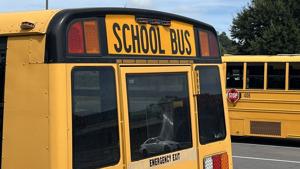
(The Center Square) – A bill that is aimed at helping Wisconsin school bus drivers older than 70 maintain their ability to drive for schools is headed to the Senate.
The bill would reduce the frequency of commercial drivers’ license testing for those 70 or older from every two to every four years while also allowing drivers to return to work when they are medically cleared by a medical professional instead of when a state medical review board approves that clearance.
The bill passed the Assembly on Tuesday afternoon and was sent to the Senate with a pair of approved amendments. One of the amendments requires an annual medical examination for drivers older than 70 despite the four-year interval on license renewal.
“Roughly a quarter of school bus drivers are 65 years or older,” Rep. Shae Sortwell, R-Two Rivers, said in testimony supporting the bill. “Overregulation, such as CDL frequency testing and a burdensome medical review process, is deterring these drivers from entering, re-entering, or staying in the profession.”
Wisconsin has 20% less school bus drivers than it had 20 years ago and lawmakers say they are concerned it will lead to school cancellations or delays along with overcrowded and unsafe buses.
Surrounding states do not change bus driver eligibility requirements at age 70, like Wisconsin has since the rules were altered in 1989.

Wisconsin lawmakers aim to cut spending, root out government spending fraud

Wisconsin lawmakers aim to cut spending, root out government spending fraud

(The Center Square) – A group of Wisconsin Republicans are looking to root out fraud by changing the way state agencies go through the budget process.
Assembly Bill 556 would require 20% of state agencies to do a zero-based budgeting process each biennial budget. That would mean starting from scratch and justifying all spending instead of building on prior agency budgets.
Sen. Chris Kapenga, R-Delafield, said that the state’s current budget process is broken and pointed out that the 2011-13 budget was for $64 billion while the 2026-27 budget is $111 billion.
“The most important part of the budget process is that every budget builds off of current spending levels,” Kapenga said in testimony for the bill, which he sponsors. “Simply put, every state budget is built on top of the one before it, or what’s called built from base. Rarely, if ever, is there an actual cut in spending.”
Kapenga said that it is necessary for state agencies to look at the effectiveness of past spending toward an agency’s purpose before choosing to spend again in the same way in the future.
“The bill also makes modifications to the way our state agencies make their budget base reports, by requiring agencies to identify the intended goal of each appropriation and analyze whether each appropriation completely succeeded in meeting its intended goal,” Kapenga said. “If not, then the agency is required to explain why. Under current law, the information agencies are required to share about how successful their prior appropriations leave much to be desired.”
Rep. Lindee Brill, R-Sheboygan Falls, said that normal business owners, like the family manufacturing business she grew up with, use zen-based budgeting and that it only makes sense for state agencies to do the same with taxpayer funds.
“Just one state over, taxpayers have been defrauded of literally billions of dollars, with the true number climbing all the time,” Brill said in testimony on the bill. “We have learned that state agencies, if not actively complicit in the fraud, allowed this to continue for cycle after cycle of budget processes.
“AB 556 provides a clear, effective measure to establish a culture of accountability in our budgeting process, to ensure that not one penny of taxpayer dollars is being wasted.”

Beef farmer joins race for Wisconsin secretary of state as Republican

Beef farmer joins race for Wisconsin secretary of state as Republican

(The Center Square) – Nate Pollnow says he has a plan to do something if he’s elected as secretary of state.
Pollnow, a beef farmer and auctioneer from Dodge County, entered the race for secretary of state Tuesday.
“What we have now is an opportunity to get in there, roll up our sleeves, go to work, get a website built that’s easily accessible to the people, so that if they want to grab something from the state, if they’re wondering about something, where some money is going they can go and get it,” Pollnow said in an interview on News Talk 1130 WISN. “Shine some light into the dark corners of our state bureaucracies.”
Wisconsin’s secretary of state doesn’t do much. The office is not in charge of voting or driver’s licenses like in some states. Pollnow said the biggest jobs for Wisconsin’s secretary of state are to be the state’s official record keeper and to manage the Common School Fund.
The secretary of state is also responsible for the Board of Commissioners of Public Lands, which handles millions of dollars in loans for local government and school infrastructure projects.
“[It’s] really a cool thing. It kind of makes a cycle [where] we’re always funding those things, and we’re keeping that money in house,” Pollnow added. “But right now, if you read the secretary of state website, it reads that we’ve got that money should be going towards green energy infrastructure projects.”
Pollnow said Democrats have, for years, used the secretary of state’s office either as a do-nothing office or a political parking spot.
“I’m not going to be there for 42 years like Doug LaFollette. and I’m definitely not taking this as a consolation prize,” Pollnow said.
If Pollnow wins, he would be the first Republican to hold the secretary of state’s office in more than 50 years. Democrat Doug LaFollette spent 42 years as secretary of state. After he stepped down, Sara Godlewski stepped in in 2023. Godlewski is not running for secretary of state this year, instead she is running for lieutenant governor. Democrat Jocasta Zamarripa is running instead.