West Allis
Republicans push back against UW System tuition increase proposal

Republicans push back against UW System tuition increase proposal

(The Center Square) – Several Republican lawmakers are upset with the University of Wisconsin System’s proposal to increase tuition by 2% a year after a 5% increase.
Sen. Patrick Testin, R-Stevens Point, went as far as saying that a pair of trustees “lied to all our faces” in committee testimony when they said that tuition would not be raised again this soon.
“Unfortunately, students and their families are the ones who will be paying the price for this dishonesty,” Testin said in a statement. “At least we now know that we can no longer take the UW Board of Regents at their word.
“My Joint Finance Committee colleagues and I certainly will not forget this betrayal when the regents and UW officials come begging to us for more money during next year’s state budget deliberations. This is simply unacceptable.”
The 2% increase for resident undergraduate tuition would be effective this fall. The university said in a press release that the increase is below the current inflation rate. The increase also includes a 3.5% increase in segregated fees, which are for student services, activities, programs, and facilities. In all, it would be a 2.5% average increase across tuition, segregated fees and room and board.
“We recognize Wisconsin families are managing rising costs in every part of their lives, and that reality informed this proposal,” Universities of Wisconsin Interim President Renée Wachter said in a statement. “This is a measured increase that helps our universities continue providing strong student support and high-quality academic experiences while keeping a UW education among the most affordable in the Midwest.”
Sen. Eric Wimberger, R-Gillett, pointed out that, over the past 10 years, the system has added 2,400 non-faculty staff positions while educating 16,000 fewer students.
Wimberger said that, if the system would “eliminate their administrative bloat,” it would free up $750 million.
“UW’s leadership is continuing to pass its payroll expenses onto students and their families, when it should be cutting its massive bureaucracy and reinvesting its funds to create a more valuable student experience,” Wimberger said in a statement. “No amount of money will ever be enough for satisfy these bureaucrats, and the bright students who attend our universities are only left with a worse education.”
Congressman Tom Tiffany, who is a Republican running for governor, said on his campaign account that he would freeze tuition in the UW System if elected.
“The UW System received a $256 million increase in the last state budget,” Tiffany wrote. “Then raised tuition 5% last year and is now proposing another 2% increase for in-state students this year.”
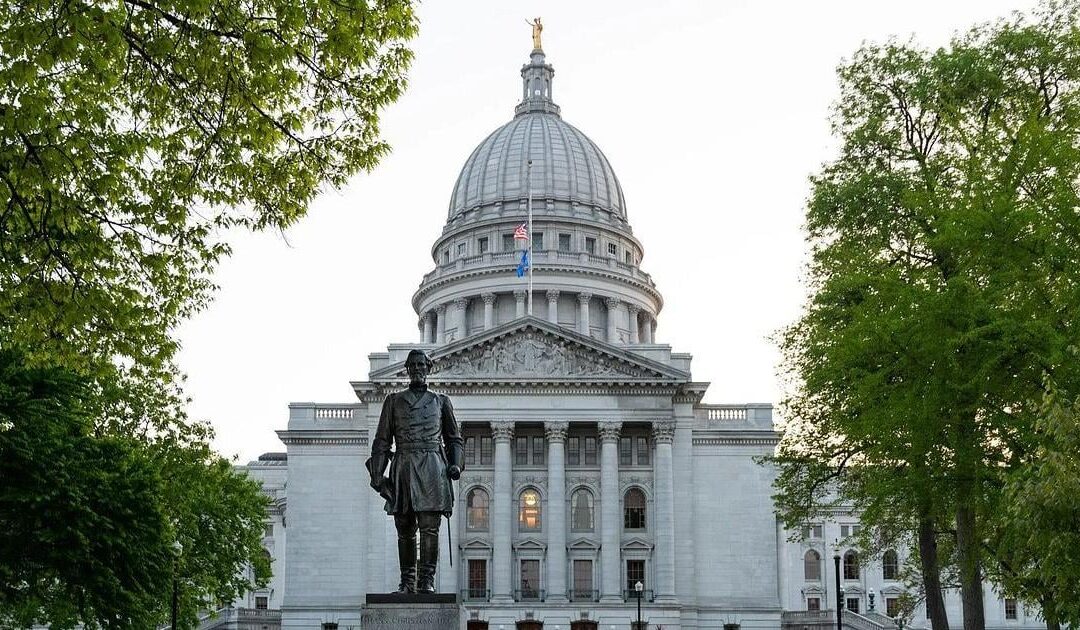
Senate Democrat leader ends talk of another tax deal vote

Senate Democrat leader ends talk of another tax deal vote

(The Center Square) – There will not be a second vote on Wisconsin’s $1.8 billion tax deal.
Senate Democratic Leader Dianne Hesselbein told Matt Smith with WISN TV that she has no plans to return to the Capitol and vote again on the tax package.
“If there is something that we can get together and talk about a compromise, we are open to something like that,” Hesselbein said. “But we also want to see where the money is. This is all a projected surplus. So, once we know if the money is going to be there, that’s when we’ll want to come back.”
Wisconsin lawmakers won’t “know” if the money is there until next year.
Hesselbein also said she spoke with Senate Republican Leader Devin LeMahieu and she said he told her there’s “absolutely not” a chance the Senate will vote again.
But it’s Hesselbein’s Democrats – along with three Republicans – who killed the plan. All 15 Senate Democrats voted no on the proposal. She said none have changed their minds.
“I have not heard that,” she added.
Assembly Speaker Robin Vos said Sunday he wants to vote on the plan again. In fact, he said the Assembly is ready to pass it again.
On Monday, Gov. Tony Evers said he would like to see a second vote as well.
The tax package would have combined a tax rebate of up to $600 with property tax relief and the end of taxes on tips and overtime, with a $300 million boost for special education across Wisconsin. In all, the package would have been worth about $1.8 billion.
Wisconsin has a $2-plus billion surplus.

Another Wisconsin county considers data center moratorium

Another Wisconsin county considers data center moratorium

(The Center Square) – Brown County is the latest in Wisconsin to consider a moratorium on approving new data center projects.
Cities and counties across the state have begun to introduce and approve moratoriums as they say they are gathering information on everything from land use to zoning to water and power uses to tax breaks for the ever-growing market of large-scale data centers in the state.
Wrightstown recently approved a non-binding referendum to be placed on the August ballot regarding data centers. This comes after Madison and Manitowoc counties have approved moratoriums and Dane County is considering an 18-month moratorium.
State Rep. Amaad Rivera-Wagner, D-Green Bay, is encouraging residents to attend the Brown County Board’s next meeting at 7 p.m. on June 17 to voice support for the effort.
“This is not about being against technology or innovation,” Rivera-Wagner said in a statement. “It is about making sure Wisconsin communities have real protections in place before we move forward. I encourage residents to attend, testify, and make their voices heard. I hope the Brown County Board supports this proposal and sends a clear message that Wisconsin communities deserve a seat at the table before decisions of this magnitude are made.”
Wisconsin state lawmakers left the recent session without putting data center guardrails in place after discussion on several bills that would limit data centers or protect ratepayers related to utility costs.
The moratoriums come as Wisconsin’s Legislative Audit Bureau shows that the state will forego $1.5 billion in sales tax to four data center projects in initial construction and then $369 million more annually once the projects are completed.
The sales tax exemption was enacted in the 2023-25 budget and applies to everything from property purchases to computer servers and energy systems at the site to electricity and cooling systems.
The exemptions apply to Microsoft’s $20.6 billion in data centers in Wisconsin along with OpenAI, Oracle and Vantage Data Centers’ $15 billion in data center investments in Port Washington. Epic Hosting’s $347 million project in Verona and Meta’s $1 billion project in Beaver Dam are also included.
Many of the projects are also in tax increment districts that allow the companies to regain additional property taxes from the developments to pay for the projects.

Wisconsin justice calls courts’ map review doing ‘bidding of political masters’

Wisconsin justice calls courts’ map review doing ‘bidding of political masters’

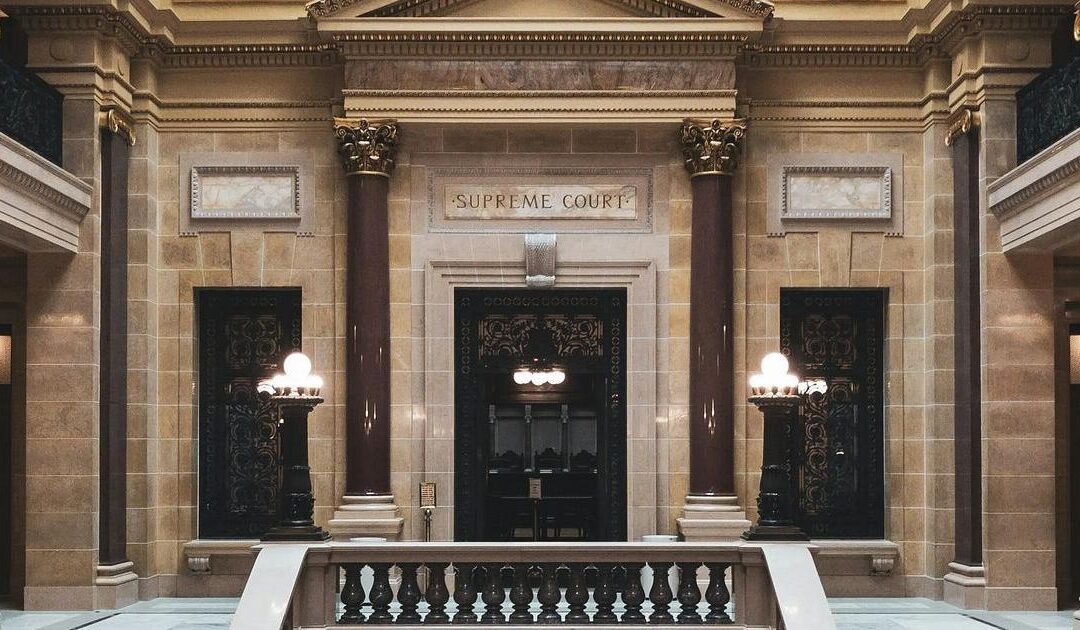
(The Center Square) – A conservative Wisconsin Supreme Court justice called the courts’ decision to hear a case challenging the state’s congressional maps doing the “bidding of its political masters” rather than a proper decision.
The court sent an order stating that it would hear an appeal of a three-judge panel’s ruling not to hear the case but said that it would not hear the case on a requested expedited schedule.
“The Democratic Party bought multiple seats on this court to achieve yet another outcome unobtainable democratically,” Justice Rebecca Bradley wrote in dissent.
Bradley joined Justice Annette Ziegler in dissent against hear the case from the Wisconsin Business Leaders for Democracy that a three-judge panel dismissed on April 28.
“It is indeed rare that I feel compelled to object to hearing a case,” Ziegler wrote. “But here, I have concluded this is too important to stand silent. The public should be informed of the requests afoot and it should have the opportunity to stay abreast of these proceedings.
“And, of course, the briefing and arguments could cause me to conclude that this appeal was proper and relief should be granted. We shall see.”
The majority of judges took offense at Bradley’s insinuation that the decision to hear the case was politically motivated, calling the dissent “false, inappropriate, and disingenuous charges.”
“Deciding to hear a case does not reflect any weighing of the merits of any party’s claims, let alone prejudgment about who will prevail and why,” Justice Rebecca Dallet wrote. “We do not prejudge cases, and for that reason, we do not comment at this early stage on the parties’ legal theories, or try to develop arguments in favor of one side or another.”
Ziegler wrote that it was “shocking” the case would be reviewed without analysis of the jurisdiction of the case, if there is a proper claim or if there is even a right to appeal the ruling of a three-judge panel. She pointed to four other times that the Wisconsin Supreme Court had determined that the current congressional map would not be reviewed.

Vos wants new June vote on failed tax deal

Vos wants new June vote on failed tax deal

(The Center Square) – The top Republican in the Wisconsin Assembly says he’s ready to vote again on the $1.8 billion tax deal that fell short last month.
Assembly Speaker Robin Vos said on UpFront on Sunday that he wants a second chance to vote on the package.
“I still think we can get it done,” Vos said. “I think we should go back in. I have asked the governor to help us get another attempt at it.”
The tax deal, which packaged over $1 billion in tax rebates and property tax relief with a new law that ended taxes on tips and overtime, in exchange for $300 million more for special education passed the Assembly.
But it died in the State Senate when three Republicans, and every Democrat voted against it.
Vos, who is leaving office at the end of this term, said the Assembly is ready to vote again, but he’s not sure about a vote count in the Senate.
“Senate Democrats, hopefully when they get a look at [the Marquette] poll, and realize we can’t even get people in Wisconsin to agree on what day of the week it is, and if 80% of the people say this deal should have been passed, let’s give them some confidence that government can actually get things done to help real people, in real time.”
Last week’s Marquette Poll said 80% of people in Wisconsin wanted the tax rebates and tax relief that were included in the plan. The poll also said about 70% of those people wanted the tax relief and tax rebates now, as opposed to next year.
“The Assembly will come back in,” Vos said of a potential re-vote. “I reached out to the governor’s office. I have not heard back, I’ll be honest. But let’s put some pressure on these politicians to get it done. Why would we wait until November when most people are suffering now.”
Sen. Chris Kapenga, R-Delafield, last week said on UpFront that there is a “zero percent” chance that lawmakers will vote on the tax plan again.
Democrats in the Wisconsin Senate have also been silent about the chances for a new vote on the plan. They are, instead, focused on what they can do with Wisconsin’s $2 billion-plus surplus next year.
“Senate Democrats remain open to sound and financially sustainable solutions to lower property taxes, invest in public schools, and lower costs for all Wisconsinites,” Senate Democratic Leader Dianne Hesselbein said in a statement last week. “That’s what we will focus on when we are in the majority in 2027.”

Wisconsin GOP wants investigation into Green Bay double absentee ballot issue

Wisconsin GOP wants investigation into Green Bay double absentee ballot issue

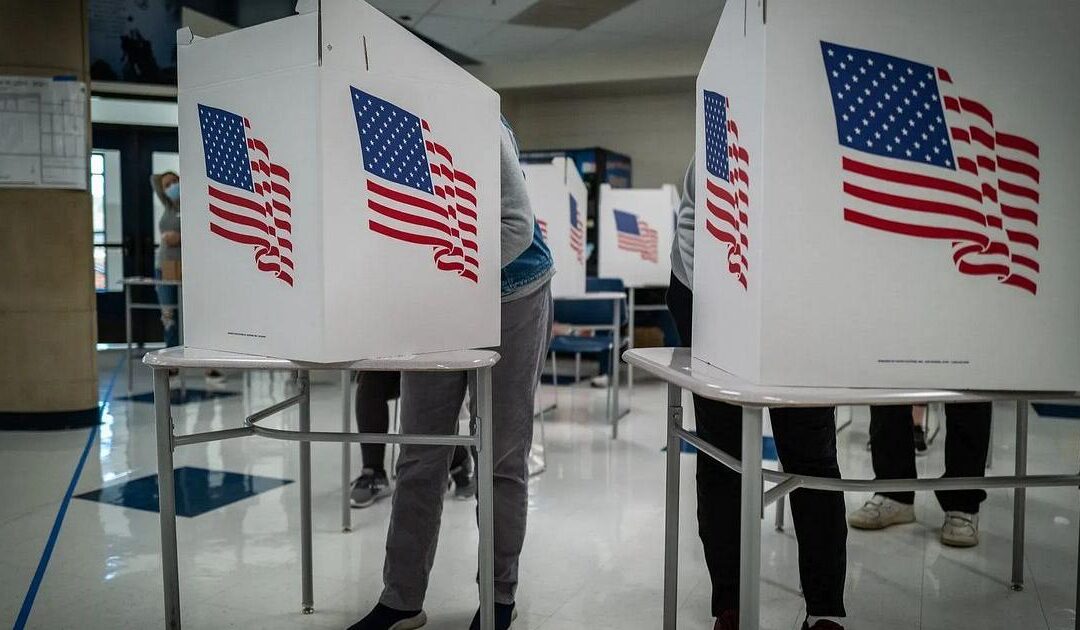
(The Center Square) – The Republican Party of Wisconsin wants the Wisconsin Election Commission to conduct an investigation into how 152 duplicate absentee ballots were mailed out by the city of Green Bay before the April election.
The clerk has stated that no duplicate ballots were returned or counted, so is no need for an investigation, claiming that the law prohibits multiple voting but does not say anything about the multiple issuance of ballots.
The party, however, believes that the issuance of the duplicate ballots was illegal. The investigation request was filed on behalf of Theresa Sipes against City Clerk Celestine Jeffreys in her official capacity.
“The city of Green Bay clerk is attempting to absolve herself of her legal duty in her reply to the original complaint by suggesting no investigations should follow this serious procedural error that enabled over 150 voters to be illegally mailed duplicate absentee ballots,” Republican Party of Wisconsin Chairman Brian Schimming said in a statement. “Laws exist to protect election integrity, and when they are violated, an investigation is warranted to prevent future breaches, ensure accountability, and maintain public confidence that election laws are applied consistently by every official.”
The party said that procedural issues like the double ballots cannot go unaddressed or it would undermine election protections related to absentee ballots.
In her response to an initial filing, Jeffrys wrote that “there was minimal voter confusion, no double voting, and no increased risk of . . . fraud.”
The party argued that Jeffrys claim about issuing multiple ballots not being a violation is incorrect.
“As set forth at length in the Complaint, Wisconsin’s absentee ballot statutes are structured around the fundamental principle that each qualified elector receives one – and only one – ballot per election,” the complaint said.

Wisconsin congressional delegation joins request for federal disaster relief

Wisconsin congressional delegation joins request for federal disaster relief

(The Center Square) – Wisconsin’s congressional delegation has joined Gov. Tony Evers in requesting that the federal government grant the state a Major Disaster Declaration to make it eligible for individual and public assistance after April flooding.
The flooding is estimated to have caused $10 million in residential property damage to 1,500 structures along with $17 million in public infrastructure damage.
The April storms led to flooding that destroyed both homes and businesses. The federal government has denied public assistance to this point and Evers said that the administration has not explained the denial.
A letter was led by Rep. Tony Weid and signed by Sen. Tammy Baldwin and Reps. Bryan Steil, Mark Pocan, Derrick Van Orden, Gwen Moore, Scott Fitzgerald, Glenn Grothman and Tom Tiffany.
Sen. Ron Johnson was the only member of Wisconsin’s delegation who did not sign.
“Given the magnitude of damage, we urge you to issue a Major Disaster Declaration under the Robert T. Stafford Disaster Relief and Emergency Assistance Act and readily make available the Individual Assistance, Public Assistance, and Hazard Mitigation Grants to Wisconsinites in need,” the letter addressed to Trump stated.
The Federal Emergency Management Agency responded swiftly to a prior request and worked with Wisconsin Emergency Management to estimate the damage.
“I’ve visited communities impacted by this spring’s severe weather, and in doing so, I’ve not only seen the devastation and destruction these storms left behind but also the strength and resilience of Wisconsinites across the state,” Evers said in a statement. “I’m grateful Wisconsin Emergency Management and FEMA’s work identified and confirmed our need for federal assistance so that we can continue to rebuild homes, restore infrastructure, and aid recovery efforts. Federal support is essential to helping communities rebuild and recover, and I’m urging the president to meet this moment with the urgency it requires and ensure affected individuals, families, and businesses receive this critical assistance as quickly as possible.”
Individual assistance is requested for residents in Bayfield, Brown, Buffalo, Jackson, Jefferson, Juneau, Kenosha, Manitowoc, Marathon, Milwaukee, Outagamie, Racine, Rock, Sauk, Vernon, Washington, Waukesha, Waupaca, and Winnebago counties along with the Oneida Nation.
The request includes public assistance for Bayfield, Iowa, Jackson, Jefferson, Juneau, Kewanee, Manitowoc, Marathon, Outagamie, Racine, Rock, Sauk, Vernon and Waupaca counties along with the Oneida Nation.

Milwaukee schools add hundreds of paraprofessionals to new $1.6B budget

Milwaukee schools add hundreds of paraprofessionals to new $1.6B budget

(The Center Square) – Milwaukee Public School managers are moving ahead with their plan to cut jobs at its central office, but the school district has changed its mind about classroom cuts.
Milwaukee’s school board recently approved a new $1.6 billion budget for the next school year.
Originally, MPS Superintendent Brenda Cassellius wanted to cut 260 non-classroom jobs. On Thursday, Cassellius said she’s still planning to make those central office cuts, but her budget now includes hiring hundreds of new paraprofessionals.
Originally, MPS was looking to hire 225 paraprofessionals. Now that number is 574. Cassellius is also looking to hire more children’s health assistants. Originally MPS wanted to add 13 assistants. Now that number is 76.
Cassellius, however, said she doesn’t expect to hire that many people.
“We do think that a number of our current district teachers, who are working at the district office, will go into the classroom and take some of those positions,” Cassellius said.
Milwaukee Schools were facing a $46 million shortfall, and Cassellius said this budget will get them out of that hole.
But Milwaukee’s school budget woes are not over.
Milwaukee, like most other school districts in Wisconsin, are losing students. That, in turn, means less money from state government and more money will have to come from local taxpayers.
MPS’ new budget includes a 2.3% property tax increase. The school district said that would add about $46 to the tax bill for someone who owns a $207,000 home.
The $1.6 billion MPS budget is $23 million larger than the current budget, and continues to make MPS Wisconsin’s largest and most expensive school district.

Wisconsin county considers 18-month hyperscale data center moratorium

Wisconsin county considers 18-month hyperscale data center moratorium

(The Center Square) – Wisconsin’s Dane County board is considering an 18-month moratorium on what it calls hyperscale data centers including applications, zoning permits or citing in the county that includes the state capital of Madison.
The board said that the resolution was allow for time to look into the complex issues surrounding the projects. The full county board is scheduled to consider the proposal June 4.
The proposal comes after Manitowoc County approved a similar 18-month moratorium in late April.
“There is growing concern that Dane County communities could see project proposals before that work is complete,” Dane County Board Chair Patrick Miles said in a statement. “This moratorium gives the committee the time it needs to finish and gives the county the opportunity to make thoughtful, data-driven policy decisions informed by their findings.”
The city of Madison will host a virtual public meeting on Wednesday related to its own one-year moratorium on data centers.
The moratoriums come as Wisconsin’s Legislative Audit Bureau shows that the state will forego $1.5 billion in sales tax to four data center projects in initially construction and then $369 million more annually once the projects are completed.
The sales tax exemption was enacted in the 2023-25 budget and applies to everything from property purchases to computer servers and energy systems at the site to electricity and cooling systems.
The exemptions apply to Microsoft’s $20.6 billion in data centers in Wisconsin along with OpenAI, Oracle and Vantage Data Centers’ $15 billion in data center investments in Port Washington. Epic Hosting’s $347 million project in Verona and Meta’s $1 billion project in Beaver Dam are also included.
Many of the projects are also in tax increment districts that allow the companies to regain additional property taxes from the developments to pay for the projects.
Economist JC Bradbury wrote Thursday that pushback against data center tax breaks nationwide have come not because data centers are bad or unnecessary but because those pushing the projects have asked for and received special tax treatment.
“Pundits are asking why data centers are so maligned,” Bradbury wrote. “Well, when the transparently bogus economic promises your hired lobbyists made about these big ugly buildings fall flat, in order to obtain rent-seeking spoils, you’re going to get some harsh blowback.
“It’s time for a new data center PR strategy. Come clean and admit you’re just like any other private business. Stop asking for handouts, and people will start treating you like a legitimate industry. Try normal capitalism, not crony capitalism.”

Critics slam Wisconsin’s student success ‘redefinition’

Critics slam Wisconsin’s student success ‘redefinition’

(The Center Square) – There are questions about Wisconsin’s new effort to “refine the future of student success” in the state.
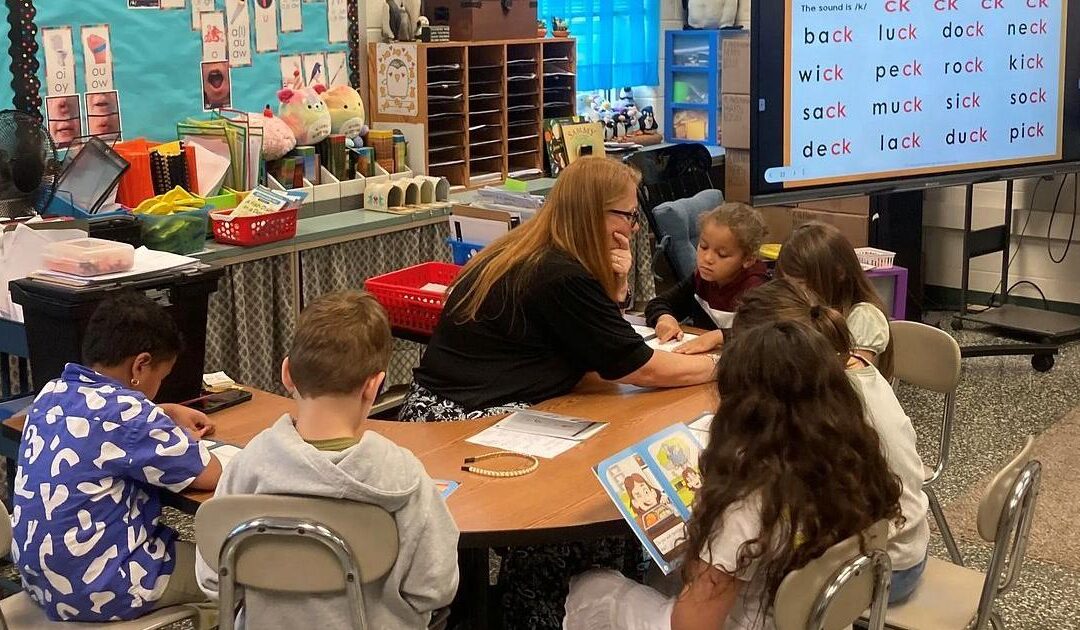
Wisconsin’s state superintendent announced the next step toward creating a new Portrait of a Graduate.
“The world our students are preparing to enter is changing quickly, and it is critical that we hear directly from the people who know our communities best. Academic rigor is always a top priority and will not change, but we also need to ensure students leave our schools prepared to think critically, adapt, communicate, solve problems and thrive,” Superintendent Jill Underly said in a statement.
The plan includes a shift to competency-based education.
“We want to broaden Wisconsin’s vision for student success,” Underly added.
Critics, however, were quick to point out that Underly’s new definition of success doesn’t mention improving reading, writing or math scores.
“Wisconsin’s state superintendent and the Disarmament of Public Instruction just launched a statewide initiative called a Portrait of a Graduate to redefine what student success looks like. It includes listening sessions, surveys, and steering committees,” former superintendent candidate and head of Kids Win Wisconsin Brittany Kinser said. “What it doesn’t include: a serious plan to address reading and math proficiency gaps that are already failing Wisconsin kids.”
National report cards show two-thirds of Wisconsin kids cannot read or write at grade level. Reading and writing scores get worse when you look at some individual school districts and schools. And Wisconsin continues to have the worst-in-the-nation racial learning gap.
Report cards show that 90% of black fourth-graders in Madison schools cannot read, write, or do math at grade level. It is 95% of black fourth-graders in Milwaukee schools.
“We are all for big-picture vision,” Kinzer added. “But when the state’s own data shows large gaps in proficiency, ‘defining success’ without fixing the fundamentals isn’t a strategy. It’s a way to dodge accountability. Wisconsin kids don’t need a new portrait of success. They need to be able to read well so they can attend college, pursue a career, or master a trade – and build a bright future.”

Op-Ed: Compromise shouldn’t be a dirty word in Wisconsin politics

Op-Ed: Compromise shouldn’t be a dirty word in Wisconsin politics

Over the past several months, Legislative Republicans and Gov. Tony Evers engaged in serious conversations about how to return Wisconsin’s budget surplus to the taxpayers who sent it to Madison in the first place.
Those discussions were not always easy, but they reflected something many Wisconsinites are yearning for from government: compromise, practical problem-solving, and a willingness to set aside partisan differences without giving up core principles. This agreement managed to check all of those boxes.
The bill negotiated between Gov. Evers and Republican legislative leadership focused on issues that matter to families across our state: returning surplus funds via an income tax rebate of $300 per individual and $600 per couple, providing more than $300 million in property tax relief (which would have amounted to a 5% reduction on a statewide basis), supporting schools by investing over $300 million into special education, and helping hardworking Wisconsinites deal with rising costs by eliminating taxes on tips and overtime.
Sadly, we watched nearly every Democrat in the Legislature reject this deal simply because election-year politics and extreme ideologies don’t allow for bipartisan cooperation. This should concern anyone who wants their elected representatives to work together. What made the situation even more concerning was watching Democrats reject a compromise negotiated by their own governor, all while arguing voters should hand them complete control of state government this November.
If Democrats can’t work with their own Democratic governor, who exactly will they work with? And if lowering property taxes, adequately funding our schools, and helping out taxpayers with rising costs don’t rise to the top of their priority list, what will their priorities be? That should concern Wisconsin voters.
There are absolutely differences between Republicans and Democrats on major issues, and there always will be. But when common ground exists on policies that help taxpayers, provide relief to families, and responsibly invest in priorities like education, elected officials should not allow ideological politics to derail meaningful progress.
The failure of this legislation to advance does not change the reality that families across Wisconsin are still facing rising costs and growing pressure on household budgets. Those problems did not disappear because one vote failed.
The people of Wisconsin are less interested in partisan theater and political posturing than they are in seeing actual results from their elected officials. The people of this state deserve leaders willing to work through disagreements, govern responsibly, and put results ahead of politics.
Legislative Republicans remain committed to doing exactly that.

Exclusive: Poll says taxpayer funds shouldn’t go to public college athletic departments

Exclusive: Poll says taxpayer funds shouldn’t go to public college athletic departments

(The Center Square) – American taxpayers are against using tax money to fund public college athletic departments in the era of name, image and likeness payments to athletes, according to a new Overton Insights poll exclusively provided to The Center Square before the poll’s full release Thursday.
Just 19% of voters support using taxpayer funds for college athletics while 56% oppose it while 25% were not sure or didn’t have an opinion.
The poll asked 1,377 registered voters questions between May 16-20.
“There is a real debate in this country about NIL and what its adoption has done to college sports,” said Overton Insights Poll Director Mark Cunningham. “But on the question of whether tax dollars should flow to public university athletic departments, voters have reached a clear consensus against it. This is one of the few issues in our poll where Republicans, Democrats, and independents all land in the same place. A whopping 56% of voters oppose it, while just 19% support it, a level of agreement you rarely see on anything in American politics today.”
Wisconsin Gov. Tony Evers signed a bill into law this spring that will send nearly $15 million each year to the University of Wisconsin-Madison athletic department from the state’s general tax fund.
North Carolina currently sends $300,000 worth of sports wagering taxes to the athletic departments of 13 public universities in the state but a legislative proposal would have increased that funding for The University of North Carolina-Chapel Hill and North Carolina State.
A Louisiana law signed in 2025 increased the states sports wagering tax rate and sends 25% of the state’s sports wagering tax money to college athletic programs.
The Overton Insights poll showed that just 13% or Republicans support sending taxpayer funds to public college athletic departments while 20% of Democrats support the idea along with 23% of independents.
Just 10% of those ages 30 to 44 support the idea and 10% of those with bachelor’s degrees support it.
The highest percentage age category supporting the idea is those ages 18 to 29 with 38% in support and 35% against it.

Report: Wisconsin public schools have record staffing, declining enrollment

Report: Wisconsin public schools have record staffing, declining enrollment

(The Center Square) – Wisconsin public schools broke a record with the most staff ever employed in the state this year with 113,171 despite decreasing student enrollment, according to a new report from the Institute for Reforming Government.
The state educates 791,794 students in public schools, the fewest since 1991.
“Teacher pay is down and referenda are up, in part, because schools have added staff while losing students,” Quinton Klabon, senior research director at the Institute for Reforming Government, said in a statement. “School boards and parents must realize no one is served well by the status quo: not students, not teachers, and not taxpayers.”
Klaxon concluded that the increasing staff sizes while the student population which funding is based upon drops has led to many of the school referenda seen across the state.
The staff increases aren’t just teachers as the state’s public schools had 187 less licensed staff than in 2020 while adding 1,581 other staff and educating 63,165 less students according to numbers from the Department of Public Instruction.
The state added 973 teachers, added 11,108 non-teachers and lost 65,381 students between 2020 and 2025 according the numbers from the National Center for Education Statistics.
The numbers of special needs diagnoses have increased from 12% of public school first graders having an Individual Education Plan in 2010 to 15% in 2020 to 19% in 2026.
“When enrollment declines, adding staff suppresses teacher pay,” the report concluded. “Teacher compensation is down significantly in inflation-adjusted dollars from 2010 to 2024. But states like Iowa and South Dakota, which have kept staffing ratios stable, have raised teacher pay.
“Enrollment will continue to decline. Fewer newborns and incoming families are causing this decline. Private and home enrollment have not changed significantly since the pandemic.”

Exclusive: Poll shows Americans opposed to legalized sports wagering

Exclusive: Poll shows Americans opposed to legalized sports wagering

(The Center Square) – Sports betting legalization is supported by just 31% of Americans with 47% saying they are opposed, according to a new Overton Insights poll exclusively provided to The Center Square before the poll’s full release Thursday.
The poll asked 1,377 registered voters questions between May 16-20. The poll showed that, overall, 16% strongly support legalized sports wagering while 15% somewhat support it, 15% somewhat oppose, 32% strongly oppose and 22% are either not sure or don’t have an opinion.
Sports wagering first became legal in 2018 in the United States after a U.S. Supreme Court ruling overturned a federal ban on state-authorized sports betting.
Currently 39 states offer some form of legalized sports wagering with 30 offering mobile sports wagering and Wisconsin still in the process of reaching an agreement with the state’s 11 tribes before launching online.
The opposition to legalized sports wagering reached across party lines with more Republicans, Democrats and independents in opposition than supporting it. Republicans were the closest to showing support with 32% supporting legalized sports wagering, 36% against it and 32% not sure.
“Sports betting has become one of the most debated issues at the state level over the past several years, with more and more states legalizing it since the 2018 Supreme Court ruling that opened the door,” said Overton Insights Poll Director Mark Cunningham. “Even with that rapid expansion, voters in our poll remain skeptical.
“Though opposition stops short of a majority at 47%, the issue is still underwater (-16%). Only 31% support it, while a striking 22% remain undecided. That level of uncertainty signals a debate that’s far from settled, even as more states weigh whether to legalize sports betting.”
The strongest age group supporting legalized sports wagering in the poll were the 53% of those ages 45 to 54 while just 24% of those ages 30 to 44 supporting it.

Republican lawmakers ask for pause in Evers’ commutation plans

Republican lawmakers ask for pause in Evers’ commutation plans

(The Center Square) – More than three-dozen Wisconsin lawmakers want Gov. Tony Evers to pause his plan to cut sentences short for some criminals in the state.
Rep. Jim Piwowarczyk, R-Hubertus, released the letter to the governor, saying crimes victims in the state need more time and more of a voice in the process.
“Many Wisconsinites are stunned that convicted cop killers are even being considered for commutation. Cases like Ted Oswald’s murder of Waukesha Police Captain James Lutz are exactly why so many families believed Wisconsin’s truth-in-sentencing laws finally brought certainty and finality for victims and their loved ones,” the lawmakers wrote.
Evers announced in April he is ending a pause in commutations in Wisconsin, and he is reviewing thousands of requests.
“It’s time for Wisconsin to join red and blue states across our country and finally move our justice system into the 21st Century by reforming our criminal justice and corrections systems to improve public safety, reduce the likelihood that individuals will reoffend when they enter our communities, and save taxpayer dollars in the long run,” the governor said in a statement.
Piwowarczyk said the governor’s announcement not only caught families off-guard, but has created a problem for what he called “overwhelmed” state and local prosecutors who are required to abide by Marcy’s Law that has protections for crime victims and their families.
“Victims and their loved ones deserve certainty, transparency, and respect from our justice system,” Piwowarczyk said. “Instead, families are being blindsided by commutation applications through social media posts and news reports. That is unacceptable. Wisconsin’s commutation process must put victims first, not reopen emotional wounds without proper notification or meaningful input.”
Piwowarczyk and the other lawmakers asked in their letter for a pause in commutations to allow lawmakers to:
● Create a robust public notification system and online tracking list for commutation applications;
● Extend victim notification periods to at least 90 days;
● Guarantee hearings that allow victims and families to be heard directly;
● Require full notification to district attorneys and sentencing judges;
● Remove all homicide offenders from eligibility for commutation consideration.

Kapenga says rebate checks would have been fiscally irresponsible

Kapenga says rebate checks would have been fiscally irresponsible

(The Center Square) – Sen. Chris Kapenga, was one of three Senate Republicans against Wisconsin’s $1.8 billion tax deal last week, said the plan to send taxpayers rebate checks of up to $600 was fiscally irresponsible.
“This is one-time money that was collected extra for the taxpayers,” the Republican from Delafield said in a broadcast interview. “We don’t want to do extra spending that is recurring, because that gets us into trouble financially.”
Kapenga also said there was never an agreement on the plan.
“There was no vote count taken at any point in the time up until probably the Monday before they started pinging people, and what happened was there were a couple of leaders in both the Assembly and in the Senate, along with the governor, who said we’ll just get it done and we’ll just push it to the floor and they’ll vote for it without talking to their caucus, which was really upsetting for me,” Kapenga said.
Democrat Mark Spreitzer, D-Beloit, also said there wasn’t an agreement on the tax deal before last week’s vote.
“Frankly, I think our Senate Republican colleagues, including Sen. LeMahieu, should have known from the start that just like the budget, there were likely going to need our help,” Spreitzer said, referring to Devin LeMahieu.
Spreitzer said in the budget process, there was negotiation with Gov. Tony Evers.
“I think if we had been able to play that role here, we could have ended up with a much better deal that could have actually become law,” he said.
The tax deal would have included those rebate checks, plus an end to taxes on tips and overtime in Wisconsin. It also would have sent about $600 million to local schools either to “buy down” local property taxes, or pay for special education needs.
Kapenga said there is “zero” percent that the plan will see another vote before November’s election.